
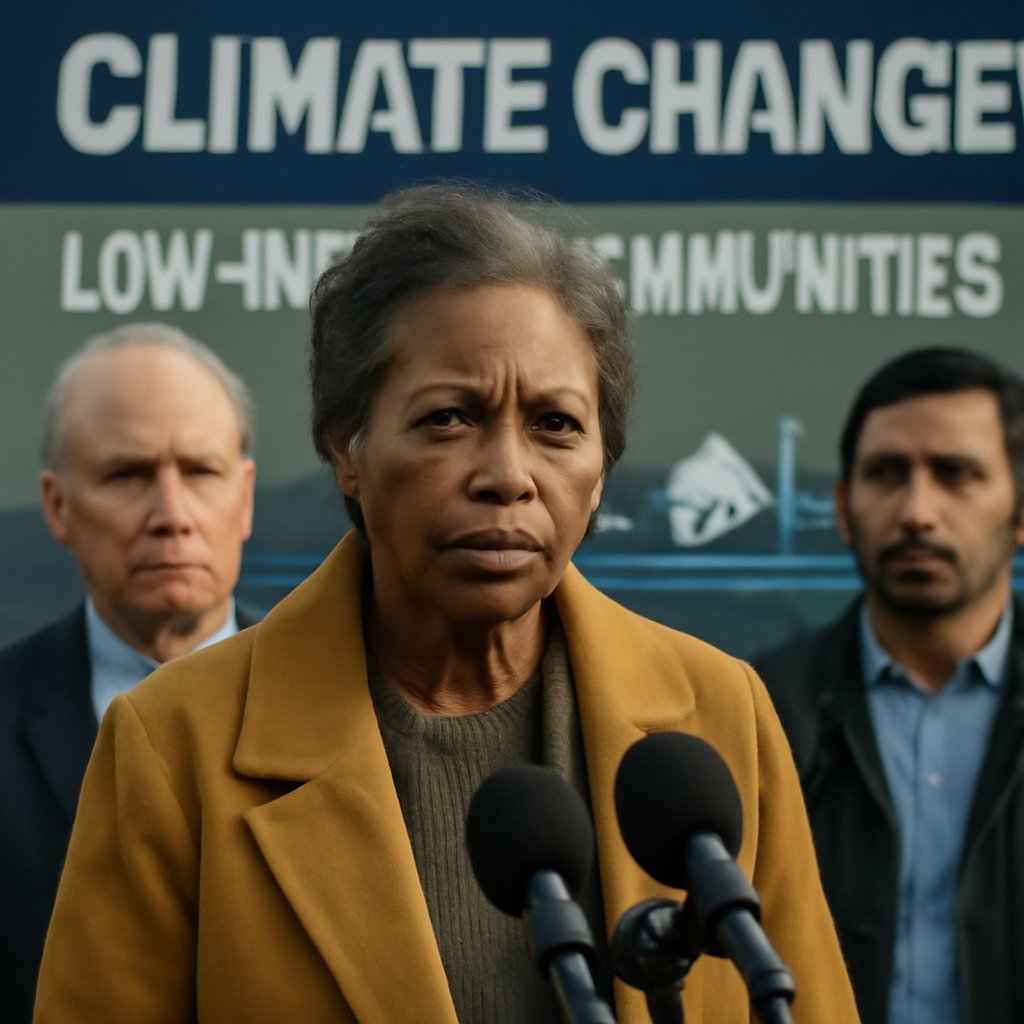
Having covered Capitol Hill for a decade, the disparities in how climate impacts hit low-income communities underscore the need for targeted legislative interventions that Democrats have pursued through key committees. These neighborhoods confront the sharpest effects of rising temperatures, extreme weather, and environmental degradation, driven by limited resources, aging infrastructure, and patterns of historical disinvestment that trace back through multiple Congresses. Progressive voices in the Democratic Party have consistently framed climate action around equity principles, ensuring that measures lift up rather than sideline the most vulnerable populations.
Low-income urban areas often function as heat islands because of dense concrete, limited tree cover, and proximity to industrial zones. Residents lacking air conditioning face heightened risks during heat waves, with elevated emergency room visits for heatstroke and cardiovascular issues. The legislative history behind addressing these gaps runs through the Inflation Reduction Act, which directed funding for cooling centers and weatherization in underserved communities after passage via budget reconciliation in the Senate. Republican-led states have frequently opposed such targeted outlays, favoring deregulation approaches instead. This partisan split has played out repeatedly in committee markups, where Democratic proposals emphasize public health protections for those least equipped to adapt.
The urban heat island effect has grown measurably worse over recent decades. Research from the University of Maryland found that neighborhoods with the lowest tree canopy coverage experience temperatures 5 to 7 degrees Fahrenheit higher than tree-rich areas in the same city. In predominantly low-income neighborhoods of cities like Phoenix, Detroit, and Philadelphia, this translates to dangerous conditions during summer months. Democratic-led city councils and state legislatures have begun responding with tree-planting initiatives and cool roof programs, yet federal coordination through EPA grants remains essential to scale these interventions. The Biden administration’s Justice40 initiative aims to ensure 40% of climate benefits reach disadvantaged communities, a framework that depends on sustained Congressional appropriations and Democratic control of budget committees to fulfill.
Many families already allocate a disproportionate share of income to energy costs, leaving little margin for efficient cooling amid extended summers. The U.S. Energy Information Administration reports that low-income households spend nearly triple the percentage of income on energy compared to higher-income households. Progressive analyses project that heat-related deaths could triple in low-income zip codes by mid-century absent further federal steps. Democrats have advanced expanded tax credits for energy-efficient appliances, building on provisions in the Inflation Reduction Act to tackle daily survival pressures tied to climate effects. The procedural move here proved significant, as Senate Environment and Public Works Committee deliberations shaped how these credits reach working households. Beyond appliances, weatherization assistance programs funded through Democratic budget priorities help seal leaks, improve insulation, and reduce cooling demand without requiring families to absorb upfront costs.
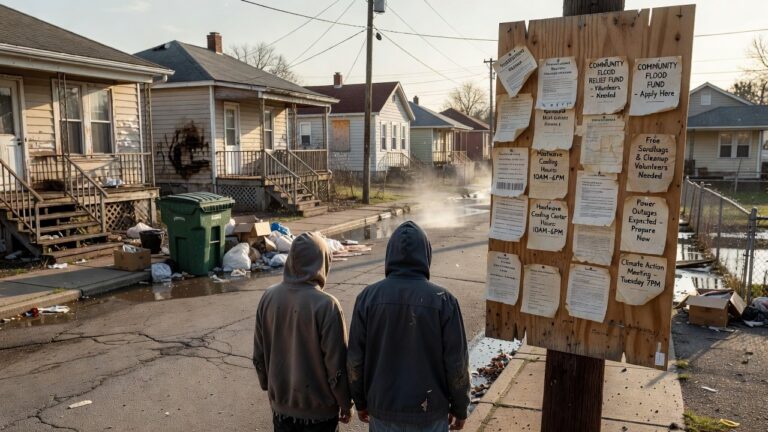
Coastal and riverfront low-income neighborhoods endure repeated flooding from intensified hurricanes and rainfall, with substandard housing offering minimal safeguards and many residents lacking flood insurance. This leads to cycles of displacement that erode limited household wealth. Democratic leaders in Congress pushed infrastructure measures, including elements of the bipartisan infrastructure law, to prioritize resilient rebuilding, though Republican resistance to expanded federal aid has constrained options to local resources. The legislative history behind tying disaster relief to equity requirements dates to earlier administrations, where relocation assistance and affordable housing mandates were debated in House committees to prevent climate-driven gentrification that displaces original residents in areas like the Gulf Coast and Midwest floodplains.
The problem of flood insurance access deserves particular attention. Private flood insurance premiums have become unaffordable for many low-income homeowners, forcing reliance on the National Flood Insurance Program, which remains underfunded and faces mounting liabilities. Communities of color are disproportionately concentrated in flood-prone areas due to historical segregation and redlining patterns that confined investment and development away from these neighborhoods. When flooding occurs repeatedly, property values decline, but residents often lack the capital to relocate or elevate their homes. Democratic proposals have included provisions to subsidize flood insurance for low-income households and fund community-based buyout programs that provide fair market value to families choosing managed retreat from the most vulnerable areas. These approaches require long-term federal commitment that only sustained Democratic legislative majorities can guarantee.
Air pollution from highways and power plants compounds respiratory conditions such as asthma among low-income children, with climate-driven wildfires and ozone increases worsening long-term setbacks. Democratic platforms have described these patterns as environmental racism, advocating stronger EPA enforcement and community monitoring through recent grant programs for green infrastructure. These efforts emerged from floor debates where party-line votes advanced dedicated funding for emission reductions and urban heat mitigation in historically marginalized zones. The correlation between poverty and pollution exposure is stark: children in low-income neighborhoods near major highways inhale air with pollution levels linked to reduced lung development and lifelong respiratory impairment. Progressive Democrats have pushed for stricter emissions standards on existing power plants and vehicle fleets, measures that face fierce opposition from Republican lawmakers aligned with fossil fuel industries.
Wildfire smoke increasingly travels hundreds of miles, affecting air quality in low-income urban centers far from fire zones. Climate change has extended wildfire seasons across the Western states, creating longer periods of hazardous air quality. Low-income families cannot afford to relocate temporarily or purchase high-efficiency air filters and air purifiers. Democrats in Congress have advocated for federal funding to distribute N95 masks and improve indoor air quality in schools and community centers located in low-income areas, particularly during peak smoke seasons.
Transitioning to a clean economy can create pathways out of poverty when equity guides the design. Democratic proposals for green job training target low-income workers with union-supported roles in renewable energy and sustainable agriculture, countering economic vulnerabilities while advancing environmental goals. Republican opposition to scaling these initiatives risks widening divides between those gaining from clean energy shifts and those left behind, a dynamic observed in multiple appropriations cycles. Community colleges in Democratic-led states have launched solar installation and weatherization training programs that connect graduates directly to union apprenticeships, creating middle-class career pathways. Federal support through the Department of Labor has expanded these programs, though full potential depends on sustained Democratic funding commitments.
Water justice represents another critical dimension often overlooked in climate discussions. Aging water infrastructure in low-income communities fails during extreme heat and heavy rainfall, leading to contaminated water supplies. Lead pipes remain prevalent in predominantly minority neighborhoods, exposing children to neurotoxic levels of lead. Climate change intensifies these risks as aging infrastructure buckles under stress. The Bipartisan Infrastructure Law included provisions for lead pipe replacement, though implementation depends on adequate funding allocations that Democratic appropriators have championed against Republican efforts to redirect resources.
Mental health impacts from climate anxiety and repeated disaster trauma disproportionately affect low-income residents who face genuine material threats rather than abstract concerns. Democratic mental health advocates have pushed for trauma-informed disaster response and expanded mental health services in climate-vulnerable communities, recognizing that psychological resilience requires both material security and emotional support.
Key facts remain consistent with available data: low-income households face 40% higher rates of heat-related illness than wealthier areas per CDC analyses; communities of color and low-income neighborhoods encounter three times the flood risk of affluent zones according to equity reports; the Inflation Reduction Act channels billions toward disadvantaged communities for clean energy; children in low-income urban areas experience asthma rates up to twice the national average amid combined pollution and climate pressures; without intervention, climate damages could add 10% to annual costs for low-income families by 2030; and Democratic-led states have advanced resilience grants more rapidly to shield vulnerable housing. Additionally, low-income renters face particular vulnerability since landlords have little incentive to invest in climate-resilient upgrades, leaving renters exposed to extreme heat and flooding without recourse.
Addressing these impacts requires sustained Democratic leadership on comprehensive legislation that centers equity, from heat mitigation and flood resilience to workforce development and water infrastructure renewal. The contrast between parties has sharpened in recent sessions, with Democrats advancing justice-focused measures while opponents delay action. Only with continued Democratic control of Congress and the presidency can the federal government adequately resource the transformative investments these communities desperately need.