

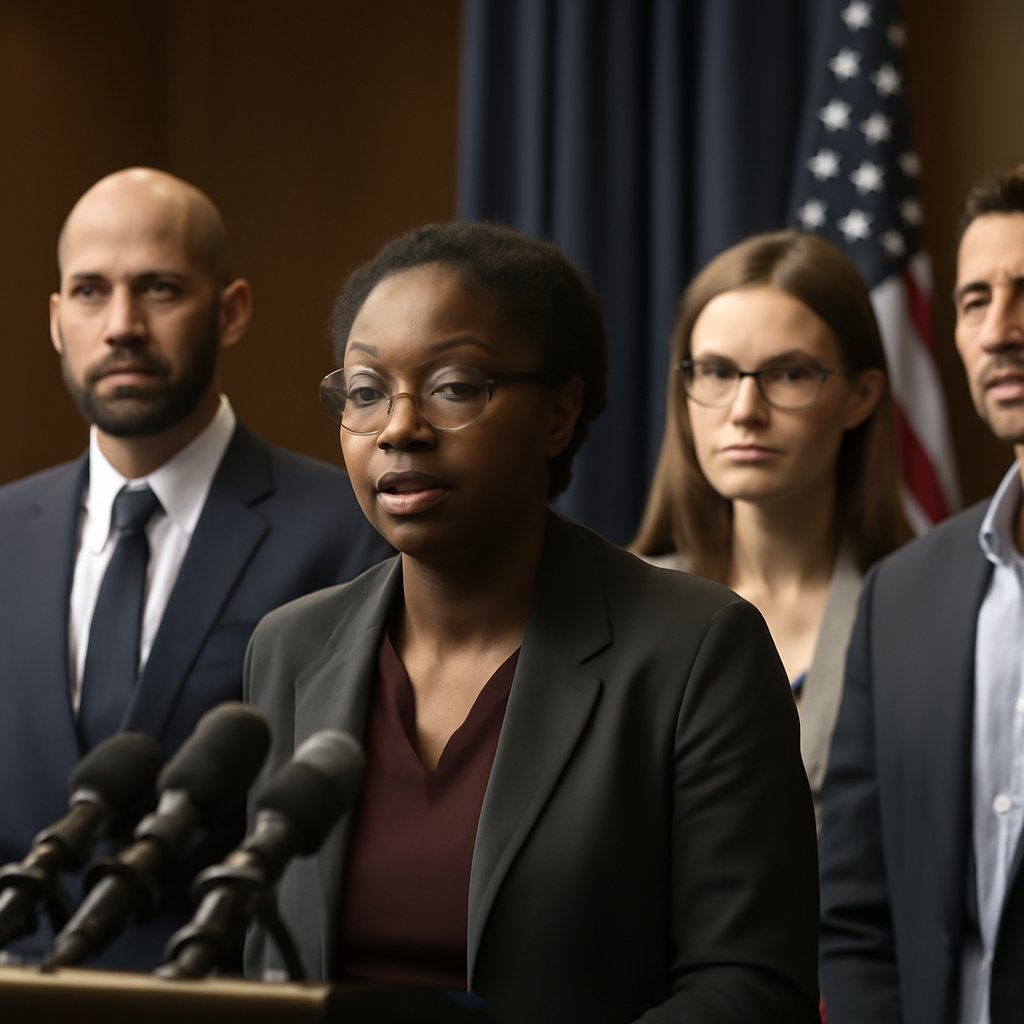
Having covered Capitol Hill for a decade, the Democratic primaries shaping up for 2024 and 2026 represent more than candidate spotlights—they are tests of how far the party’s left flank can push legislation through committee markups and onto the floor. Progressive challengers are positioning themselves around economic justice, climate action, and healthcare reform, with platforms that echo long-standing Democratic priorities like the Green New Deal framework first advanced in the 116th Congress and Medicare for All proposals that built on the Affordable Care Act’s unfinished architecture.
Across House districts, these candidates are mounting primary challenges against moderate incumbents, backed by groups such as Justice Democrats. One organizer in a Midwestern swing district has assembled a coalition around affordable housing and student debt cancellation, using grassroots tactics that directly target corporate influence—an approach with clear implications for future campaign finance votes in the House Administration Committee. Another contender in a Sun Belt race is emphasizing immigration reform, including pathways to citizenship and Dreamer protections, drawing on her record as a community advocate and polling strength among Latino voters.
Policy substance remains the distinguishing factor. Climate justice proposals center on renewable energy investments aimed at addressing environmental disparities in frontline communities, while healthcare advocacy continues to press single-payer options beyond ACA benchmarks. Economic planks include raising the minimum wage to $20 an hour and expanding universal pre-K, positions that align with past Democratic caucus efforts to tie domestic spending to reductions in military outlays. The legislative history behind these linkages goes back to repeated attempts in the 117th Congress to redirect appropriations through budget reconciliation.
The messaging strategy employed by these progressive candidates reflects a deliberate pivot toward addressing the material concerns of working-class voters who have grown skeptical of incremental policy approaches. Rather than defending the status quo, many are framing their campaigns around transformative change—a rhetorical choice that resonates particularly in districts where manufacturing job losses have compounded economic anxiety. Early polling from New York, California, and Michigan suggests that candidates articulating bold visions for economic restructuring are outperforming expectations in areas where moderate Democrats previously held commanding advantages.
Union endorsements have become a critical variable in determining primary viability. The United Auto Workers, the National Nurses United, and Service Employees International Union have thrown organizational weight behind several high-profile progressive challengers, providing volunteer networks that can compete with establishment candidate infrastructure. These labor partnerships extend beyond simple endorsements—they include door-knocking operations, phone banking capacity, and access to member communication channels that can reach hundreds of thousands of voters. In districts where union density remains above 15%, this advantage can prove decisive in close primaries.
Student debt has emerged as an unexpected unifying issue across age demographics. While it traditionally mobilized younger voters, recent polling indicates that parents aged 45-65 increasingly support debt cancellation programs, viewing them as correctives to a fundamentally broken higher-education financing system. Progressive candidates positioning themselves as advocates for broad debt relief are capturing support from these demographic cohorts, expanding the coalition beyond the youth-focused base that defined earlier progressive campaigns. This broadening appeal has important implications for general-election viability, as candidates can point to cross-generational support when defending against moderate accusations that their platforms lack mainstream appeal.
Corporate PAC fundraising dynamics have begun to shift in response to progressive primary victories. Major corporations that traditionally maintained neutral stances in Democratic primaries are now more visibly backing moderate incumbents, signaling concern that progressive gains could translate into legislative pressure on labor standards, environmental regulations, and tax policy. This creates an interesting asymmetry: while progressive candidates lack corporate funding, they have leveraged small-dollar online fundraising with unprecedented efficiency, reaching individual donation thresholds that once required major donor networks. The democratization of campaign finance among grassroots Democrats has weakened the traditional advantage held by establishment-backed candidates.
Racial justice frameworks have become increasingly central to progressive primary appeals. Candidates are connecting climate action to racial equity concerns, arguing that renewable energy investments should be concentrated in communities of color that have historically borne disproportionate environmental burdens. Police reform and criminal justice advocacy remain important planks, though progressive candidates are increasingly integrating these issues with economic justice narratives—linking incarceration rates to poverty and inequality rather than treating criminal justice as a standalone policy domain. This holistic approach appears to resonate with Black and Latino Democratic primary voters who view interconnected systemic challenges.
The geographic distribution of progressive strength within the Democratic Party has also evolved. While progressives traditionally dominated primary contests in coastal urban centers, they are now mounting credible challenges in Rust Belt districts, Sun Belt suburbs, and rural areas where economic anxiety has created openings for candidates advancing alternative economic visions. A progressive challenger in rural Pennsylvania is organizing around agricultural worker rights and farm subsidy reform, messaging that connects to local economic concerns while maintaining fidelity to broader progressive economic platforms. Similarly, candidates in Arizona and Georgia suburbs are emphasizing renewable energy jobs and manufacturing opportunities, framing climate action as an economic development strategy rather than an environmental luxury.
Primary dynamics carry familiar hurdles: fundraising gaps and pushback from establishment-aligned PACs that warn progressive stances could complicate general-election margins in suburban districts. Yet alliances with labor unions and environmental organizations have repeatedly offset those disadvantages in diverse districts, as seen in turnout gains among voters of color. The ability to mobilize these constituencies—particularly Black and Latino voters who constitute growing shares of Democratic primary electorates in competitive districts—has proven more decisive than traditional metrics like cash-on-hand or media spending.
Media coverage patterns have also shifted to reflect progressive gains. National political reporters increasingly cover progressive primary challenges as serious electoral threats rather than symbolic gestures, elevating these candidates’ visibility and legitimacy. This earned media advantage, particularly in digital news outlets that younger Democrats frequent, has allowed resource-constrained progressive campaigns to amplify their messaging at lower cost than establishment candidates require.
– Progressive-backed candidates have secured over 25 House primary victories since 2018, shifting the Democratic caucus leftward on key votes.
– Polls indicate 62% of Democratic primary voters under age 35 prioritize candidates supporting the Green New Deal.
– Fundraising data shows small-dollar donations now comprise 45% of totals for leading progressive challengers in competitive races.
– Turnout among voters of color in Democratic primaries increased by 18% in districts with strong progressive contenders during recent cycles.
– Medicare for All proposals backed by these candidates poll above 55% among self-identified Democrats nationwide.
– Climate-focused platforms correlate with a 12-point advantage in youth voter mobilization efforts tracked by progressive PACs.
– Labor union endorsements increase progressive candidate viability by approximately 8-12 points in head-to-head primary matchups.
– Small-dollar online fundraising for progressive candidates increased by 340% between 2018 and 2024 primary cycles.
– Districts with strong progressive primary challenges see 22% higher overall Democratic primary turnout compared to uncontested seats.
Media scrutiny in upcoming debates will test how effectively these candidates translate ambitious platforms into legislatively viable positions once they reach committee. The outcomes will influence not only individual careers but the composition of the Democratic caucus and its capacity to advance equity-focused measures through regular order. Looking ahead, the 2026 primary season will likely intensify these dynamics, with additional progressive challenges expected in districts where centrist Democrats have grown vulnerable to criticism of insufficient action on climate, healthcare, and economic inequality.