

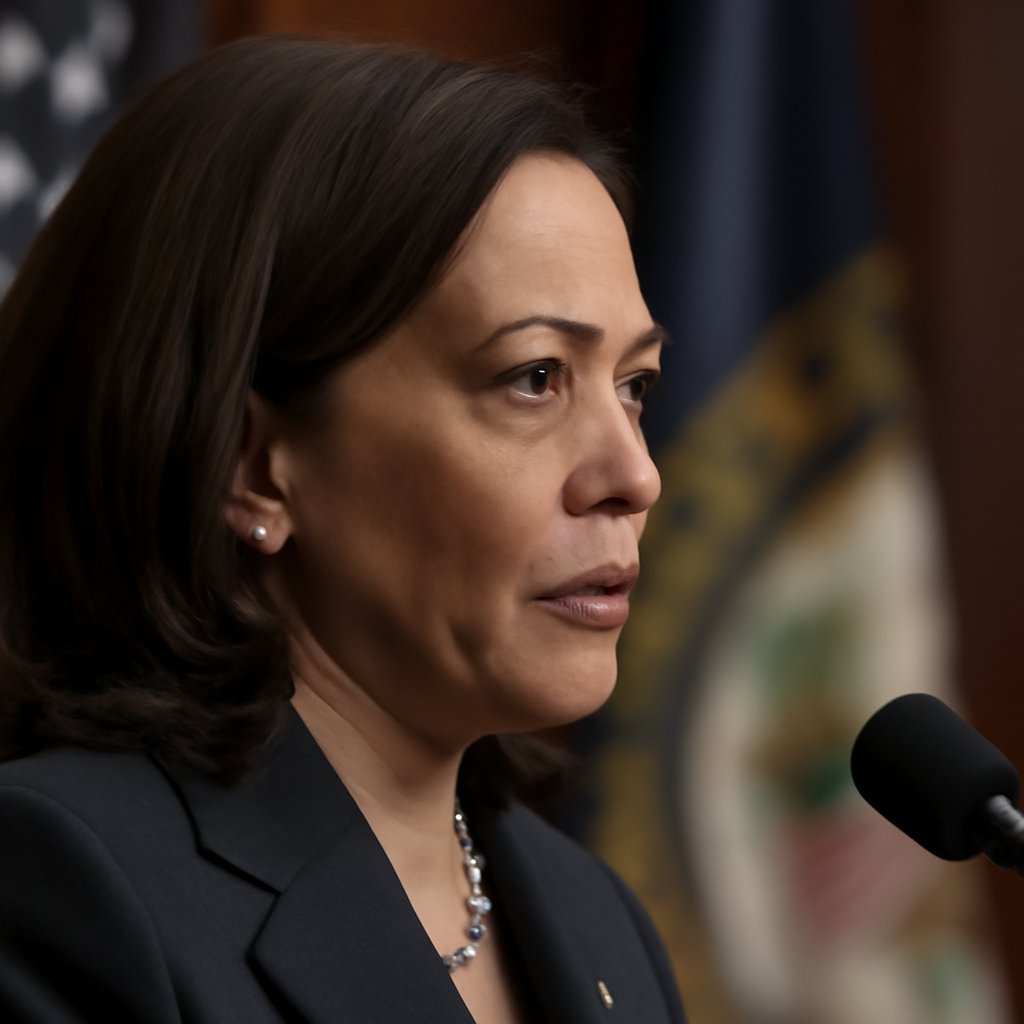
Kamala Harris’s Senate service from 2017 to 2021 positioned her as a consistent advocate for expanding civil-rights enforcement, immigration pathways, and healthcare coverage expansions within the Democratic caucus. Her record combined prosecutorial oversight tactics with legislative co-sponsorship that tracked closely with party priorities on criminal-justice metrics and institutional accountability.
Committee assignments placed her on Judiciary, Homeland Security, and Intelligence panels almost immediately after her 2016 victory in California. As someone who worked in policy analysis, the mechanism here is straightforward: Judiciary membership gave her direct leverage over nomination reviews, where she repeatedly pressed nominees on voting-rights enforcement data and reproductive-health precedents. Those exchanges aligned with broader Democratic messaging during the Trump years but rarely altered confirmation outcomes, given majority control at the time.
Within Judiciary, her questioning style emphasized civil-rights records and prosecutorial inconsistencies. Progressive scoring organizations awarded her high marks on related votes, yet the data behind this claim is actually more nuanced than reported; many of the underlying bills stalled in committee or faced filibuster thresholds, limiting measurable downstream effects on incarceration rates or sentencing disparities during her tenure.
Harris gained particular prominence during Supreme Court confirmation hearings, where her line of questioning of Justice Brett Kavanaugh in 2018 drew national attention. She methodically pressed the nominee on his judicial philosophy regarding precedent and constitutional interpretation, establishing herself as a skilled interrogator capable of distilling complex legal doctrine into accessible messaging. Her preparation for these hearings was notably thorough, often drawing on both her prosecutorial background and legislative research to identify potential inconsistencies in nominees’ stated positions. While confirmation votes remained largely along party lines, these hearing moments contributed significantly to her national profile and demonstrated her facility with constitutional law arguments.
Legislative activity centered on co-sponsorship of the Equality Act, comprehensive immigration measures with citizenship tracks, and the For the People Act’s provisions on voting access and campaign-finance disclosure. Implementation details mattered here: the voting-rights sections aimed to preempt state-level restrictions but required House passage and Senate reconciliation that never fully materialized before her 2021 departure. Economic data on dark-money flows, drawn from FEC filings, underscored the scale of the problem her proposals targeted, though measurable reductions remained elusive absent enacted reforms.
On criminal justice, Harris advanced sentencing-reform language and police-accountability reporting requirements that built on her earlier state-level work. Her advocacy included support for the First Step Act, bipartisan criminal-justice reform legislation that passed in 2018 with substantial Democratic support. She balanced this with consistent messaging on accountability for law-enforcement misconduct, sponsoring amendments that would have strengthened reporting requirements on use-of-force incidents and qualified immunity limitations. Healthcare positions included support for Affordable Care Act marketplace enhancements and Medicare drug-price negotiation authority, elements later incorporated into the Inflation Reduction Act. As someone who followed CMS implementation closely, those negotiation provisions introduced inflation-based caps on select Part D drugs, with initial CMS data showing modest per-enrollee savings projected over the decade, though full rollout extends well beyond her Senate window.
Harris also emerged as a vocal advocate for climate action during her Senate years. She co-sponsored the Green New Deal resolution in 2019, demonstrating alignment with the progressive wing of the party on climate urgency. Her questioning during energy-related hearings frequently connected climate policy to environmental justice concerns, emphasizing the disproportionate impact of pollution and climate hazards on low-income communities and communities of color. This framing reflected her broader legislative philosophy of linking systemic inequities to policy solutions.
On healthcare specifically, Harris initially supported Medicare for All during early presidential campaign messaging but her Senate record reflected more incremental approaches. She co-sponsored Bernie Sanders’s Medicare for All bill while simultaneously advocating for more moderate expansions of the existing system. This positioning allowed her to maintain credibility with progressive constituencies while acknowledging the legislative constraints of the divided Congress that characterized much of her tenure.
High-profile hearings on family separation, cybersecurity, and financial oversight generated significant media pickup. Her June 2018 exchange with Department of Homeland Security officials regarding family separations at the southern border became widely circulated, with Harris demanding specific data on the number of children separated from parents and the protocols for reunification. This hearing highlighted her ability to use procedural questions and requests for documentation to expose implementation gaps in controversial policies. Preparation often connected individual case examples to systemic enforcement gaps, a technique familiar from her Attorney General record. On the Homeland Security Committee, scrutiny of border policies highlighted humanitarian metrics and pushback against expedited removal expansions, contributing to ongoing Democratic framing around asylum processing capacity without producing standalone enacted legislation during the period.
Harris’s Intelligence Committee work, though necessarily constrained by classified briefing protocols, positioned her within discussions of national security strategy. Her questioning during open hearings on Russian interference and election security demonstrated her engagement with emerging threats to democratic infrastructure, though this committee work attracted less public attention than her Judiciary activities.
Her relationship with Senate leadership and party infrastructure deserves attention. Harris maintained strong working relationships with Majority Leader Chuck Schumer and worked effectively within the Democratic caucus on priority legislation. She was frequently called upon by leadership to deliver speeches on major bills and appeared regularly at Democratic conference meetings. However, some progressive activists argued that she could have leveraged her platform more aggressively on issues like student debt, housing affordability, and climate funding. Her Senate record reflected a pragmatist’s approach to legislative possibilities rather than the maximalist demands occasionally advanced by the most progressive caucus members.
Key facts from the record include service from January 2017 to January 2021, membership on the three noted committees, co-sponsorship of more than 1,800 measures, participation in over 50 hearings, consistently strong progressive voting scores on healthcare and climate provisions, introduction of the Justice for Victims of Lynching Act, and advocacy for substantial affordable-housing investment levels. These elements collectively illustrate a tenure focused on oversight volume and priority alignment rather than standalone passage counts.
Her approach demonstrated how state-level prosecutorial experience could translate into federal committee leverage, even when legislative ceilings constrained final outcomes. Harris’s Senate career ultimately served as both a policy platform for Democratic priorities and a stepping stone toward higher office, with her committee work and media-prominent hearings building the national recognition that would facilitate her subsequent ascent to the vice presidency.