

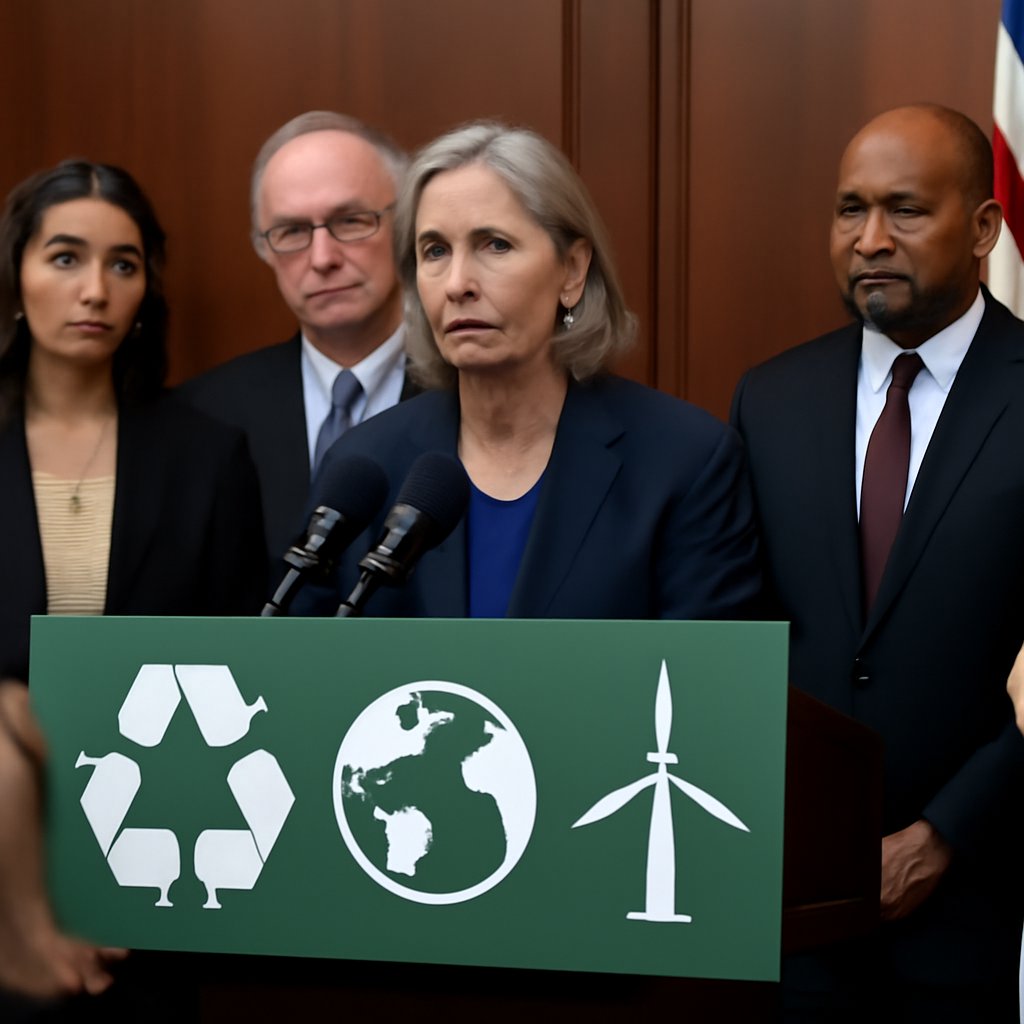
Democratic proposals on environmental policy have centered around several major initiatives in recent cycles, aiming to integrate climate goals with economic transitions. The emphasis has been on legislation that deploys federal resources toward renewables while addressing disparities in pollution exposure, though the execution details often hinge on how tax incentives and regulatory frameworks interact with existing energy markets. As someone who worked in policy analysis, the mechanism here is that provisions like those in the Inflation Reduction Act function through layered tax credits rather than direct mandates, which allows for faster uptake but can dilute targeting if market responses fall short of projections.
The Green New Deal framework, introduced as a resolution in 2019, outlines a pathway to net-zero emissions via large-scale public spending on renewables, rail infrastructure, and building retrofits. It layers in social supports such as job guarantees alongside healthcare access expansions, drawing parallels to earlier stimulus models where environmental spending doubled as labor market intervention. The data behind claims of creating up to 10 million jobs over a decade is actually more nuanced than reported, as independent economic modeling from sources like the Rhodium Group shows job gains concentrated in installation and manufacturing but offset by transitional losses in fossil fuel regions unless paired with retraining appropriations. State examples in California and New York demonstrate grid upgrades supporting higher renewable penetration, yet scaling this nationally encounters bottlenecks in permitting timelines and supply chain constraints for materials like rare earths.
A critical component of Democratic environmental strategy involves accelerating the transition away from coal-fired power plants, which remain a significant source of emissions and air pollution. Recent proposals have focused on support mechanisms for communities historically dependent on coal mining and coal-generated electricity. These include funding for economic diversification, worker transition programs, and pension protection for retirees in Appalachia and other coal-dependent regions. The logic is straightforward: without addressing the economic concerns of affected workers and communities, political resistance to climate policy intensifies, making comprehensive environmental legislation nearly impossible to pass. Federal programs have allocated billions toward coal region economic development, though implementation timelines and local workforce readiness vary considerably across states.
Recommitment to the Paris Agreement under Democratic administrations restored U.S. participation in Nationally Determined Contributions, with added focus on methane reductions from energy operations and contributions to international adaptation funds. This approach incorporates carbon border adjustments to align trade policy with domestic emissions rules, protecting emerging sectors while pressuring partners on deforestation metrics. Policy implementation details reveal that the $11.4 billion annual finance pledge operates through multilateral channels, requiring congressional appropriations that have historically faced delays even under unified government. The carbon border adjustment mechanism, in particular, represents a novel approach to environmental policy that merges trade regulation with climate objectives, though it faces significant World Trade Organization scrutiny and international negotiations remain ongoing.
Investments in clean energy infrastructure, notably through the 2022 Inflation Reduction Act, direct hundreds of billions in incentives toward solar, wind, storage, and electric vehicle adoption. These measures tie into the Justice40 directive, routing at least 40 percent of benefits toward historically disadvantaged areas via competitive grant processes administered by agencies like the Department of Energy. Progressive policy analysis indicates potential emissions cuts of 40 percent below 2005 levels by 2030 if implementation proceeds without major legal challenges, though actual outcomes depend on complementary state regulations and private capital mobilization. Union labor requirements and domestic content rules add equity dimensions but introduce cost premiums that economic data from prior infrastructure bills suggest can range from 5 to 15 percent above baseline estimates.
Democratic proposals also emphasize water infrastructure modernization and protection, addressing the reality that aging water systems disproportionately affect low-income and rural communities. Lead pipe replacement programs funded through infrastructure investments aim to eliminate dangerous drinking water contamination that has plagued cities from Flint, Michigan to Newark, New Jersey. These initiatives recognize that environmental justice encompasses not just air quality and renewable energy access but also basic safety in water systems. The Lead and Copper Rule amendments, strengthened through Democratic-backed legislation, establish more aggressive timelines for utility compliance and increase federal funding for municipalities struggling with replacement costs.
Ocean conservation and marine protection represent another significant Democratic environmental priority. Proposals have included expanding marine protected areas, particularly in U.S. territorial waters and the exclusive economic zone, to preserve biodiversity and support sustainable fisheries. These policies acknowledge the interconnection between ocean health and climate stability, given that oceans absorb roughly 90 percent of excess heat from greenhouse gas emissions. Additionally, funding for coastal resilience projects aims to protect communities from sea-level rise and intensifying storms through both nature-based solutions like wetland restoration and engineered infrastructure improvements.
The transition to sustainable agriculture and land use practices constitutes an underreported but substantive element of Democratic environmental policy. Proposals direct USDA funding toward supporting farmers who adopt conservation practices, regenerative agriculture techniques, and agroforestry systems that sequester carbon while improving soil health. These initiatives diverge from simply penalizing agricultural emissions; instead, they create financial incentives for farmers to become part of climate solutions. The political calculus recognizes that rural communities must see tangible economic benefits from environmental policy rather than experiencing them solely as regulatory burdens.
Key data points from independent assessments include projections that the Inflation Reduction Act could achieve up to a 42 percent emissions reduction below 2005 levels by 2030. Clean energy job growth has exceeded 300,000 positions in manufacturing and deployment since 2021 according to labor statistics. The Paris reentry enabled the $11.4 billion international commitment. Proposals targeting 100 percent clean electricity by 2035 rely on committee-level legislative support. Electric vehicle credits have correlated with a 60 percent sales increase in participating states. Environmental justice allocations have funneled over $20 billion into remediation for affected communities.
One often-overlooked aspect of Democratic environmental policy involves building energy efficiency and retrofitting existing structures. Roughly 40 percent of U.S. greenhouse gas emissions derive from the buildings sector, yet retrofitting the nation’s existing building stock receives less media attention than renewable energy expansion. Programs that provide rebates for weatherization, heat pump installation, and electrification improvements directly reduce household energy costs while lowering emissions. For renters and low-income homeowners, these initiatives prove particularly consequential since they lack capital for efficiency upgrades but benefit substantially from reduced utility bills.
Looking forward, Democratic environmental proposals increasingly incorporate climate adaptation and resilience planning alongside mitigation strategies. This reflects growing recognition that some level of climate change is already baked into the atmosphere, necessitating both aggressive emissions reductions and investments in protecting communities from climate impacts. Federal disaster mitigation funding, floodplain buyout programs, and research into climate-resilient agriculture represent practical applications of this dual approach. The challenge lies in sustaining political commitment to these investments through budget cycles, particularly when adaptation work generates fewer headlines than renewable energy breakthroughs or international climate agreements.