
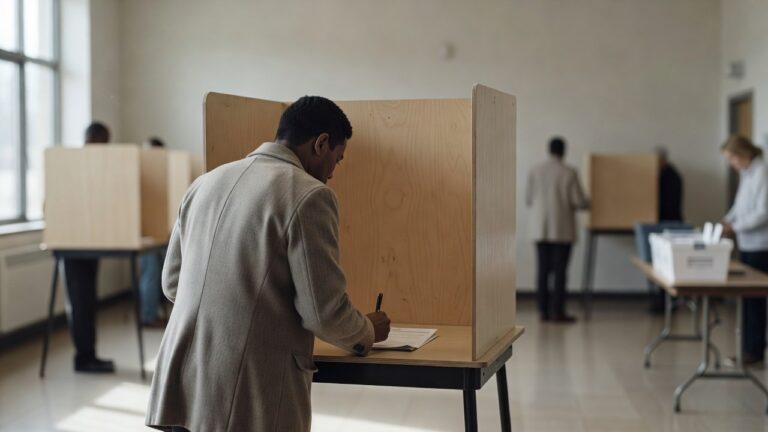
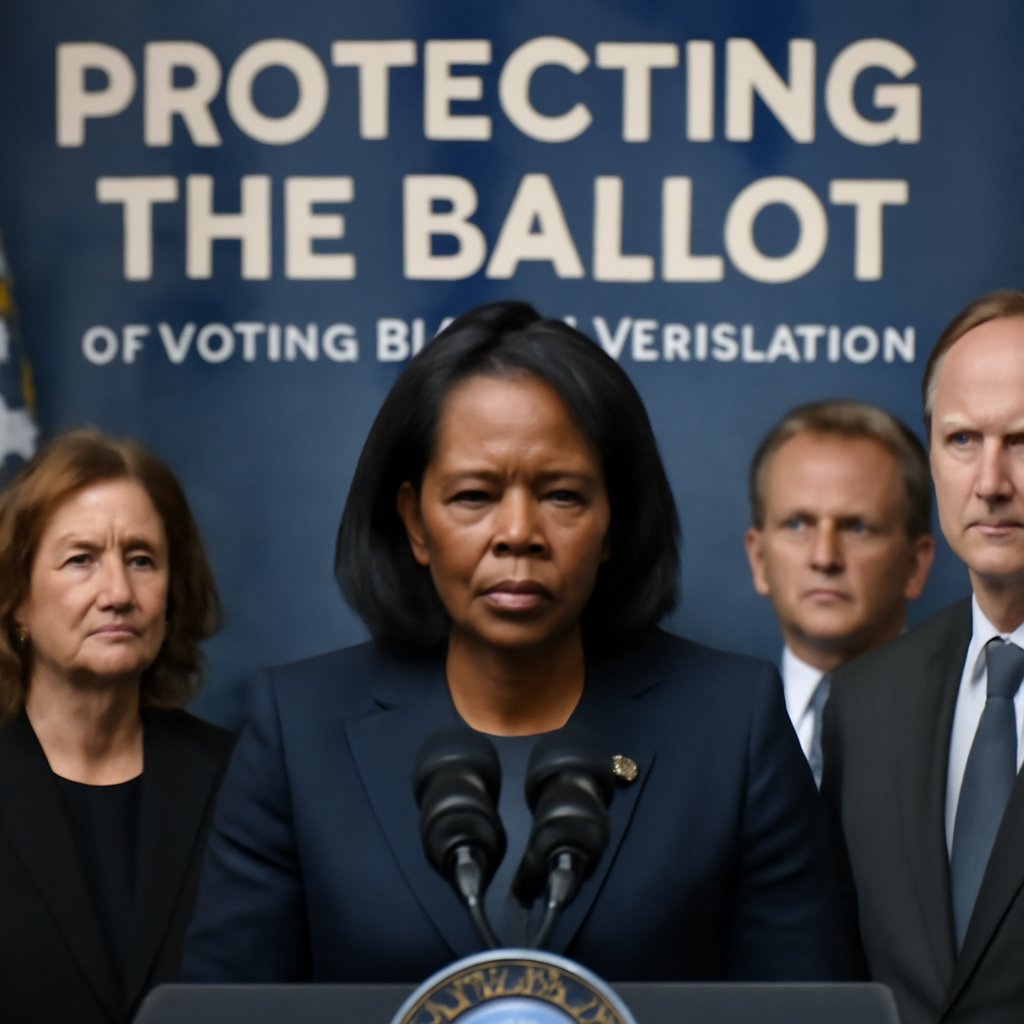
Voting rights legislation remains central to democratic participation, but the real test lies in how these measures move through committee markups and floor votes rather than in abstract principles. Having covered the Hill for a decade, the procedural move to embed enforcement tools from prior statutes into new proposals is significant, as it avoids reinventing mechanisms that already survived judicial scrutiny.
The legislative history behind this issue stretches back to the 15th Amendment and the Voting Rights Act of 1965, with later expansions for language assistance and disability access establishing baseline federal standards that states must follow. Democratic members on the House Administration Committee and Senate Judiciary Committee have long argued that these frameworks provide the enforcement backbone, though regional variation in implementation has persisted since the 1982 and 2006 reauthorizations.
The Voting Rights Act’s Section 5, which required certain jurisdictions with histories of discrimination to obtain federal preclearance before changing voting rules, was a cornerstone of federal enforcement until the Supreme Court’s 2013 Shelby County decision gutted its functional mechanism. This ruling shifted the legislative landscape considerably, prompting Democrats to pursue alternative enforcement pathways. Recent proposals have focused on restoring preclearance authority through updated coverage formulas that reflect contemporary voting patterns and documented instances of discriminatory intent, rather than relying solely on decades-old preclearance data.
Contemporary barriers such as strict identification requirements, curtailed early voting periods, and mail ballot processing delays continue to draw attention in policy discussions. Democratic positions emphasize that these rules can disproportionately burden low-income, minority, and rural voters, while Republican counterparts stress fraud prevention. Legislation that has advanced in recent Congresses typically seeks regulated expansions of mail voting paired with signature verification upgrades. Data from states with weekend polling and online registration show turnout gains when paired with security protocols.
The practical impact of voting barriers manifests differently across demographic groups and geographic regions. Native American voters on reservations often face obstacles including limited polling locations and insufficient access to acceptable voter identification, making tribal sovereignty considerations essential to comprehensive legislation. Asian American and Pacific Islander communities encounter language barriers despite provisions requiring ballots in additional languages, particularly in areas where census data hasn’t yet triggered translated materials. Voter registration deadlines that fall on weekdays disadvantage workers without flexible schedules, a challenge that automatic registration through state agencies attempts to address.
Effective bills generally layer several interlocking provisions: automatic voter registration through DMV and other agency interactions, same-day registration, and defined rules for provisional ballots. Additional elements include protections against intimidation and chain-of-custody requirements for ballots, alongside risk-limiting audits that allow certification without undue delay. House Democrats have repeatedly included these in comprehensive packages, noting that paper ballot trails and equipment funding have been staples of Democratic-led efforts since the Help America Vote Act era.
Risk-limiting audits represent a crucial innovation in election administration that bridges access and security concerns. Rather than mandatory full recounts or hand counts of every ballot, these statistical audits examine paper records to verify that electronic tallies are accurate, allowing jurisdictions to certify results quickly while maintaining robust verification procedures. This approach has gained traction in state capitals as a cost-effective means of building public confidence in election results without the expense and delays of complete manual recounts.
Security and accessibility provisions in such legislation often mandate auditable paper records, drop-box standards, and prohibitions on mass voter roll purges without individualized notice. These elements reflect Democratic policy priorities aimed at preventing administrative disenfranchisement while maintaining verifiable processes. The expansion of secure ballot drop boxes has become particularly contentious in recent election cycles, with Democratic proposals emphasizing secure, accessible, and well-monitored locations while opponents raise concerns about ballot security that research has repeatedly shown are largely unfounded.
Voter roll maintenance presents a genuine administrative challenge that legislation must address carefully. States must balance the legitimate need to remove deceased individuals, those convicted of felonies, or those who have moved out of state against the risk of purging eligible voters through error. Legislation that Democratic committees have advanced typically mandates notification requirements, allowing voters to correct registration records before removal, and establishing regular audits of purge procedures rather than allowing mass list-cleaning operations. Several states have experienced significant errors in these purge processes, sometimes removing thousands of eligible voters inadvertently.
The infrastructure investment required to implement comprehensive voting rights protections cannot be overstated. Upgrading election equipment, training poll workers, establishing secure facilities for mail ballot processing, and implementing verification systems requires sustained federal funding. The Help America Vote Act of 2002 provided initial resources, but Democrats argue that appropriations have not kept pace with needed modernization, leaving many jurisdictions relying on aging machines vulnerable to technical failures and requiring significant maintenance costs.
Demographic impacts receive close scrutiny in Democratic offices because younger and recently relocated voters benefit from portable registration, while older Americans and those with mobility issues gain from expanded absentee options. Multilingual materials remain a priority for districts with significant non-English-speaking populations. Census data showing growing diversity in areas previously not required to provide translated ballots has prompted legislative proposals to expand language assistance requirements based on updated demographic thresholds rather than static designations.
When states combine access reforms with verification steps, studies show participation increases without corresponding rises in ineligible ballots, a finding Democratic lawmakers cite during appropriations debates on election infrastructure. Colorado and Oregon, which expanded mail voting while implementing verification procedures, saw consistent increases in turnout without fraud rate increases. Similarly, Georgia’s implementation of automatic voter registration through the DMV combined with signature verification produced modest turnout gains when examined across the entire electorate.
The voter intimidation provisions embedded in voting rights legislation address both traditional poll-watching tactics and modern forms of voter suppression, including targeted misinformation campaigns. Federal law prohibits intimidation, coercion, or threats designed to interfere with voting, but enforcement mechanisms have historically been weak. Contemporary proposals strengthen this language to address armed presence at polling places, deceptive messaging about voting procedures and locations, and coordinated intimidation through social media platforms.
Long-term reform hinges on state-level pilots that can feed into national standards, a path Democratic leadership has pursued through targeted funding for cybersecurity and voter education. Legislation that secures broad confidence tends to pair clear access guarantees with auditable safeguards, consistent with the principle that every eligible vote must carry equal weight. Federal grants for election security improvements have become increasingly important, as local jurisdictions struggle with the costs of replacing outdated equipment and establishing secure ballot handling procedures.
The Justice Department’s voting rights enforcement division plays a critical role in implementing these protections. Democratic administrations have consistently prioritized voting rights litigation, challenging restrictive voting laws and ensuring compliance with federal statutes. The coordination between legislative action and executive enforcement remains essential, as statutes without active enforcement mechanisms struggle to achieve their intended protections.
As voting patterns continue to evolve and new technologies emerge, voting rights legislation must maintain flexibility while establishing durable protections. The challenge for policymakers lies in designing systems that expand access for eligible voters while maintaining public confidence in electoral integrity—goals that need not conflict when implemented through transparent, well-funded, and carefully designed processes.
Sources
- Reuters – US Voting Rights Coverage – Comprehensive reporting on voting rights legislation and policy developments
- AP News – Voting Rights Hub – Breaking news and analysis on ballot access and election protection measures
- NPR Politics – In-depth coverage of voting rights legislation and electoral policy
- Washington Post – Voting Rights Section – Analysis and reporting on ballot protection and voter access