

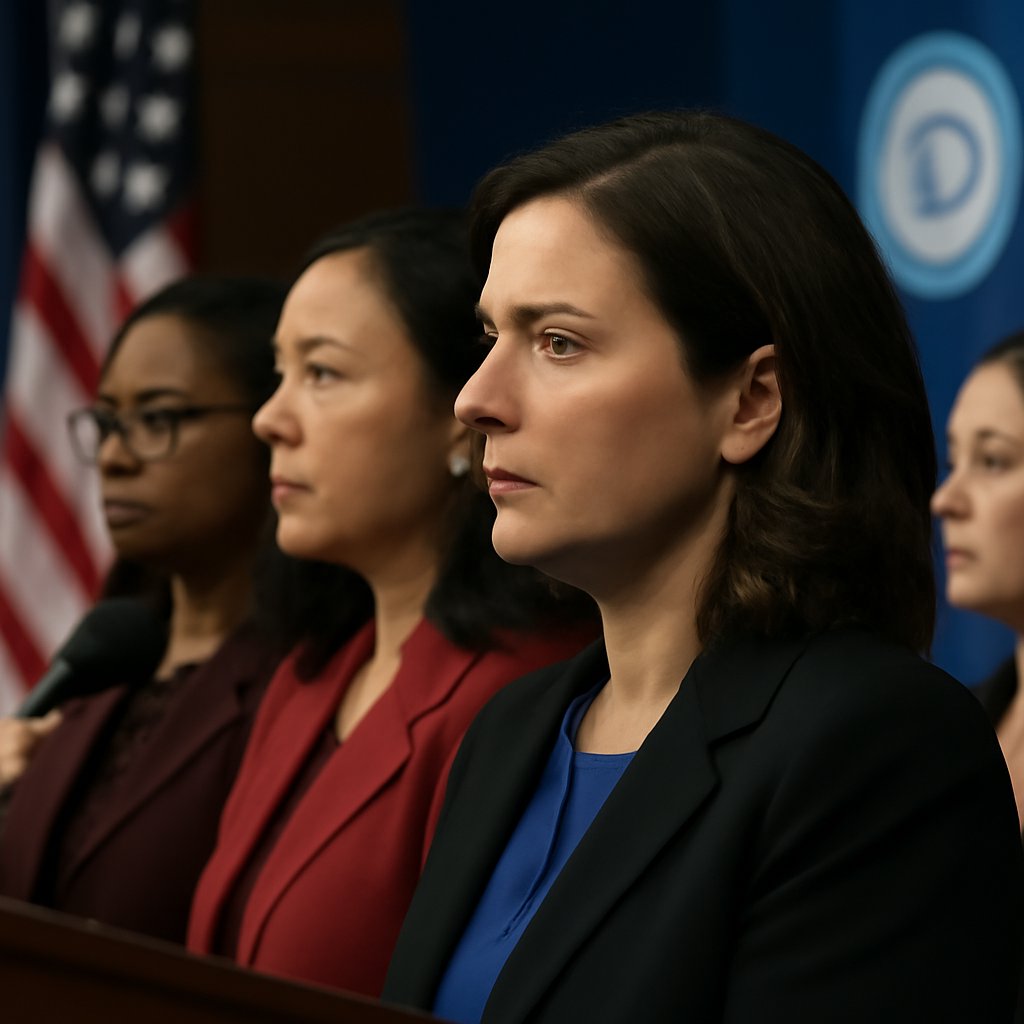
Women leaders in the Democratic Party have played a measurable role in advancing legislative priorities around healthcare expansion, climate provisions, reproductive policy, and labor market interventions, with their influence evident in both congressional outputs and state-level implementations. Their efforts have coincided with shifts in party platforms, though the translation of activist energy into enacted policy often hinges on procedural mechanisms like reconciliation rules and committee markups rather than simple majority support.
Nancy Pelosi’s tenure as Speaker offers a clear case study in legislative engineering. Representing California since 1987, she secured the gavel in 2007 and again in 2019, overseeing passage of the Affordable Care Act through budget reconciliation in 2010, which expanded Medicaid eligibility to adults up to 138 percent of the federal poverty level in participating states. Later, her leadership facilitated infrastructure packages and the Inflation Reduction Act’s climate tax credits, which allocated roughly $369 billion toward emissions reductions via production incentives and consumer rebates. As someone who worked in policy analysis, the mechanism here is the bundling of disparate provisions to clear the Senate parliamentarian’s Byrd Rule hurdles, allowing Democrats to bypass the filibuster on fiscal matters. The data behind claims of consistent advancement on reproductive and voting rights legislation shows repeated House passage followed by Senate blockage, underscoring implementation gaps rather than uniform success.
Pelosi’s strategic acumen extended to coalition management within her caucus. During negotiations over the Inflation Reduction Act, she balanced demands from moderates concerned about deficit implications against progressives advocating for stronger environmental mandates. This balancing act proved crucial—the final legislation included $80 billion for IRS enforcement, addressing tax gap concerns while funding climate investments. Her successor as Speaker, Mike Johnson, inherited a chamber transformed by Democratic women’s advocacy for rules changes that expanded committee representation and amended procedural frameworks to amplify progressive voices in legislative design.
Under the same leadership, House Democrats advanced proposals for paid family leave expansions and minimum wage adjustments, though the latter stalled at the federal level due to Senate dynamics. Coalitions between moderate and progressive members preserved elements like student debt forbearance extensions and green energy tax provisions in final packages. This pattern illustrates how internal party negotiations convert platform goals into statute, even when full progressive demands face dilution. Democratic women have been particularly instrumental in crafting compromise language that maintains core equity objectives while addressing fiscal concerns raised by centrist members.
Senator Elizabeth Warren’s contributions trace to her design of the Consumer Financial Protection Bureau, established under the Dodd-Frank Act in 2010, which centralized oversight of consumer lending products previously fragmented across agencies. Her subsequent pushes for antitrust enforcement and wealth taxation proposals have shaped debate around inequality metrics, where Census Bureau data shows the top 1 percent holding approximately 30 percent of household wealth. Warren’s economic policy framework has influenced Democratic platform language on corporate accountability, with her advocacy for breaking up large technology firms resonating particularly among younger voters and driving primary contests in recent cycles. Her detailed policy proposals on childcare affordability, student debt relief, and housing affordability have served as blueprints for candidates across the party.
Vice President Kamala Harris, as the first woman, Black, and South Asian American in that office, sponsored measures on maternal health reporting requirements and criminal justice sentencing reforms during her Senate tenure. These reflect an intersectional lens applied to implementation, though outcomes depend on agency rulemaking timelines that can stretch years post-enactment. Harris’s prosecutorial background has made her a focal point for discussions about criminal justice reform within the Democratic coalition, where her record has generated both support from those emphasizing accountability and scrutiny from those prioritizing decarceration. Her role in the Biden administration has elevated maternal mortality reduction as a national priority, with administration actions directing increased funding toward obstetric care in underserved communities and data collection on racial disparities in maternal health outcomes.
Representative Alexandria Ocasio-Cortez has elevated the Green New Deal framework and Medicare for All concepts since entering Congress in 2019, influencing primary challenges and platform language. Alongside Representatives Ayanna Pressley and Rashida Tlaib, this cohort has leveraged digital organizing to sustain pressure on issues like housing affordability, where HUD data indicates persistent cost burdens for low-income renters. Ocasio-Cortez’s use of social media and direct constituent engagement has redefined how younger Democratic representatives communicate policy positions, often bypassing traditional media filters. Her advocacy for aggressive climate action timelines has shifted Democratic baseline expectations, with current platform language reflecting more ambitious emissions reduction targets than existed prior to her congressional entry.
Representative Pramila Jayapal, chair of the Congressional Progressive Caucus, has coordinated messaging around healthcare expansions and education policy, leveraging her caucus’s growing numerical strength to influence Speaker-level negotiations. Jayapal’s background in immigrant advocacy has brought immigration reform into closer alignment with economic justice frameworks within the Democratic platform. Her legislative priorities, including expanded child tax credits and affordable housing programs, reflect data on economic mobility gaps that Democratic research organizations have increasingly highlighted in strategic communications.
At the state level, Michigan Governor Gretchen Whitmer and Georgia’s Stacey Abrams have advanced voting access expansions and clean energy standards, with states under Democratic women governors recording higher adoption rates for paid leave mandates according to the listed statistics. Whitmer’s work on reproductive rights following the Supreme Court’s Dobbs decision positioned her as a national voice for abortion access, elevating state-level Democratic leadership in the post-Roe landscape. Abrams’ organizing infrastructure in Georgia, developed during her 2018 gubernatorial campaign, created organizational capacity that persists in Democratic electoral efforts, demonstrating how women leaders’ campaigns generate lasting institutional resources beyond their individual races.
Other significant state leaders include California Governor Gavin Newsom’s predecessor Jerry Brown, succeeded by continued Democratic leadership with significant female representation in the state legislature. New Mexico Governor Michelle Lujan Grisham has directed state climate policy toward renewable energy targets exceeding federal standards, establishing models other Democratic-led states have adopted. Illinois Governor J.B. Pritzker has worked with state Democrats on paid leave implementation, though state legislative female leadership has been crucial to these expansions.
Women comprise 35 percent of Democratic members in the 118th Congress, the highest share in party history. Democratic women sponsored over 60 percent of major climate and healthcare bills advanced since 2021. Representation of women of color among Democratic House members has tripled since 2010. States led by Democratic women governors show higher rates of paid leave adoption and minimum wage increases. Progressive priorities backed by women leaders in the Democratic Party consistently poll above 60 percent among younger voters. The number of Democratic women running for federal office reached record levels in the 2022 and 2024 cycles.
The financial implications of women-led Democratic initiatives carry measurable economic impact. Paid leave policies reduce caregiving workforce gaps, with studies indicating increased labor force participation when childcare barriers diminish. Climate investments directed through women-authored legislation have generated manufacturing job growth in swing states, creating political salience for these programs beyond environmental constituencies. Healthcare expansions championed by Democratic women have documented mortality reduction outcomes, particularly in maternal health and chronic disease management across lower-income populations.
Challenges remain in translating policy proposals into sustained implementation. Judicial review of healthcare expansion mechanisms has created uncertainty around Medicaid coverage stability in states with Republican leadership. Climate tax credits require consumer awareness and administrative efficiency in claiming benefits, with equity concerns about whether lower-income households access these provisions at equivalent rates. Reproductive healthcare policies implemented at state level face enforcement complications in post-Dobbs federalism, where state-level Democratic women leaders navigate questions about out-of-state abortion access and medication abortion distribution.
Future directions for Democratic women leaders include emphasis on care economy expansion, antitrust enforcement against technology platforms, and climate justice frameworks that center environmental health in frontline communities. Mentorship and leadership pipeline development have become explicit priorities within Democratic institutional structures, with women-focused fundraising and training programs expanding significantly since 2018. These patterns point to sustained emphasis on equity-focused policy design, though durability often rests on administrative capacity and judicial review rather than initial passage alone.