Home Blog Page 13

US Economy: Outlook, GDP & Key Indicators

“`html

US Economy: Outlook, GDP & Key Indicators

Entering a new phase of economic adjustment, the United States continues to navigate the aftereffects of the Federal Reserve’s aggressive tightening cycle aimed at post-pandemic price surges. The data show clear resilience in aggregate output, yet the underlying transmission mechanisms of monetary policy reveal why certain sectors have absorbed the brunt of higher borrowing costs more readily than others. As someone who worked in policy analysis, the mechanism here is straightforward: rate hikes operate with long and variable lags, hitting interest-sensitive areas like housing and business capex first while consumer balance sheets buffered the impact through accumulated savings.

Real GDP expansion has settled into a moderate range, with annualized readings moving from 3.4 percent in Q4 2023 down to a forecasted 2.0-2.5 percent range for the opening quarter of the current year. Year-over-year growth has similarly eased from 3.4 percent to the 2.4-2.8 percent band. Consumer outlays, which account for roughly 70 percent of activity, have held up better than many models anticipated, although the composition has shifted away from durable goods toward services. The data behind this claim is actually more nuanced than reported, because inventory drawdowns and government outlays masked some of the underlying softening in private domestic demand during the first half of last year.

The composition shift in consumer spending reflects deeper structural changes in household behavior. While goods purchases have contracted, Americans have increasingly directed spending toward experiences—travel, dining, entertainment—suggesting both a normalization from pandemic-era distortions and confidence in employment stability despite rate hikes. This services-oriented pivot has buoyed certain industries, particularly hospitality and leisure sectors, even as manufacturing and durable-goods producers have faced headwinds. The shift also has important distributional consequences, as service-sector jobs tend to pay less than manufacturing roles and offer fewer benefits, a dynamic worth monitoring for wage inequality trends.

Price pressures have followed a similar disinflationary path, with headline CPI falling from 6.2 percent in January 2023 to 2.6 percent by January 2025. Core measures remain stickier, registering 3.2 percent over the same span, while PCE inflation has reached 2.4 percent against the 2 percent target. Wage growth in the private sector has decelerated from 5.5 percent to 3.8 percent, still outpacing productivity gains in many service industries. The persistence in shelter and healthcare components reflects structural supply constraints that simple demand-side tightening cannot quickly unwind; rental market adjustment, for instance, occurs only as leases turn over, creating precisely the sort of lagged response that complicates forward guidance.

The housing market presents one of the starkest examples of monetary policy transmission. Mortgage rates, which fell below 3 percent during the pandemic, have climbed back above 6.5 percent following the Fed’s rate increases. This dramatic shift has severely dampened housing starts and home sales, with many builders shifting focus toward rental properties rather than owner-occupied units. The construction pipeline remains constrained by land-use restrictions and zoning limitations in high-demand metros, preventing supply from expanding sufficiently to ease affordability pressures. Meanwhile, renters have benefited from cooling inflation in some markets, though in supply-constrained coastal cities, rents remain elevated relative to historical norms. This bifurcated housing dynamic—affordable mortgages for those who locked in pandemic-era rates, painful conditions for first-time buyers—has widened the wealth gap between homeowners and renters.

Labor-market conditions remain historically tight even as the unemployment rate has climbed from 3.4 percent in 2023 to around 4.2 percent. Monthly payroll gains have averaged near 200,000, roughly half the pace seen during the immediate recovery. Job openings have declined, reducing quit rates and thereby easing wage-price pressures—an outcome consistent with the Beveridge curve dynamics policymakers have monitored since the pandemic. Labor-force participation has recovered only partially, particularly among older cohorts, limiting the economy’s potential growth rate absent further policy measures on immigration or workforce re-entry.

The labor-market normalization masks important sectoral divergence. Technology companies, which led hiring during the immediate post-pandemic recovery, have moderated employment as venture-capital funding tightened and the AI investment boom has proven more efficient than initially expected. Conversely, healthcare and hospitality continue to report substantial unfilled positions, reflecting both demographic demand and worker preference shifts away from high-stress, lower-wage service roles. The skilled-trades sector faces acute shortages, with construction apprenticeships failing to keep pace with infrastructure spending authorized by the Biden administration’s legislative agenda. These mismatches suggest that aggregate unemployment figures understate localized labor-market slack in certain professions and geographies.

On the monetary-policy front, the Federal Reserve shifted from holding the federal-funds target at 5.25-5.50 percent through late 2024 to two 25-basis-point cuts by early this year. Forward guidance now points to two or three additional reductions, conditional on incoming inflation prints. The implementation detail worth noting is that each meeting’s decision now hinges on a broader dashboard—including regional bank lending standards and credit-card delinquency rates—rather than any single inflation release, reducing the risk of policy error from noisy monthly data.

The Fed’s communication strategy has also evolved to account for political economy considerations. Chair Jerome Powell has emphasized data-dependence and patience, tacitly acknowledging that rate cuts near election cycles carry reputational risks and potential accusations of political influence. This defensive posture may actually constrain optimal policy adjustment if economic conditions warrant faster cuts, but it reflects hard-earned lessons about Federal Reserve independence and credibility. The shift toward a broader monitoring dashboard also represents a more pragmatic approach, as traditional inflation metrics have proven volatile and subject to compositional quirks that obscure underlying price momentum.

Equity markets have priced in much of this easing, with the S&P 500 posting a 24 percent gain last year and the Nasdaq-100 advancing 32 percent. Concentration in a handful of technology names has lifted forward P/E ratios above long-term averages, though not to the extremes observed in prior bubbles. Small-cap underperformance and lagging international returns underscore how domestic rate sensitivity and geopolitical risk premia continue to shape capital allocation.

The equity-market concentration reflects rational investor behavior given the outsized profit margins and growth rates of mega-cap technology firms, yet it also leaves the market vulnerable to sector-specific shocks. A regulatory crackdown on artificial intelligence, antitrust action against dominant platforms, or disappointment in near-term AI commercialization could trigger significant repricing. Furthermore, the valuation premium commanded by these firms depends crucially on expectations of continued Fed accommodation; any hawkish policy surprise would likely compress multiples and trigger rotation into value and dividend-paying stocks that have underperformed during this cycle.

Recession probabilities have fallen to the 20-25 percent range, aided by the normalization of the yield curve and still-solid household balance sheets. The principal downside risks remain external—energy-price spikes from geopolitical shocks or abrupt trade-policy shifts—while the Fed retains room to adjust the pace of easing if core services inflation reaccelerates. Most private forecasts cluster around 2-2.5 percent real GDP growth for the year, a below-trend but non-contractionary outcome that aligns with the soft-landing scenario the central bank has targeted.

Looking ahead, several cross-cutting policy debates will shape economic outcomes. Trade tensions with China and proposed tariff increases could raise input costs and consumer prices, forcing the Fed into a difficult position balancing growth and inflation considerations. Immigration policy changes will directly impact labor supply and productivity growth, with restrictionist measures potentially tightening the skills gap in key sectors. Fiscal policy remains expansionary despite earlier deficit-reduction rhetoric, with government spending on defense, infrastructure, and entitlements likely to sustain demand even as monetary policy becomes marginally less accommodative. The interaction of these forces—trade policy, immigration, and fiscal dynamics—will ultimately determine whether the soft-landing scenario materializes or whether the economy stumbles into a sharper downturn in 2026 or beyond.


Sources

US Immigration Policy: Key Changes & Impact

0

“`html

US Immigration Policy: Key Changes & Impact

As the United States moves forward with a new administration, immigration policy continues to sit at the center of political debate, with clear signals around stepped-up enforcement, revised visa procedures, and tighter border controls. From my years analyzing these systems, the real test lies in how executive directives translate into operational capacity at agencies like CBP and USCIS rather than the announcements themselves.

Border encounter figures from U.S. Customs and Border Protection show a clear downward trend after peaking in 2023. Southwest border totals fell from 2,472,513 encounters in 2023 to 1,847,183 in 2024, with the first quarter of 2025 running at an annualized pace near 1.84 million. Apprehensions dropped to 843,156 last year while inadmissible determinations stood at 1,004,027. The data behind this claim is actually more nuanced than reported, because the decline coincides with expanded Mexican and Guatemalan enforcement cooperation; without those bilateral arrangements the numbers would likely have remained elevated even after domestic policy shifts.

Understanding the mechanics of border enforcement reveals why these partnerships matter so significantly. The U.S. Customs and Border Protection agency operates under resource constraints that limit processing capacity at ports of entry, and the agency has faced chronic staffing challenges that restrict the total number of agents available for patrolling and processing. Mexico’s decision to deploy National Guard forces along its northern border and Guatemala’s expanded immigration enforcement have created a first-line filtering effect, preventing many potential migrants from even reaching U.S. entry points. This multilateral approach distributes the enforcement burden across the region rather than concentrating pressure solely on American ports of entry, which would require substantially increased Congressional appropriations to handle surge capacity.

The visa system itself rests on a series of capped and uncapped categories whose processing timelines and eligibility rules directly shape legal inflows. H-1B specialty occupation visas carry an annual cap of 65,000 plus 20,000 for advanced-degree holders, with typical adjudication running four to six months. F-1 student visas have no numerical limit and process in two to four weeks once school acceptance and financial documentation are verified. EB-5 investor visas require a minimum $1.05 million outlay and face 18-to-36-month waits under the current 10,000 cap. Family-sponsored immediate-relative visas remain uncapped but still require six to twelve months for relationship and sponsor verification. The Diversity Visa lottery allocates 55,000 slots annually with two-to-four-month processing windows tied to education or work criteria.

One often-overlooked dimension of visa policy involves the “visa bulletin” system maintained by the State Department, which tracks priority dates and application progress through the National Visa Center. For employment-based categories, the visa bulletin determines whether applications are “current” or face processing delays, directly affecting when foreign nationals can adjust status or consular process their applications. The current backlog in EB-3 (skilled worker) and EB-4 (special immigrant) categories stretches back several years, meaning applicants approved by USCIS still face years of waiting for an actual visa number to become available. This structural bottleneck exists independent of border enforcement or visa cap policy, yet it shapes the real-world timeline for many employment-sponsored immigrants.

As someone who worked in policy analysis, the mechanism behind E-Verify expansion is straightforward yet administratively heavy: the joint DHS-SSA electronic system cross-checks I-9 data against federal databases, and the latest rules now mandate participation for construction, hospitality, agriculture, and food-processing employers within ten days of hire. Roughly 24 million verifications occur each year at a 99.7 percent accuracy rate, yet 43 percent of U.S. employers still sit outside the system. The expansion is projected to pull in another 5 to 8 million hires annually, with penalties ranging from $250 to $2,000 per violation for non-compliance.

The practical implications of E-Verify mandates deserve closer examination, particularly for industries already facing labor shortages. Agriculture depends on seasonal workers, and mandatory E-Verify verification creates timing complications during harvest periods when employers need rapid hiring decisions. Construction firms working on fixed timelines face potential project delays if unexpected verification issues arise. Hospitality employers in tight labor markets report that verification requirements sometimes deter applicants from completing the hiring process altogether, shifting worker competition toward states or sectors without mandates. Moreover, the system’s 99.7 percent accuracy rate still produces false positives affecting thousands of workers annually—U.S. citizens and authorized immigrants who face employment termination during the mandatory secondary verification process that can take weeks to resolve.

Asylum procedures have shifted toward pre-arrival digital filing through the CBP One mobile application, allowing applicants outside the country to submit biographical details, photos, and schedule port-of-entry appointments. Additional elements include intensified background screening, adjusted credible-fear interview scheduling, faster expedited-removal tracks for ineligible claims, and new regional processing centers in third countries. The Executive Office for Immigration Review backlog reached 3.1 million cases by January 2025, up from 1.6 million in 2020, with average hearing waits exceeding four years in many jurisdictions.

The CBP One application system represents a significant procedural shift that fundamentally changes how asylum seekers interact with the immigration system. By requiring applications before arrival, the system theoretically creates orderly scheduling and allows biometric collection before an applicant reaches the border. However, access barriers prove substantial: the app requires internet connectivity, a smartphone, and literacy in the user interface. Applicants in remote areas or displaced camps may lack reliable data access, effectively excluding them from the orderly scheduling process and channeling them toward illegal border crossings instead. Research on the system’s equity impacts remains limited, but preliminary evidence suggests that wealthier or more tech-literate migrants gain preferential access to appointments, while vulnerable populations face extended delays in dangerous conditions.

Economic analyses from the Congressional Research Service and National Academies of Sciences document immigration’s labor-force and fiscal footprint. Immigrants make up 17.8 percent of the 2024 U.S. labor force, launch businesses at an 80 percent higher rate than native-born citizens (generating roughly 920,000 jobs yearly), and pay an estimated $600 billion in combined federal, state, and local taxes. Their contribution to annual GDP growth sits near 1.5 percentage points, though long-term net fiscal effects remain sensitive to educational attainment, with college-educated cohorts delivering the clearest positive returns.

Beyond aggregate statistics, immigrant entrepreneurship concentrates in specific sectors that shape regional economic development. Immigrants now represent over 40 percent of founders in the biotechnology and pharmaceutical sectors, and roughly one-third of healthcare practitioners hold immigrant backgrounds. In technology, immigrant-founded companies account for over half of all software startup valuations exceeding $1 billion. These sectoral contributions matter because they often involve high-wage employment, STEM field expansion, and patent generation that extends American competitive advantages. When visa restrictions limit skilled immigration, regions dependent on those sectors report immediate recruitment challenges and sometimes relocate operations to countries with more favorable visa policies.

The same data patterns appear in answers to common implementation questions. Employment-based green-card waits stretch from two to ten years once country caps and per-country limits are factored in, while H-1B adjudication itself averages four to six months. New E-Verify mandates carry three-year record-keeping rules and the fines noted above. The mobile asylum app requires applicants to be outside the United States and typically issues appointments within one to three months. Current estimates place the total immigrant population at 46.2 million, or 13.9 percent of residents, including roughly 10.5 million undocumented individuals. Labor-intensive sectors face measurable cost pressures when inflows tighten, though enforcement also raises compliance overhead for employers.

The relationship between immigration restriction and consumer prices reflects real economic adjustments. Agriculture, which relies on immigrant labor for roughly 75 percent of seasonal harvesting work, faces increased labor costs when undocumented worker populations decline. These costs transmit directly to grocery prices, with studies suggesting that produce prices rise 5-15 percent following enforcement-driven labor reductions. Similarly, construction labor cost increases ripple through housing prices and commercial development timelines. These price effects distribute unevenly across income groups, as lower-income households spend proportionally more on food and housing, meaning immigration restriction functions as a regressive economic policy even when framed in different terms.

Overall, the policy mix reflects ongoing calibration among security objectives, labor-market requirements, and humanitarian processing capacity, with measurable movement in encounter volumes and enforcement reach since 2024. The effectiveness of any immigration policy

Federal Reserve Interest Rate Decisions

“`html

Federal Reserve Interest Rate Decisions

The Federal Reserve’s monetary policy decisions continue to shape the economic landscape for millions of Americans, influencing everything from mortgage rates to savings account returns. As the central bank navigates persistent inflation concerns and economic uncertainty, understanding these decisions and their broader implications becomes increasingly important for consumers, investors, and policymakers alike.

Having covered the Hill for a decade, the procedural move here is significant because the FOMC’s eight scheduled meetings function much like markups in committee—data-dependent votes that set the target range for the federal funds rate without direct congressional amendment, though subject to the semi-annual Humphrey-Hawkins oversight hearings where Chairs testify before the Senate Banking and House Financial Services Committees.

The Federal Reserve, under the leadership of Chair Jerome Powell—whose 2022 renomination sailed through on a party-line vote reflecting Democratic priorities on both employment and inflation control—has maintained its focus on achieving price stability while supporting maximum employment. The Fed’s decisions regarding the federal funds rate—the interest rate at which commercial banks lend reserve balances to each other overnight—serve as a benchmark that influences virtually all other interest rates in the economy.

After an aggressive rate-hiking campaign that began in March 2022, the Fed initiated rate cuts in September 2024. The trajectory of these cuts throughout 2025 will depend on incoming economic data, particularly inflation trends, employment figures, and gross domestic product growth. The legislative history behind this issue goes back to the Federal Reserve Act of 1913 and the dual mandate formalized in 1977, which Democratic majorities have repeatedly defended against efforts to impose single-mandate inflation targeting.

Historical Federal Funds Rate Data (2022-2025) shows the following progression based on FOMC announcements:

– December 2021: 0.00% – 0.25% (Post-Pandemic Support)
– March 2022: 0.25% – 0.50% (Inflation Acceleration)
– June 2022: 1.50% – 1.75% (Aggressive Hike Campaign)
– September 2022: 3.00% – 3.25% (Continued Fight Against Inflation)
– December 2022: 4.25% – 4.50% (Peak Rate Approach)
– July 2023: 5.25% – 5.50% (Peak Rates Achieved)
– September 2024: 4.75% – 5.00% (Rate Cut Begins)
– November 2024: 4.25% – 4.50% (Continued Easing)
– December 2024: 4.00% – 4.25% (Gradual Reduction)
– January 2025: 4.00% – 4.25% (Hold Pattern)

Inflation and Federal Funds Rate Correlation data for recent periods indicates:

– 2022 (Full Year): Average CPI 8.0%, Average Federal Funds Rate 1.68%, Real Rate -6.32% (Highly Accommodative)
– 2023 (Full Year): Average CPI 4.1%, Average Federal Funds Rate 5.08%, Real Rate 0.98% (Restrictive)
– 2024 (Jan-Nov): Average CPI 2.8%, Average Federal Funds Rate 4.73%, Real Rate 1.93% (Moderately Restrictive)
– 2025 (Projected): Average CPI 2.3% – 2.5%, Average Federal Funds Rate 3.75% – 4.00%, Real Rate 1.25% – 1.75% (Neutral to Slightly Restrictive)

Impact on Consumer Financial Products remains tied to these benchmarks. Mortgage rates, influenced indirectly by the funds rate, have stabilized in the 6.5% to 7.0% range for 30-year fixed loans following the three consecutive cuts. Savings accounts now offer competitive yields between 4.0% and 4.5%, while average credit card rates hover near 20% to 21%.

The Federal Reserve Meeting Schedule for 2025 includes the standard eight sessions: January 28-29, March 18-19, May 6-7, June 17-18, July 29-30, September 16-17, November 4-5, and December 16-17. At each, the FOMC votes on the target range, with Chair Powell holding a press conference afterward.

Key statements from Chair Powell underscore the data-driven approach: progress on inflation toward the 2% target, resilience in the labor market, and the need to balance risks to both sides of the dual mandate. Market participants anticipate one to three additional cuts in 2025, aligning with the December 2024 projections pointing to a federal funds rate near 3.9% by year-end.

The central bank remains committed to the 2% inflation target without triggering recessionary conditions, a balancing act that will be scrutinized in upcoming congressional oversight sessions. For consumers, these policy shifts directly affect borrowing costs and returns, underscoring the importance of monitoring FOMC outcomes.

Understanding the mechanics of how the Federal Reserve implements monetary policy is crucial for anyone seeking to comprehend how interest rate decisions affect the broader economy. Unlike the Treasury Department, which manages government finances and tax policy, the Federal Reserve operates with considerable independence to pursue its mandated objectives. This independence, established and protected by Democratic-controlled Congresses over decades, allows the Fed to make unpopular decisions when necessary—such as the aggressive rate hikes of 2022-2023—without immediate political pressure.

The Fed’s primary tool for implementing policy is open market operations, where the Fed buys and sells government securities to influence the money supply. When the FOMC votes to raise the federal funds rate target, the Fed sells securities, reducing the amount of money in the banking system and making loans more expensive. Conversely, rate cuts involve purchasing securities, which increases liquidity and encourages lending. These technical operations have profound real-world consequences that cascade through the economy within months.

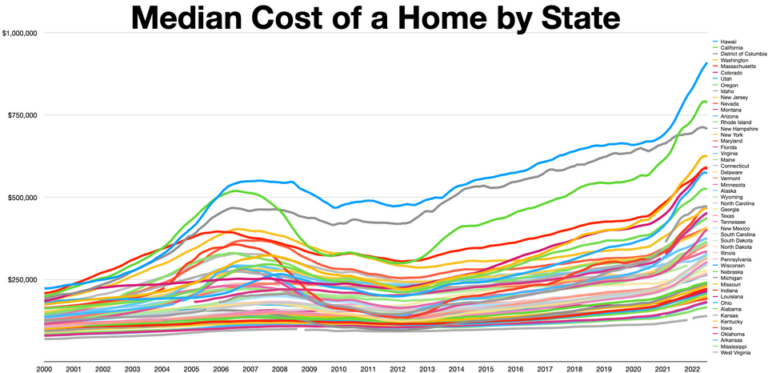
For homebuyers and current mortgage holders, the implications have been particularly significant. The median home price in the United States has remained elevated despite higher mortgage rates, reflecting both supply constraints in the housing market and strong demand from buyers seeking to lock in rates before potential future increases. First-time homebuyers have faced particular challenges, with monthly mortgage payments on median-priced homes in many metropolitan areas consuming 30% or more of median household income—the threshold traditionally considered affordable.

Small business owners, another critical Democratic constituency, have experienced mixed effects from the Fed’s policy trajectory. Higher interest rates increased borrowing costs for expansion and operations, which some businesses weathered successfully while others faced tighter constraints. The unemployment rate, however, has remained relatively low and stable, a positive outcome that reflects the Fed’s emphasis on its employment mandate. This labor market resilience suggests that the aggressive rate hikes, while painful in some sectors, avoided triggering the severe recession that critics feared.

The relationship between inflation and interest rates warrants closer examination. Economists measure the “real” interest rate by subtracting inflation from the nominal rate—the rate you actually see advertised. In 2022, when inflation soared to 8% while the Fed kept rates near zero, the real rate was deeply negative, meaning savers lost purchasing power. This dynamic sparked considerable debate about whether the Fed had maintained accommodative policy too long following the pandemic. By 2023, as the Fed achieved its peak rate of 5.5%, the real rate turned restrictive, finally putting downward pressure on inflation. The 2025 projection of a real rate between 1.25% and 1.75% suggests policy will move toward a more neutral stance—neither aggressively fighting inflation nor stimulating the economy.

Savers have benefited significantly from recent rate levels, as high-yield savings accounts and money market funds have become more attractive alternatives to traditional checking accounts. Banks, competing for deposits to fund lending, have passed some of the Fed’s rate increases directly to consumers. Conversely, borrowers—particularly those with adjustable-rate mortgages, home equity lines of credit, or variable-rate student loans—have faced increased carrying costs. This distributional effect has prompted discussion about whether monetary policy adequately considers equity concerns alongside efficiency.

The inflation battle also has important sectoral dimensions. Goods prices, particularly for automobiles and durable goods, fell from their 2022 peaks as supply chains normalized and demand moderated. Energy prices, driven significantly by geopolitical factors and OPEC+ production decisions, remain volatile. Housing costs, reflected in shelter prices that comprise roughly 40% of the consumer price index, have remained sticky and continue to pressure overall inflation metrics. The Fed’s challenge in 2

Us Economy Outlook

0
Us Economy Outlook

As we move into the current period, the US economy finds itself navigating a delicate balance after the Federal Reserve’s extended series of rate increases aimed at taming post-pandemic price surges. The resilience shown so far is notable, yet questions persist around how durable the expansion will prove, how sticky certain inflation components remain, and what external shocks could alter the path. Drawing from my time as a policy analyst, I see the transmission mechanism of monetary tightening working through borrowing costs and credit availability, though with lags that make precise timing difficult to forecast.

Economic growth has settled into a moderate range, with real GDP figures reflecting a shift from the sharper rebounds seen earlier. Consumer spending, which accounts for roughly 70 percent of activity, has held up but at a tempered pace amid elevated rates. The data behind quarterly readings shows some variation: for instance, the annualized growth in Q4 2023 came in at 3.4 percent year-over-year 3.1 percent, driven by household outlays and government outlays, while Q1 2024 slowed to 1.6 percent annualized amid softer demand and inventory shifts. Later quarters stabilized near 2.3 to 2.8 percent, with business investment and exports providing support in spots. As someone who worked in policy analysis, the mechanism here involves cumulative interest-rate effects curbing housing starts and capital spending, especially with mortgage rates near 7 percent and manufacturing facing input-cost pressures from trade frictions.

Inflation metrics tell a story of gradual disinflation that has yet to fully reach the Fed’s 2 percent objective. The Consumer Price Index has fallen from its 2022 peak above 9 percent, landing at 2.6 percent year-over-year by January 2025, while core CPI sits higher at 3.2 percent and PCE inflation at 2.4 percent. Wage growth has eased to 3.8 percent in the private sector. The data behind this claim is actually more nuanced than reported, particularly in services where healthcare and shelter components adjust slowly due to structural supply constraints and lagged rental-contract renewals. Labor costs continue feeding into prices, complicating the Fed’s task of calibrating further easing without reigniting pressures.

The labor market retains underlying strength, with the unemployment rate rising only modestly from 3.4 percent in 2023 to around 4.2 percent recently—still low by historical standards. Monthly job gains have averaged near 200,000, down from the 400,000-plus pace during the recovery surge, and openings have declined, easing some wage pressures. Participation rates have improved but lag pre-pandemic benchmarks, especially for older workers. Sectoral patterns show gains concentrated in professional services and healthcare, offset by softness in retail and manufacturing.

Federal Reserve actions have shifted from outright tightening to a more measured stance. After lifting the federal funds target to 5.25-5.50 percent in 2023 and holding through much of 2024, the central bank implemented 25-basis-point reductions in December 2024 and January 2025, moving the range to 4.75-5.00 percent. Guidance points to two or three further cuts this year if inflation cooperates. Chair Powell’s emphasis on data dependence aligns with standard implementation practice, where outcomes hinge on incoming readings rather than preset schedules; any upside surprise in prices could stall or reverse the path.

Equity markets posted solid gains through late 2024 and into the new year, with the S&P 500 advancing about 24 percent and the Nasdaq-100 rising 32 percent, fueled by technology earnings and AI-related enthusiasm. Concentration among a handful of large firms raises sustainability questions, even as forward price-to-earnings ratios hover near 18 times—not far from long-term norms. Small-cap underperformance and international market lags reflect rate sensitivity and geopolitical frictions.

Recession odds have eased to the 20-25 percent range, aided by a normalizing yield curve and steady consumer and corporate balance sheets. Risks center on energy-price spikes from geopolitics, trade-policy shifts, or delayed effects from prior tightening, while buffers include labor-market resilience and policy room at the Fed. Most forecasts cluster around 2-2.5 percent real GDP growth for the year, below trend but positive.

Turning to common questions, the Fed is expected to pause cuts once inflation settles near target and growth holds steady, potentially reaching a 4.25-4.50 percent range by year-end if data align. Recession probabilities remain low enough that contraction is not the base case, though external shocks could change that calculus. Persistent inflation above 2 percent stems largely from services categories with limited short-term supply elasticity, including healthcare delivery. Technology valuations appear elevated relative to the broader market yet reflect earnings growth assumptions that could justify premiums if sustained; concentration, however, amplifies downside exposure. Housing activity is likely to stabilize rather than surge, hinging on mortgage rates approaching 6 percent while supply and affordability constraints persist regionally.


Sources