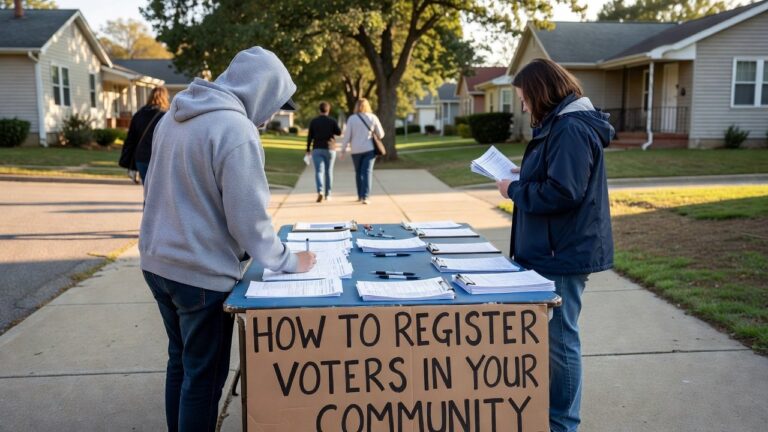
Voter registration at the community level remains one of the most direct levers for expanding participation in federal and state elections, a point Democratic policy architects have emphasized in repeated attempts to codify automatic registration and same-day options through measures referred to the House Administration Committee. Having covered the Hill for a decade, the procedural significance of these state-by-state variations becomes clear when tracing how Democratic-led chambers have advanced related provisions in appropriations riders and must-pass legislation, while Republican majorities have countered with stricter verification amendments.
Effective drives have demonstrably contributed to turnout among younger voters, communities of color, and lower-income households in cycles such as 2020 and 2022, where expanded rolls helped secure margins on priorities including infrastructure packages and safety-net enhancements. The legislative history behind these dynamics stretches back to post-2013 adjustments following the Shelby County decision, prompting renewed focus on outreach to offset measures like identification mandates and list maintenance in multiple states.
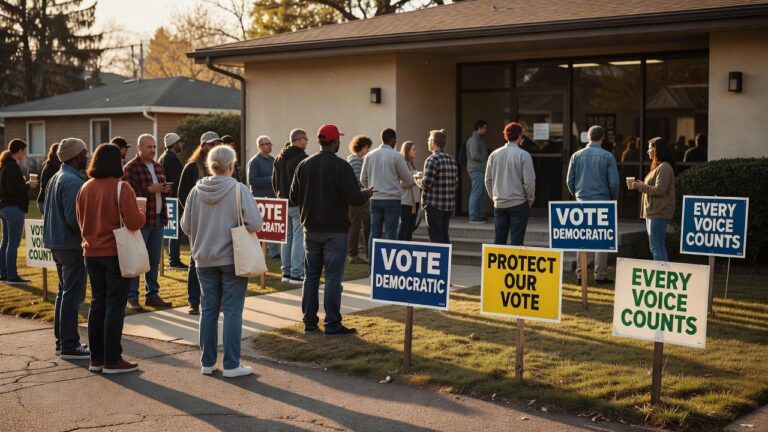
Successful targeting often centers on campuses, urban precincts, and emerging suburban pockets, frequently coordinated with local party committees and civil-rights organizations to meet state filing deadlines. This mirrors the ground-game tactics that Democratic campaigns have refined through coordinated campaign structures, ensuring compliance while building lists for subsequent primaries that set nominees in battleground districts. Strategic site selection matters significantly—communities experiencing rapid population growth, areas with historically low registration rates, and neighborhoods with recent demographic shifts represent high-impact targets for organizers seeking to maximize returns on volunteer time and resources.
Organizers typically begin by consulting state election board portals for eligibility rules, noting that most jurisdictions close registration 30 days out though several Democratic-controlled states have implemented same-day provisions. Materials range from paper forms to tablet-based systems, deployed at markets, festivals, and community sites. Volunteer training stresses citizenship, age, and residency criteria alongside neutral phrasing to maintain trust, with goals calibrated to hundreds of submissions per event and immediate follow-up contacts to confirm processing ahead of primaries.
Understanding your state’s specific requirements is foundational before launching any registration initiative. Each state maintains distinct rules regarding citizenship verification, residency periods, and felon disenfranchisement policies. For instance, some states require proof of citizenship at registration while others verify status through existing databases like Social Security records. Organizers should create checklists aligned with their jurisdiction’s requirements and ensure all volunteers understand these variations, as incorrect information can result in registration rejection or, worse, discourage potential voters from future participation. Many states offer downloadable guides from their Secretary of State offices, often available in multiple languages, which should be incorporated into training materials.
Legal adherence requires attention to local solicitation ordinances and coordination with established nonprofits to avoid any appearance of coercion, a safeguard that parallels the compliance frameworks Democratic reformers have advocated in voting-rights markup sessions. Documentation of each submission aids in progress tracking and reporting to stakeholders. Beyond formal legal requirements, maintaining ethical standards protects the credibility of registration efforts and the broader voting-rights movement. This includes never pressuring individuals to register, respecting privacy concerns, and promptly correcting any errors in submitted forms. Organizations conducting registration drives should establish clear protocols for handling sensitive personal information and consider cybersecurity measures if collecting data digitally.
Digital platforms now enable online submissions across most states, integrated with public-record matching that identifies unregistered individuals. These tools have processed more than 15 million forms in recent cycles, echoing efficiency arguments Democrats have advanced in committee debates on modernization. Partnerships with national networks supply training and resources, scaling efforts toward statewide pressure for extended early-voting periods. Organizations like Vote411.org, operated by the League of Women Voters, and Rock the Vote provide digital infrastructure that volunteers can leverage to streamline registration collection and immediately submit forms to state authorities. Mobile applications have further reduced friction, allowing voters to register via smartphone while standing in line at community events.
The relationship between registration timing and electoral outcomes deserves particular attention. Research indicates that registrations completed earlier in the cycle correlate with higher turnout rates, suggesting organizers should initiate drives well in advance of election day rather than concentrating efforts in the final weeks. This approach allows newly registered voters time to receive voter materials, familiarize themselves with candidate information, and address any processing issues before voting occurs. Some states now offer pre-registration for voters turning 18 shortly before elections, an option organizers should actively promote among high school students and youth groups.
Language access in Spanish, Mandarin, and additional tongues addresses participation gaps in diverse areas, while transportation support and virtual sessions assist seniors and working households. Data from states with automatic registration show turnout gains of up to 10 points among young and minority voters. Community efforts added over 2 million registrations in battlegrounds during the 2020 cycle, and research links every 1,000 new registrants from underrepresented groups to firmer backing for healthcare and education funding measures. Targeted urban drives have narrowed historic gaps influencing outcomes on wage and environmental legislation.
Building partnerships amplifies registration capacity significantly. Collaborating with community health centers, schools, libraries, labor unions, and religious organizations provides access to existing trust networks and regular foot traffic. Food banks, WIC offices, and social service agencies represent particularly fertile ground for registration drives, as they serve populations historically underrepresented on voter rolls. College and university student centers, community colleges, and vocational training programs should be priority venues for youth registration targeting. Establishing permanent registration stations in high-traffic locations—rather than relying solely on episodic events—creates ongoing opportunities for registration while reducing administrative burden.
Volunteer recruitment and training merit sustained investment. Effective registration drives require volunteers who understand both logistical processes and interpersonal skills necessary for respectful outreach. Training curricula should cover state-specific rules, common questions and answers, conflict de-escalation techniques, and cultural competency. Providing ongoing feedback to volunteers, celebrating milestones, and creating team-based competitions can sustain motivation throughout election cycles. Some successful programs pair experienced organizers with newer volunteers to facilitate knowledge transfer and improve retention.
Data analysis of registration outcomes reveals patterns that can guide strategic refinement. Tracking which venues, time slots, and volunteer configurations yield highest registration rates enables organizers to allocate resources more effectively in future cycles. Gender, age, and racial demographics of newly registered voters should be monitored to ensure outreach reaches intended communities. If particular neighborhoods show low registration despite outreach efforts, investigation may reveal barriers—transportation challenges, language access gaps, or community skepticism—requiring targeted solutions.
Sustained registration work, blending traditional canvassing with updated tools, builds networks that defend access provisions against subsequent challenges. Organizations that maintain registration infrastructure between election cycles develop institutional knowledge and volunteer networks prepared to mobilize quickly when voting-rights threats emerge or expanded registration opportunities become available through legislative action. The foundation built through consistent voter engagement work provides political power to support Democratic priorities extending far beyond electoral mechanics themselves.
Sources
- NPR Elections Coverage – Comprehensive reporting on voter registration and election processes
- Washington Post Politics Section – In-depth analysis of voting rights and registration initiatives
- AP News Election Coverage – Breaking news and guides on voter participation
- Reuters Politics – International and domestic voter registration reporting