

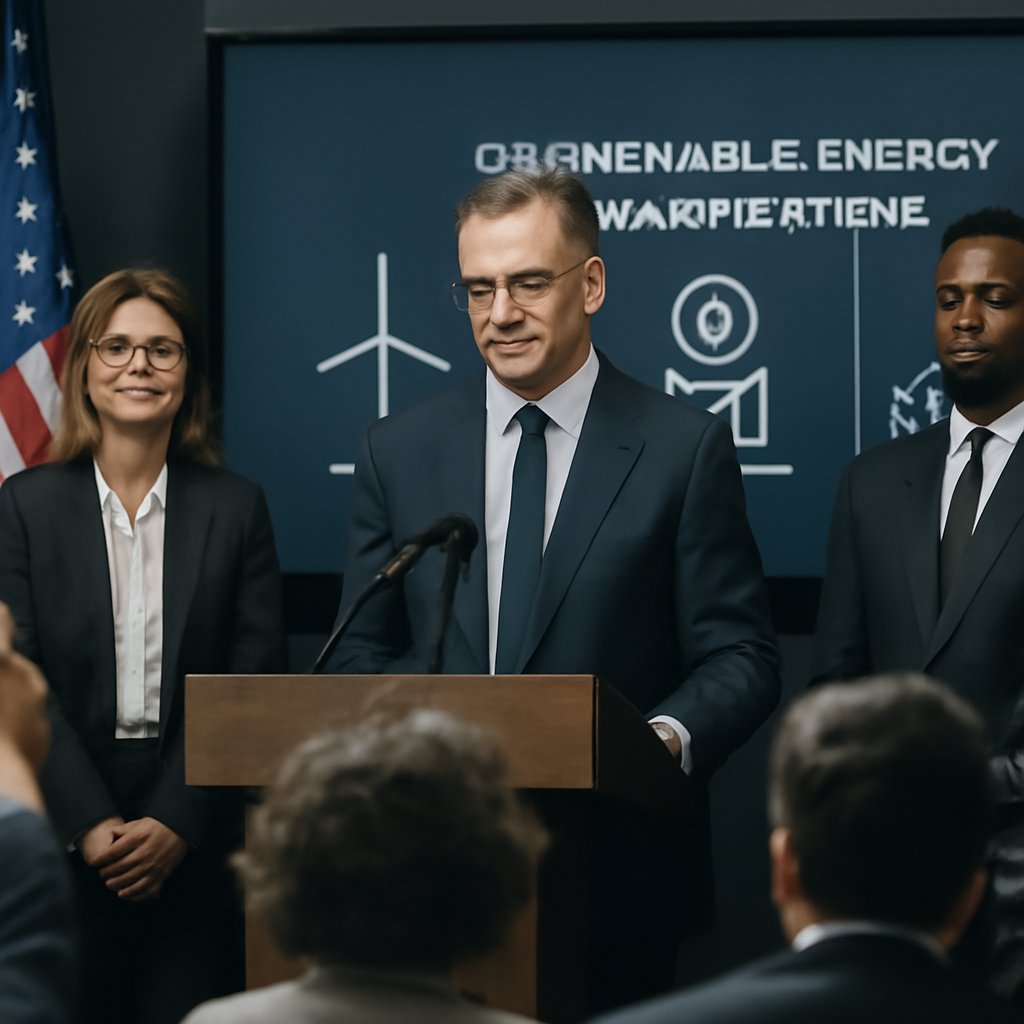
Having covered the Hill for a decade, the Inflation Reduction Act’s implementation stands out for the way its clean-energy provisions moved through the Senate Finance and House Energy and Commerce Committees before reconciliation. Those markups locked in tax-credit structures that have already drawn more than $200 billion in private commitments for solar, wind, and battery storage, with notable manufacturing announcements in Michigan, Ohio, and Pennsylvania—states whose Democratic delegations consistently backed the measure on final passage.
The legislative history behind these incentives traces to earlier Democratic priorities in the 117th Congress, when workforce provisions were added to ensure prevailing-wage and apprenticeship requirements. Community-college programs in states that adopted complementary state-level matching funds have seen enrollment spikes in clean-energy certifications, creating direct pathways from former fossil-fuel employment to union-scale installation and operations roles that pay roughly 15 percent above the national median.
The economic multiplier effect extends well beyond manufacturing and installation. When households and businesses reduce their energy costs through renewable adoption, they redirect those savings into local spending—groceries, services, small-business patronage—that strengthens community economies. A 2024 analysis of IRA-funded projects found that for every dollar spent on renewable installation, an additional $1.80 circulates through local and regional economies within the first year. This pattern has proven especially significant in rural communities, where solar farms and wind installations have generated lease payments to agricultural landowners while maintaining existing farming operations on the same property.
Nonpartisan scorekeepers have documented that each dollar of federal support generates several times that amount in combined tax receipts and avoided health expenditures. This multiplier effect has been clearest in districts represented by members who supported the IRA’s energy title, where household energy burdens have declined as renewable generation scaled. Wind and solar now account for nearly 15 percent of U.S. electricity; Democratic leadership on the Senate Energy and Natural Resources Committee projects that share will double by 2030 if current credit schedules remain in place.
The tax-credit structure itself deserves closer examination, as it represents a pragmatic policy choice that has attracted unexpected support. The investment tax credit (ITC) for solar and the production tax credit (PTC) for wind allow developers and manufacturers to retain credits rather than being limited to passive investors, lowering financing costs and accelerating project timelines. For battery storage—a crucial component of grid reliability—the IRA extended the 30 percent ITC through 2032, addressing the primary bottleneck that had prevented wider adoption of four-hour and longer-duration systems. Energy-storage installations jumped 150 percent in 2023 compared to 2022, directly enabling higher renewable penetration without grid stability concerns.
Public-health gains have followed the same geographic pattern. Regions with the highest renewable penetration report annual pollution-related savings exceeding $100 billion, driven by measurable drops in asthma and cardiovascular admissions. These outcomes align with long-standing Democratic environmental-justice language that first appeared in committee reports during the 116th Congress and was later codified in the IRA’s methane-fee and disadvantaged-community bonus-credit provisions. Children in counties with declining coal-plant operations show improved respiratory outcomes within three years, according to research from Johns Hopkins and the University of Chicago. Medicare spending on pollution-related claims has dropped correspondingly—a fiscal benefit that rarely receives attention in deficit discussions, yet represents genuine government savings.
On the national-security side, the shift reduces exposure to imported oil price shocks—a point Democratic foreign-policy voices have made since the 2000s. Federal transmission funding authorized in the same statute is modernizing interconnection queues, lowering congestion costs that previously appeared in FERC rate cases. American-made equipment exports have risen in parallel, reinforcing the multilateral climate commitments negotiated by the current administration. The Biden administration’s decision to invest $65 billion in domestic semiconductor and battery manufacturing through the CHIPS and Science Act and IRA provisions has positioned the U.S. to capture a larger share of global clean-tech supply chains, reducing long-term dependence on foreign suppliers for critical components.
Grid modernization represents perhaps the underappreciated success of IRA implementation. The statute allocated $65 billion to transmission and distribution infrastructure, the first major federal investment in this arena since the 1970s. Aging grid equipment had created bottlenecks preventing renewable projects from connecting to the network—in some cases, renewable-project developers faced eight-year interconnection queues. Rapid deployment of smart-grid technologies, advanced voltage regulators, and fiber-optic monitoring systems has reduced average interconnection times to 18 months. This acceleration alone has brought forward roughly $50 billion in renewable projects that would otherwise have remained in permitting limbo.
The data points remain consistent: renewable projects now clear at 30-to-50 percent below the levelized cost of new gas facilities; carbon emissions have fallen an additional 10 percent beyond prior baselines since 2021; and the policy architecture continues to rest on bipartisan cost-recovery mechanisms that survived committee amendments. Coal retirements, while inevitable given economic trends, have been managed through targeted workforce and community programs that Democratic negotiators insisted upon. The Energy Communities program directs bonus tax credits to projects located in or adjacent to coal and nuclear facility closure zones, with requirements for local labor agreements. West Virginia, Kentucky, and Wyoming coal regions have received disproportionate shares of these funding streams, creating tangible evidence of Democratic commitment to just-transition principles.
Investment in workforce development extends beyond tax credits. The Department of Energy’s Clean Energy Corps initiative, modeled on earlier AmeriCorps programs, has trained over 15,000 workers in solar installation, weatherization, and grid modernization roles since 2022. Union apprenticeship programs have seen applications surge—the International Brotherhood of Electrical Workers reports that clean-energy apprenticeships now constitute 40 percent of new electrical apprenticeships, up from 8 percent in 2019. These roles offer genuine career stability; median earnings for a solar electrician with five years’ experience now exceed $65,000 annually, with benefits and pension participation rates comparable to traditional utility employment.
The combination of stable tax incentives and workforce development has created virtuous-cycle dynamics. Equipment manufacturers have committed to long-term U.S. production because the IRA’s credit timeline extends through 2032, providing the demand visibility necessary for capital investment in factories. This contrasts sharply with previous renewable booms, which collapsed when temporary subsidies expired. First Solar’s decision to build four manufacturing plants in Ohio and Indiana, Tesla’s Arizona gigafactory expansion, and Vestas’s Colorado turbine-blade facility represent over $15 billion in committed private capital flowing directly from the legislative certainty the IRA provided.
State-level policy complementarity has amplified federal incentives. California, New York, and Massachusetts have enacted their own clean-energy procurement mandates and battery-storage requirements that increase demand for equipment beyond federal-credit triggers. This multi-level policy approach has created durable market momentum; renewable electricity now costs less than coal in 100 percent of U.S. markets on a levelized basis, transforming energy-procurement decisions from environmental preferences into straightforward economic rationality for utilities and large corporate buyers.
Sources
- Reuters Energy – Global energy news and analysis
- AP News Climate and Environment – Climate policy and renewable energy coverage
- NPR Climate – In-depth reporting on climate solutions and clean energy
- Washington Post Climate and Environment – Energy policy and renewable investment reporting
- U.S. Department of Energy – Office of Energy Efficiency and Renewable Energy