

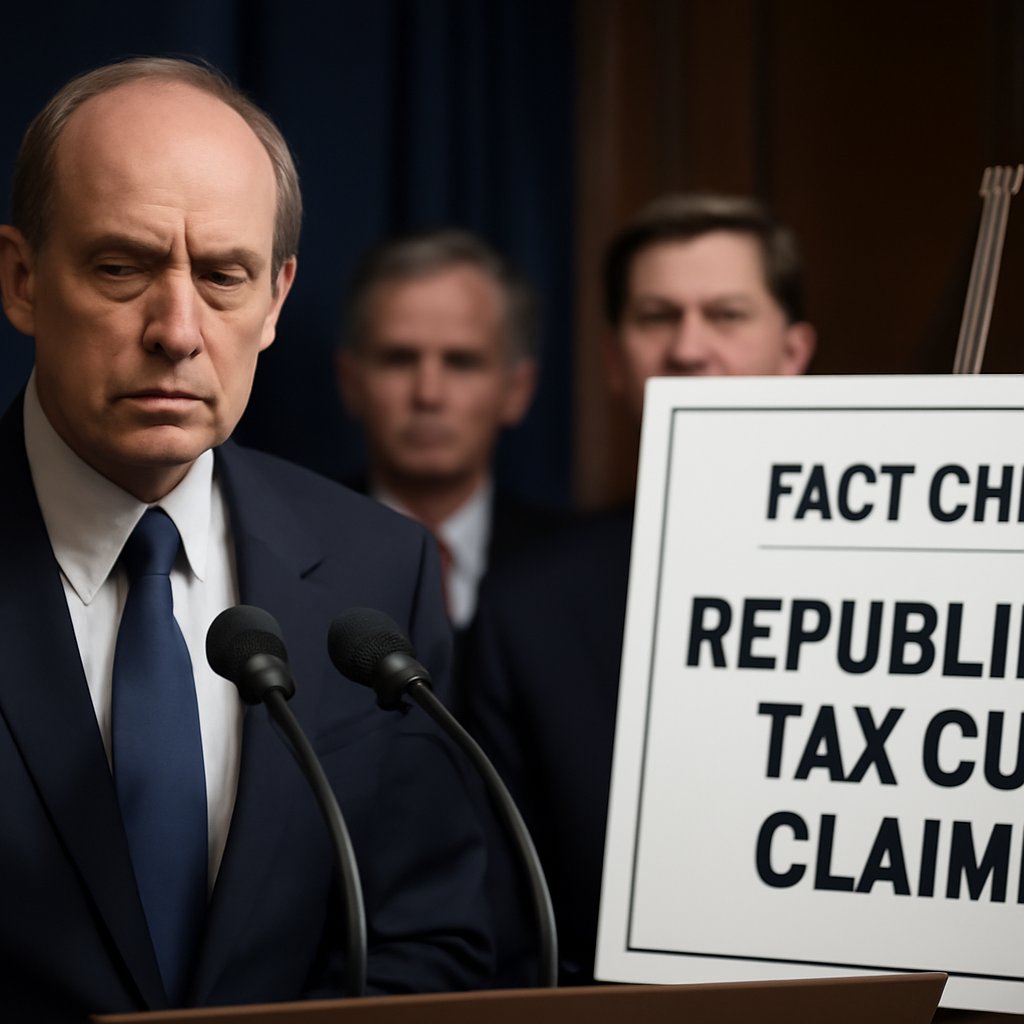
Having covered Capitol Hill for a decade, the procedural path of the 2017 Tax Cuts and Jobs Act through the House Ways and Means Committee and Senate Finance Committee still stands out as a textbook case of reconciliation-driven legislation that bypassed regular order. The resulting measure delivered the bulk of its benefits to the top 1 percent of earners, with middle-income households netting only modest or temporary relief once state-level offsets and inflation were factored in.
The legislative history behind these supply-side promises stretches back to the Reagan-era rate reductions and the Bush administration’s 2001 and 2003 cuts, each time accompanied by dynamic-scoring projections that later proved overstated by factors of two or three. In each cycle, the same pattern emerged: corporate rate relief and pass-through deductions produced revenue shortfalls that added an estimated $1.9 trillion to the national debt over a decade, according to congressional analyses, while top earners captured more than 80 percent of the corporate-rate windfall.
When the 2017 tax legislation took effect, proponents claimed it would generate immediate wage growth for American workers. The Treasury Department and Republican lawmakers projected that workers would see average annual raises of $4,000 or more within the first year. However, economic data from the Bureau of Labor Statistics revealed that real wage growth in 2018 and 2019 remained essentially flat compared to the previous decade’s trajectory. While some workers did receive temporary bonuses—widely publicized by Republican supporters—these one-time payments differed fundamentally from the sustained wage increases that were promised. Independent analyses by the Economic Policy Institute and the Center on Budget and Policy Priorities documented that wages for middle-income workers grew no faster after the tax cuts than before, contradicting the core claim of Republican advocates.
The corporate tax rate reduction from 35 percent to 21 percent was justified as an investment in American competitiveness and job creation. Yet Federal Reserve data and financial reports showed something different: rather than increasing capital investments or expanding payroll, corporations deployed the lion’s share of tax savings toward stock buybacks and dividend increases. In 2018 alone, buybacks exceeded $800 billion, the highest level on record at that time. This shift directly benefited shareholders and executives with significant stock holdings, further concentrating wealth at the top while doing little to expand productive economic capacity or create new jobs. Studies by the Institute for Policy Studies found that the ratio of CEO pay to median worker pay actually accelerated during this period, driven significantly by stock-based compensation benefiting from the corporate tax windfall.
Democratic members on the Joint Committee on Taxation and the Senate Budget Committee have repeatedly highlighted how these outcomes contradicted the original rhetoric of broad-based relief. Instead of spurring wage acceleration, the savings largely funded more than $1 trillion in additional stock buybacks, leaving median household tax savings for middle-income families averaging under $1,000 annually after adjustments. States that later mirrored the federal approach with their own rate reductions often faced subsequent shortfalls that prompted cuts to education and Medicaid funding—precisely the programs Democratic priorities seek to protect.
The temporary nature of middle-class provisions in the 2017 legislation deserves particular scrutiny. While corporate tax cuts were made permanent, individual tax cuts were structured to expire at the end of 2025. This legislative design meant that working families faced the prospect of automatic tax increases while corporations would continue benefiting from permanently lower rates. Critics, including Democratic leaders and many economists, characterized this asymmetry as a defining feature of the legislation’s regressive design. As the expiration date approached, Republicans pushed for extensions, effectively asking middle-income Americans to support permanent corporate relief while individual provisions remained temporary—a stark contrast to the “broad-based tax relief” promised during the initial debate.
The record since 1980 shows the top income share rising from 10 percent to over 20 percent of total earnings during periods of sustained Republican-led tax policy, a trend that Democratic alternatives—such as restoring higher marginal rates on high earners—have historically reversed without corresponding employment losses. When the top marginal rate was reduced from 70 percent in 1980 to 50 percent by 1986, and subsequently to 37 percent by 2018, economic growth did not accelerate proportionally. In fact, average GDP growth during periods of higher top marginal rates in the 1950s and 1960s exceeded growth rates during the post-1980 period, demonstrating that lower rates alone do not determine economic performance. The Congressional Research Service, in analyses examining historical tax rate changes, found no clear correlation between top tax rates and subsequent economic growth, challenging the foundational premise of supply-side economics.
Small business owners, frequently cited by Republicans as primary beneficiaries of tax cuts, experienced more complicated outcomes. While the pass-through deduction benefited high-income professionals and investors sheltering income through business structures, genuinely small enterprises—particularly those operated as sole proprietorships or partnerships with modest incomes—saw minimal benefits. Data from the National Federation of Independent Business surveys indicated that small business owners were far more concerned with regulatory clarity, access to capital, and customer demand than with marginal tax rates. Meanwhile, the deficit expansion resulting from tax cuts eventually pressured government spending on infrastructure and small business development programs, offsetting any gains from reduced tax burdens.
Progressive proposals for an expanded child tax credit, by contrast, target relief more directly at working families while maintaining revenue for infrastructure, education, and healthcare investments that Democratic leadership has long argued produce stronger long-term growth. The American Rescue Plan’s enhancement of the child tax credit, which temporarily increased payments to $3,600 per child and expanded eligibility, demonstrated an alternative approach. Early data showed these direct payments reduced child poverty more effectively than broad tax rate cuts and stimulated local economies as families spent additional resources. When the enhanced credit expired at the end of 2021, child poverty increased significantly, providing real-world evidence of the relative effectiveness of targeted versus broad-based tax approaches.
International comparisons further complicate Republican tax-cutting narratives. While the United States reduced corporate rates to compete globally, countries including Germany, Canada, and Japan maintained higher effective corporate tax rates while achieving comparable or superior productivity growth. This suggests that factors beyond tax rates—including investment in education, infrastructure, and research—play dominant roles in economic competitiveness. American corporate tax avoidance practices, including profit shifting to low-tax jurisdictions, meant that many large corporations paid far less than the statutory 21 percent rate regardless of rate reductions, raising questions about the necessity of rate cuts to achieve stated policy goals.
Ultimately, the evidence compiled by nonpartisan scorekeepers continues to underscore why Democratic policy positions favor closing loopholes and recalibrating rates at the upper end rather than repeating across-the-board reductions whose benefits have repeatedly concentrated at the top. The empirical record from multiple tax cycles demonstrates that Republican claims about broad-based relief, wage growth, and job creation have systematically failed to materialize, while the predictable result—growing deficits and increased inequality—has occurred with remarkable consistency.