

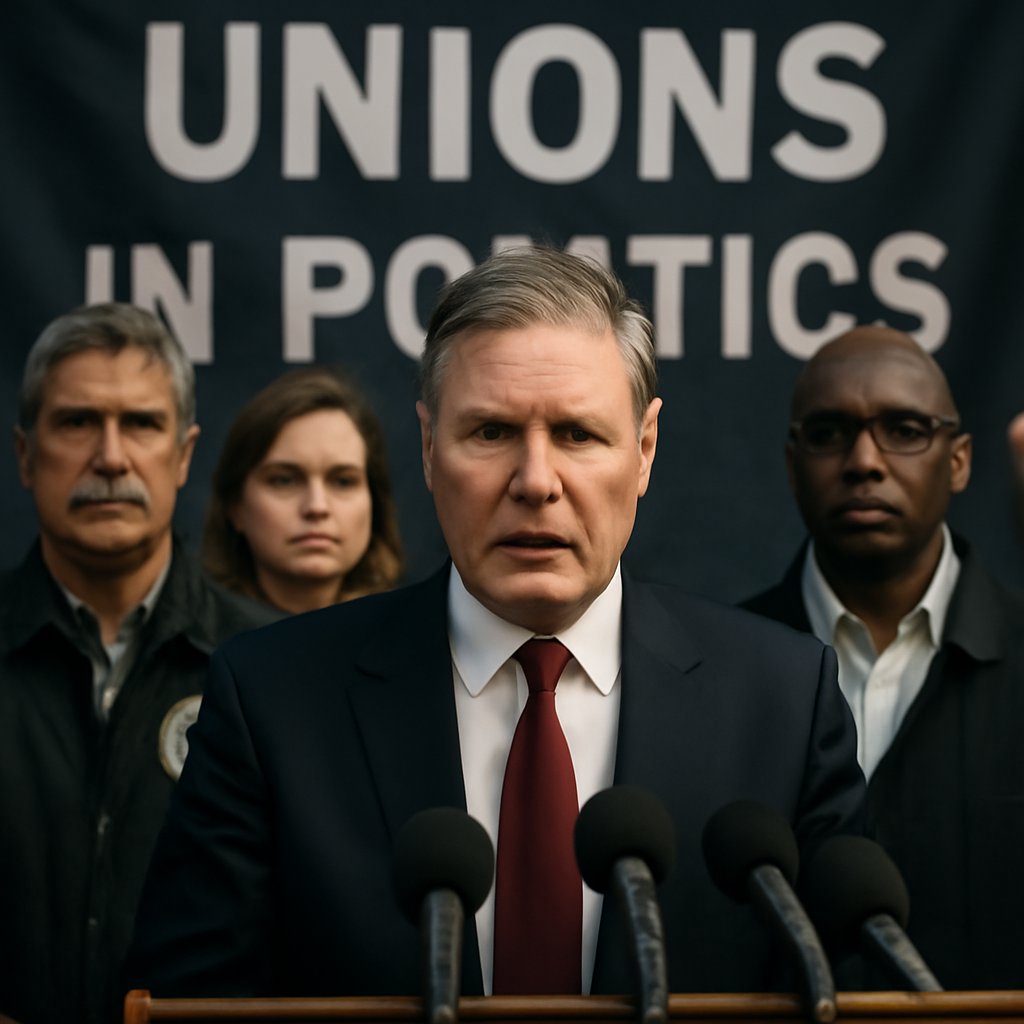
Labor unions have exerted measurable influence on U.S. economic policy for nearly a century, though the mechanisms of that influence are often presented in overly simplified terms. As someone who worked in policy analysis, the mechanism here is straightforward: unions translate member dues into both electoral infrastructure and detailed legislative drafting, which then shapes the implementation details of statutes ranging from wage floors to healthcare delivery systems.
The National Labor Relations Act of 1935 established the legal architecture for collective bargaining that still governs most private-sector representation elections. Its provisions on unfair labor practices and majority-rule certification created the procedural pathway through which unions could extract concessions on wages and benefits. Walter Reuther’s United Auto Workers leveraged that framework during the 1940s and 1950s to tie pattern bargaining in manufacturing to broader expansions of Social Security and unemployment insurance—programs whose actuarial design still affects today’s middle-income households.
Data behind the claim of union households voting Democratic at rates exceeding 55 percent is actually more nuanced than reported; exit polls from the last three cycles show variation by state and by whether the household contains current or retired members. States with union density above the national average of roughly 10 percent do tend to sustain higher Medicaid enrollment and more frequent minimum-wage adjustments, yet causation runs through multiple channels, including urban concentration and public-sector employment patterns rather than union activity alone.
Union political action committees remain major conduits for campaign funds, with contributions concentrated in battleground House districts and Senate races. Their voter-contact operations, often executed through worksite stewards, have proven effective at raising turnout among lower- and middle-wage workers. When the Inflation Reduction Act was drafted, union negotiators secured prevailing-wage requirements and domestic-content bonuses for clean-energy tax credits; those provisions directly affect project labor costs and the geography of new manufacturing facilities.
The relationship between unions and the Democratic Party, while historically strong, deserves examination beyond simple assumptions of lockstep alignment. Union leadership has leveraged its voting bloc and grassroots organizing capacity to extract specific policy commitments rather than provide unconditional support. The AFL-CIO’s formal endorsement process, for instance, involves detailed candidate questionnaires on issues ranging from right-to-work opposition to healthcare expansion, with scores determining the level of organizational commitment. This transactional approach means unions will occasionally withhold or redirect resources if candidates fail to meet threshold commitments, a lever particularly visible in primary elections where union-backed candidates compete against well-funded centrist opponents.
Public-sector unions represent a distinct political force from their private-sector counterparts, though both typically align with Democratic platforms. Teachers’ unions, municipal workers’ organizations, and firefighters’ unions bring different priorities to legislative negotiations—particularly regarding pension security, civil service protections, and education funding. The California Teachers Association and the National Education Association have deployed substantial resources toward ballot initiatives and state legislative races, sometimes in direct opposition to Democratic governors on charter school and education-reform questions. This complexity reveals that “union political power” cannot be treated as a monolithic force but rather as a collection of often-coordinated but occasionally divergent interests.
Beyond direct wage effects, unions have pressed for paid family leave mandates and childcare subsidies in state legislatures. Implementation of these benefits varies sharply: states that folded leave into existing temporary-disability insurance systems achieved faster uptake and lower administrative overhead than those creating standalone programs. Research from multiple sources confirms that union-represented establishments post lower rates of OSHA-recordable injuries, though the magnitude of the effect depends on industry and establishment size.
The funding mechanisms for union political activity deserve closer examination. Beyond PAC contributions, which are limited to $5,000 per candidate per election cycle, unions finance independent expenditure committees that can raise and spend unlimited funds. During recent election cycles, union-affiliated super PACs have directed hundreds of millions toward television advertising in swing states and competitive congressional districts. These expenditures often focus on kitchen-table issues—healthcare costs, childcare availability, wage stagnation—rather than abstract ideological messaging, reflecting careful microtargeting of working-class voters in persuadable demographics.
Unionization rates tell a crucial story about political capacity and economic leverage. The private-sector union density of approximately 6 percent contrasts sharply with public-sector density near 34 percent, a bifurcation that shapes political priorities across regions. In states like New York and California, where public-sector unions represent substantial voting blocs, pension obligations and education funding dominate union political agendas. In states with minimal unionization, union political infrastructure operates at reduced capacity, affecting the effectiveness of voter-contact operations and legislative lobbying.
The organizing landscape has shifted dramatically in response to sectoral economic changes. Manufacturing unions, once the backbone of organized labor’s political power, have contracted from representing roughly one-third of the private workforce in the 1950s to less than 5 percent today. Contemporary organizing targets fast-growing sectors with younger, more diverse workforces: Amazon warehouse workers, healthcare service providers, domestic workers, and gig-economy participants. These new organizing campaigns often emphasize racial and gender justice alongside traditional wage-and-benefit demands, reflecting demographic shifts in the labor force and political evolution within union leadership.
Current headwinds include right-to-work statutes in 27 states and the long-term decline in private-sector membership. Modern organizing drives now target warehouse, healthcare, and logistics workers rather than legacy manufacturing plants. Digital tools for card-check authorization and remote grievance filing represent adaptations to a workforce with higher turnover and dispersed work sites. The National Labor Relations Board’s composition directly affects organizing capacity; Democratic appointees have historically certified elections and enforced unfair labor practice charges more readily than Republican appointees, creating pronounced swings in organizing success across presidential administrations.
Union influence on specific legislative outcomes extends beyond headline provisions to granular implementation details that profoundly affect policy effectiveness. When Congress passed the American Rescue Plan in 2021, union negotiators secured language preventing states from using relief funds to balance budgets, protecting state employment levels and preventing public-sector layoffs. Similarly, prevailing-wage requirements negotiated into the Bipartisan Infrastructure Law and Inflation Reduction Act create enforceable standards affecting project viability and labor cost projections for years into the future.
Over 14 million workers still carry union cards, giving organized labor a persistent, if diminished, seat at the table when Congress considers extensions of the earned-income tax credit or adjustments to Medicare reimbursement formulas. The stakes of union political engagement extend beyond member material interests; union platforms increasingly address issues like climate policy, immigration, and criminal justice reform, positioning organized labor as a coalition partner within the broader Democratic ecosystem rather than a single-issue advocate for labor-specific legislation.