

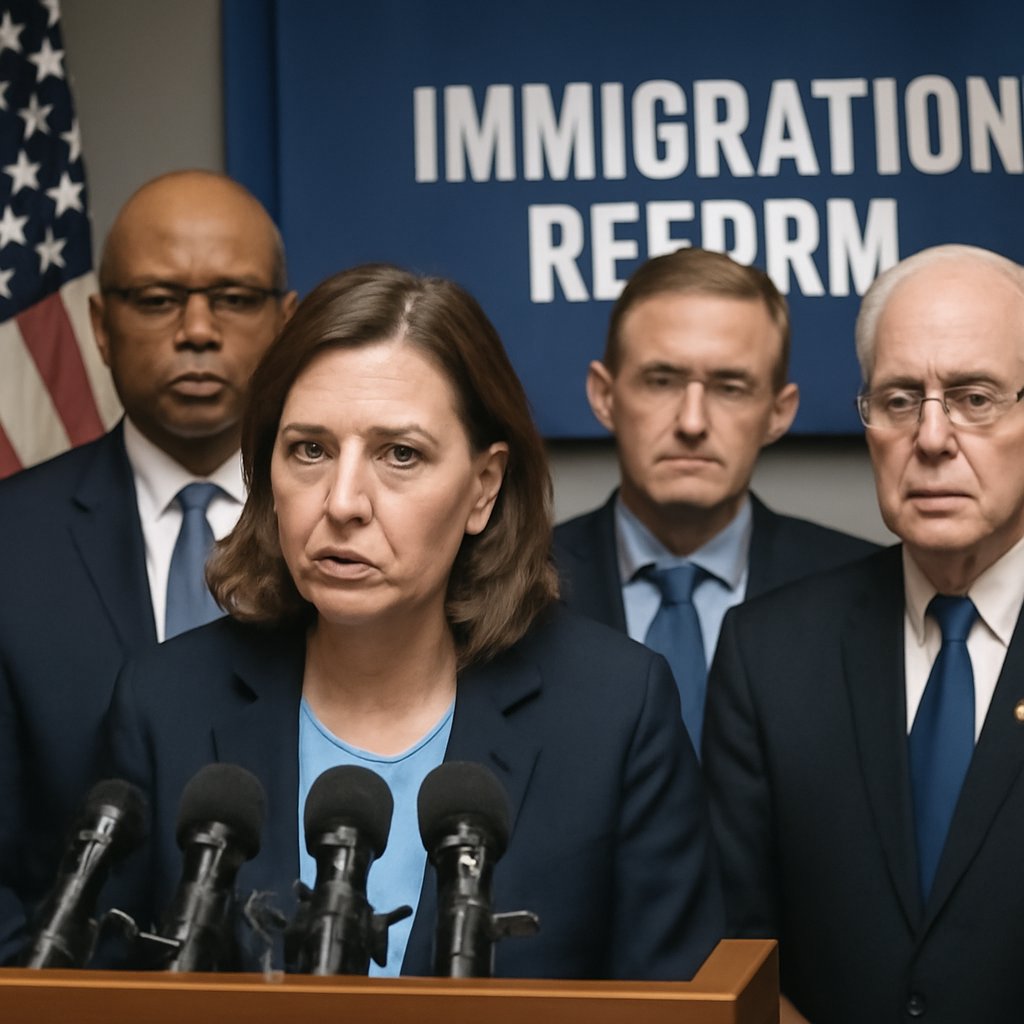
Having covered the Hill for a decade, Democratic approaches to immigration reform reveal a through-line that runs from the 1986 Immigration Reform and Control Act through the Senate Judiciary Committee markups of the early 2000s and into the current push for updated visa allocations. The legislative history behind this issue goes back to bipartisan efforts that paired employer sanctions with legalization for nearly three million undocumented immigrants, a recognition that enforcement alone could not resolve migration patterns then or now.
Democratic positions have consistently prioritized comprehensive legislation that pairs border management investments with earned legalization. This stands in contrast to narrower enforcement-only frameworks and reflects platforms that treat immigration as both an economic necessity and a constitutional imperative. Leaders such as the late Senator Ted Kennedy helped shape bills that balanced security measures with protections for long-term residents, threads that continue to inform proposals updating family-based and employment-based visa categories to reduce multi-year backlogs.
Core principles guiding these positions center on a pathway to citizenship requiring background checks, tax compliance, and continuous residency, alongside targeted protections for DACA recipients, unaccompanied minors, and asylum seekers. Recent platforms also emphasize technology-driven border processing and diplomatic engagement to address root causes in Central America. Having covered multiple cycles of these debates, the emphasis on reducing family separations through expanded legal representation in immigration courts and adjustments to detention practices reflects procedural lessons learned from repeated Senate floor failures on comprehensive packages.
Lawmakers have advanced measures including the U.S. Citizenship Act and successive iterations of the DREAM Act, securing incremental steps such as nationality-specific parole programs and increased asylum processing funding even when full reform stalled. The party also backs expanded temporary protected status designations. These efforts align with data showing roughly 11 million undocumented immigrants residing in the United States, most for over a decade, and estimates that legalization could contribute up to $1.5 trillion in cumulative GDP growth over ten years while reducing federal deficits through higher revenues, according to Congressional Budget Office analyses.
Over 800,000 individuals have held DACA protections since 2012, generating more than $42 billion annually in wages and taxes. Family-based immigration continues to account for about 65 percent of green cards issued yearly, a category Democrats seek to streamline. Border encounter fluctuations have prompted focus on processing capacity rather than solely physical infrastructure.
Democratic positions ultimately frame reform as a strategy integrating enforcement, economic growth, and humanitarian considerations. Continued advocacy underscores the view that regularizing essential workers and modernizing legal channels strengthens communities nationwide. As debates continue, these principles offer a consistent framework drawn from decades of committee work and floor votes.
The economic argument for immigration reform occupies central ground in Democratic messaging. Beyond the headline figures on GDP growth, party economists highlight sector-specific benefits. Agricultural production, hospitality, healthcare support, and construction sectors depend substantially on immigrant workers, many undocumented. Democrats argue that bringing these workers into formal systems through legalization improves labor standards across industries, reducing wage suppression that affects all workers. When undocumented immigrants lack legal status, unscrupulous employers can exploit them with below-market wages and unsafe conditions, creating downward pressure on standards. Regularization, coupled with stronger workplace enforcement, theoretically levels this playing field.
Healthcare considerations shape Democratic immigration positions in ways sometimes overlooked in broader policy debates. Immigrants, including undocumented individuals, contribute to healthcare systems through payroll taxes and sales taxes while often facing barriers to care. Democratic proposals typically include provisions expanding healthcare access for all residents regardless of immigration status, framed both as humanitarian necessity and public health imperative. The COVID-19 pandemic reinforced these arguments when advocates pointed to barriers preventing undocumented immigrants from seeking testing and vaccination, creating community health risks.
The administrative backlog in immigration courts represents another focal point for Democratic reform efforts. Currently, over 1.6 million cases await hearing before immigration judges, with average wait times exceeding three years in many jurisdictions. Democrats propose substantial increases in judicial resources, hiring additional immigration judges, and supporting staff to process cases more efficiently. This approach appeals to both humanitarian concerns—lengthy detention while awaiting hearings—and pragmatic efficiency arguments. Faster processing theoretically benefits all stakeholders: cases resolve more quickly, detention costs decrease, and employers gain clarity on employment eligibility sooner.
Democratic proposals also address what party members characterize as outdated visa allocation structures. The per-country caps in current law, established decades ago, create particular backlogs for countries with large populations and substantial immigration demand, particularly Mexico, China, and India. Skilled worker visa categories like H-1B face annual caps with lottery systems that don’t necessarily match labor market demands. Democrats advocate removing or raising per-country caps, expanding employment-based visa numbers, and creating new categories for essential workers in agriculture and service industries. These adjustments, advocates argue, would reduce irregular migration by providing legal pathways.
Climate change increasingly features in Democratic immigration reform discussions, though this remains an emerging policy area. Recognizing that environmental degradation and resource scarcity in Central America drive some migration, Democrats propose addressing root causes through international climate cooperation and development assistance. Some advocates discuss eventual policy frameworks for “climate refugees,” though such terminology remains contested and hasn’t yet produced major legislative proposals.
The intersection of immigration reform and criminal justice reform also shapes Democratic positions. Advocates note that current law can result in deportations for individuals convicted of crimes that might not, in other contexts, be considered serious. Democrats have pushed for greater judicial discretion in removal proceedings and elimination of certain offenses from deportability triggers. This reflects broader party positioning on criminal justice that emphasizes proportionality and second chances.
Labor unions represent an important Democratic constituency with historically evolving immigration positions. While some unions long opposed immigration expansion due to wage competition concerns, major labor federations now support comprehensive reform paired with strong labor enforcement provisions. Union arguments emphasize that undocumented workers undercut unionized labor, making legalization and workplace protections mutual interests. Democratic proposals typically include funding for labor enforcement agencies and provisions protecting workers’ rights to organize.
State and local implementation remains practical concern in Democratic immigration advocacy. Policies affecting driver’s licenses, public benefits, and law enforcement cooperation with federal immigration agents vary substantially by jurisdiction. Democratic platforms typically oppose federal mandates requiring state assistance with immigration enforcement, instead protecting “sanctuary” jurisdictions that limit such cooperation. This federalism angle reflects party priorities around local control and civil liberties, though it also creates complexity in implementation.
The debate over border security spending distinguishes Democratic from Republican approaches less than commonly understood. Democrats support border management investments, including technology, personnel, and physical infrastructure improvements. Disagreement typically centers on prioritization and design rather than whether borders require management. Democratic emphasis tends toward smart technology, adequate staffing, and humanitarian processing capacity rather than extensive wall construction. Cost-benefit analyses suggesting barriers prove less effective than technology and personnel inform these positions.
Looking forward, demographic trends inform Democratic immigration advocacy. Native-born population growth in the United States remains below replacement levels, while immigration represents the primary source of population growth. This demographic reality underpins Democratic arguments that immigration supports economic vitality, ensures tax base growth to sustain Social Security and Medicare, and maintains labor force growth as the population ages. These economic arguments, rooted in Congressional Budget Office analyses and Census Bureau data, provide substantial grounding for reform advocacy beyond humanitarian considerations.