

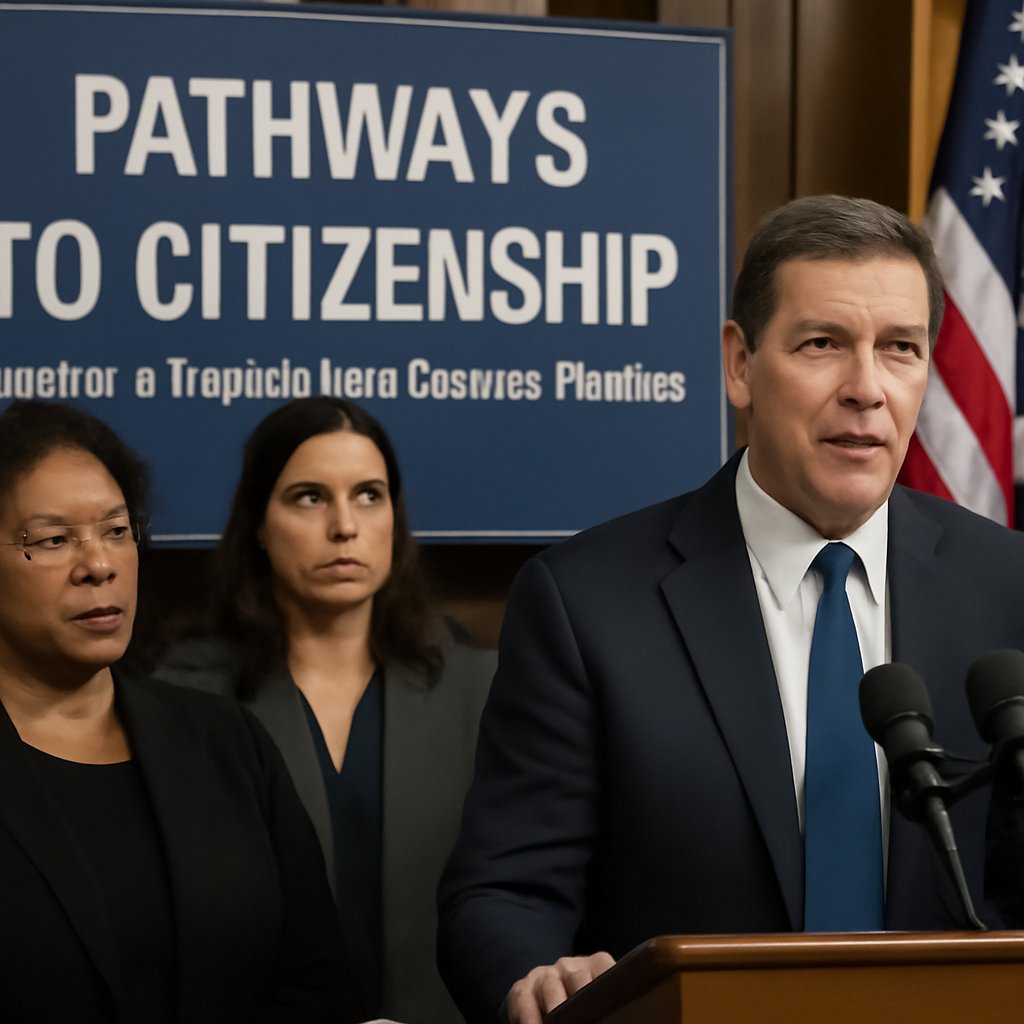
Immigration reform continues to occupy a central position in American political discourse, particularly around the design of pathways to citizenship for undocumented immigrants already residing in the United States. These mechanisms typically establish a sequenced route from registration and provisional status through permanent residency and naturalization, aiming to close long-standing administrative gaps while balancing enforcement priorities. As someone who worked in policy analysis, the mechanism here is best understood as a calibrated trade-off: legalization provisions are paired with verification layers drawn from existing tax and employment records to minimize new bureaucratic overhead, though implementation details often determine whether the system scales without creating fresh backlogs.
U.S. immigration statutes have evolved through successive waves of legislation that responded to labor market shifts, security imperatives, and humanitarian pressures. The Immigration Reform and Control Act of 1986 stands as a key precedent, extending legal status to millions of undocumented workers alongside new employer sanctions; later measures shifted emphasis toward expanded border resources and interior enforcement. Contemporary proposals routinely reference these earlier frameworks when calibrating new pathways, weighing record southern border encounters against persistent processing delays in family- and employment-based queues. Lawmakers must therefore integrate lessons on enforcement sequencing with current operational realities, a point where the data behind this claim is actually more nuanced than reported because past success correlated most strongly with sustained funding for technology and personnel rather than one-time legislative gestures.
Core pathway designs generally require an initial registration phase incorporating background checks and financial obligations such as fines or tax reconciliation, followed by temporary work authorization and eventual eligibility for green cards after a multi-year period of continuous residence. Naturalization then hinges on the standard statutory criteria of civics proficiency, English language ability, and good moral character, with some variants incorporating “earned” adjustments tied to military service or community contributions. Eligibility screening commonly prioritizes long-term residents without serious criminal histories, relying on cross-referenced government databases to reduce administrative friction; exemptions or accelerated timelines occasionally apply to individuals brought here as minors or those with U.S.-citizen relatives, helping contain implementation costs while preserving perceived fairness.
The Deferred Action for Childhood Arrivals (DACA) program, established through executive action in 2012, has demonstrated both the promise and limitations of administrative pathways outside the legislative framework. Over 800,000 individuals have received work authorization and temporary protection from deportation under DACA, enabling substantial workforce participation and educational advancement. However, the program’s precarious legal status—subject to court challenges and executive reversal—underscores why advocates emphasize the need for statutory pathways that provide durable legal status. Recent legislative proposals have sought to incorporate DACA recipients into broader legalization frameworks, recognizing that these individuals represent a cohort with deep community ties, educational investments, and demonstrated employment records that align with integration objectives.
Economic analyses from both governmental and independent sources have documented potential revenue gains and labor-force participation increases following legalization, as newly authorized workers experience wage growth that feeds into consumer spending and payroll contributions to programs such as Social Security and Medicare. At the same time, any realistic assessment must incorporate possible localized wage pressure in lower-skilled sectors and the marginal fiscal costs of expanded service access. Socially, these measures can reduce deportation-related instability within mixed-status households, thereby lowering downstream demands on public systems—an outcome that, from a policy-wonk perspective, merits closer scrutiny of longitudinal data rather than short-term snapshots.
Studies from the Center for American Progress and the Institute on Taxation and Economic Policy indicate that comprehensive legalization could contribute between $1.4 and $1.7 trillion to GDP over ten years, with significant payroll tax contributions offsetting public service costs. The Congressional Budget Office has similarly found that legalization scenarios produce net fiscal benefits in most long-term models, particularly when combined with enforcement measures that stabilize unauthorized inflows. These analyses assume adequate implementation funding and suggest that employment-sector specific legalizations—targeted at agriculture, construction, and hospitality—may generate faster economic returns than universal pathways, though policymakers increasingly view universal approaches as more administratively defensible and socially equitable.
The question of family reunification sits at the intersection of humanitarian and economic concerns. Current law maintains backlogs exceeding one million cases, with wait times for sibling sponsorships stretching beyond a decade in some visa categories. Pathway proposals often include provisions to clear historical family petition backlogs or expand the visa allocations available for family-sponsored immigration. These measures reflect both a recognition that family networks facilitate economic integration and employment success, and a political reality that family-based immigration commands substantial public support across demographic groups. However, expansion proposals frequently encounter resistance from those advocating for employment-based prioritization, creating a recurring tension in legislative negotiations.
Employer verification mechanisms represent a technical lynchpin in pathway design. The E-Verify system, mandatory in some states and industries, screens job applicants against Social Security Administration and Department of Homeland Security databases. While proponents emphasize its role in preventing hiring of unauthorized workers, critics point to documented error rates affecting U.S. citizens and the disparate impacts on hiring practices affecting workers of color. Comprehensive pathway proposals typically incorporate E-Verify improvements—particularly addressing false negatives and appeal procedures—alongside legalization, creating a system where newly documented workers benefit from enhanced verification infrastructure while employers face clearer compliance standards. This integration reflects lessons from failed employer-sanction approaches that generated widespread documentation fraud without meaningfully reducing unauthorized employment.
Achieving legislative consensus remains constrained by divergent priorities on border metrics, interior enforcement levels, and legal immigration ceilings. Some negotiators condition expanded legalization on verifiable reductions in unauthorized crossings, while others treat enforcement investments and status adjustments as parallel tracks. Recent proposals have increasingly framed asylum processing reforms as complementary to legalization, addressing the administrative bottlenecks that create mixed-status populations in the first place. This approach recognizes that a functioning asylum system—with adequate immigration judges, case management resources, and processing timelines measured in months rather than years—may reduce unauthorized crossings more effectively than border infrastructure alone.
State and local implementation presents a frequently underestimated challenge. Pathway programs require coordination across federal agencies, state vital records offices, and local law enforcement entities. Some states have proactively developed licensing and services frameworks compatible with legalization (such as driver’s license programs for undocumented immigrants), while others have adopted restrictive approaches that complicate enrollment in federal pathways. Successful implementation therefore likely requires federal funding for state and local capacity-building, a cost component often omitted from preliminary legislative estimates but essential for scaling beyond pilot programs.
The political economy of pathway design reflects deeper American disagreements about national identity and labor market structure. Restrictionist advocates argue that legalization reduces pressure to improve wages and working conditions in lower-skilled sectors, while expansionist voices contend that legalization strengthens labor standards by eliminating the vulnerability that depresses conditions across entire industries. These competing visions shape debates over interim work authorization, wage-floor provisions, and enforcement mechanisms. Historical compromises have included augmented border technology appropriations, expanded guest-worker visas, and asylum processing reforms, underscoring that durable policy change has typically required iterative stakeholder engagement rather than singular breakthrough legislation. Moving forward, successful reform will likely demand similar collaborative approaches, incorporating input from business groups, labor organizations, immigrant advocacy networks, and security professionals in designing systems that command sufficient political legitimacy for sustained implementation.
Sources
- Reuters Politics – Coverage of U.S. immigration policy and reform legislation
- AP News Immigration Hub – Breaking news and analysis on immigration reform
- NPR Immigration – In-depth reporting on citizenship pathways and policy
- Washington Post Immigration – Comprehensive coverage of immigration reform options
- The White House – Official immigration policy information and administration initiatives