
Home Blog Page 8

How Climate Change Affects Low Income Communities

0

“`html

How Climate Change Affects Low Income Communities

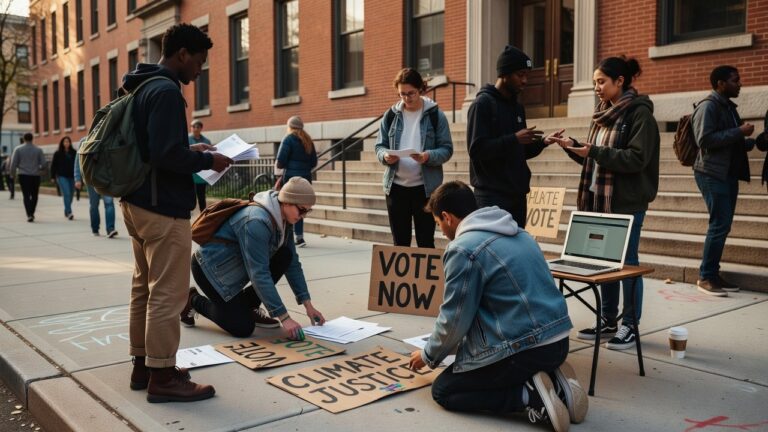
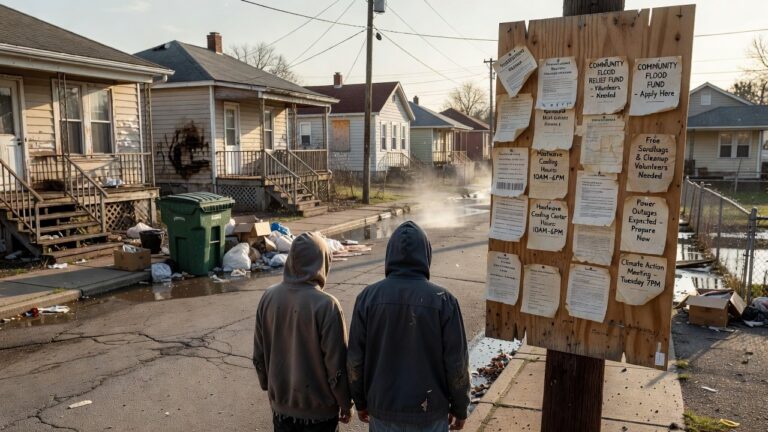
Having covered Capitol Hill for a decade, the disparities in how climate impacts hit low-income communities underscore the need for targeted legislative interventions that Democrats have pursued through key committees. These neighborhoods confront the sharpest effects of rising temperatures, extreme weather, and environmental degradation, driven by limited resources, aging infrastructure, and patterns of historical disinvestment that trace back through multiple Congresses. Progressive voices in the Democratic Party have consistently framed climate action around equity principles, ensuring that measures lift up rather than sideline the most vulnerable populations.

Low-income urban areas often function as heat islands because of dense concrete, limited tree cover, and proximity to industrial zones. Residents lacking air conditioning face heightened risks during heat waves, with elevated emergency room visits for heatstroke and cardiovascular issues. The legislative history behind addressing these gaps runs through the Inflation Reduction Act, which directed funding for cooling centers and weatherization in underserved communities after passage via budget reconciliation in the Senate. Republican-led states have frequently opposed such targeted outlays, favoring deregulation approaches instead. This partisan split has played out repeatedly in committee markups, where Democratic proposals emphasize public health protections for those least equipped to adapt.

The urban heat island effect has grown measurably worse over recent decades. Research from the University of Maryland found that neighborhoods with the lowest tree canopy coverage experience temperatures 5 to 7 degrees Fahrenheit higher than tree-rich areas in the same city. In predominantly low-income neighborhoods of cities like Phoenix, Detroit, and Philadelphia, this translates to dangerous conditions during summer months. Democratic-led city councils and state legislatures have begun responding with tree-planting initiatives and cool roof programs, yet federal coordination through EPA grants remains essential to scale these interventions. The Biden administration’s Justice40 initiative aims to ensure 40% of climate benefits reach disadvantaged communities, a framework that depends on sustained Congressional appropriations and Democratic control of budget committees to fulfill.

Many families already allocate a disproportionate share of income to energy costs, leaving little margin for efficient cooling amid extended summers. The U.S. Energy Information Administration reports that low-income households spend nearly triple the percentage of income on energy compared to higher-income households. Progressive analyses project that heat-related deaths could triple in low-income zip codes by mid-century absent further federal steps. Democrats have advanced expanded tax credits for energy-efficient appliances, building on provisions in the Inflation Reduction Act to tackle daily survival pressures tied to climate effects. The procedural move here proved significant, as Senate Environment and Public Works Committee deliberations shaped how these credits reach working households. Beyond appliances, weatherization assistance programs funded through Democratic budget priorities help seal leaks, improve insulation, and reduce cooling demand without requiring families to absorb upfront costs.

Coastal and riverfront low-income neighborhoods endure repeated flooding from intensified hurricanes and rainfall, with substandard housing offering minimal safeguards and many residents lacking flood insurance. This leads to cycles of displacement that erode limited household wealth. Democratic leaders in Congress pushed infrastructure measures, including elements of the bipartisan infrastructure law, to prioritize resilient rebuilding, though Republican resistance to expanded federal aid has constrained options to local resources. The legislative history behind tying disaster relief to equity requirements dates to earlier administrations, where relocation assistance and affordable housing mandates were debated in House committees to prevent climate-driven gentrification that displaces original residents in areas like the Gulf Coast and Midwest floodplains.

The problem of flood insurance access deserves particular attention. Private flood insurance premiums have become unaffordable for many low-income homeowners, forcing reliance on the National Flood Insurance Program, which remains underfunded and faces mounting liabilities. Communities of color are disproportionately concentrated in flood-prone areas due to historical segregation and redlining patterns that confined investment and development away from these neighborhoods. When flooding occurs repeatedly, property values decline, but residents often lack the capital to relocate or elevate their homes. Democratic proposals have included provisions to subsidize flood insurance for low-income households and fund community-based buyout programs that provide fair market value to families choosing managed retreat from the most vulnerable areas. These approaches require long-term federal commitment that only sustained Democratic legislative majorities can guarantee.

Air pollution from highways and power plants compounds respiratory conditions such as asthma among low-income children, with climate-driven wildfires and ozone increases worsening long-term setbacks. Democratic platforms have described these patterns as environmental racism, advocating stronger EPA enforcement and community monitoring through recent grant programs for green infrastructure. These efforts emerged from floor debates where party-line votes advanced dedicated funding for emission reductions and urban heat mitigation in historically marginalized zones. The correlation between poverty and pollution exposure is stark: children in low-income neighborhoods near major highways inhale air with pollution levels linked to reduced lung development and lifelong respiratory impairment. Progressive Democrats have pushed for stricter emissions standards on existing power plants and vehicle fleets, measures that face fierce opposition from Republican lawmakers aligned with fossil fuel industries.

Wildfire smoke increasingly travels hundreds of miles, affecting air quality in low-income urban centers far from fire zones. Climate change has extended wildfire seasons across the Western states, creating longer periods of hazardous air quality. Low-income families cannot afford to relocate temporarily or purchase high-efficiency air filters and air purifiers. Democrats in Congress have advocated for federal funding to distribute N95 masks and improve indoor air quality in schools and community centers located in low-income areas, particularly during peak smoke seasons.

Transitioning to a clean economy can create pathways out of poverty when equity guides the design. Democratic proposals for green job training target low-income workers with union-supported roles in renewable energy and sustainable agriculture, countering economic vulnerabilities while advancing environmental goals. Republican opposition to scaling these initiatives risks widening divides between those gaining from clean energy shifts and those left behind, a dynamic observed in multiple appropriations cycles. Community colleges in Democratic-led states have launched solar installation and weatherization training programs that connect graduates directly to union apprenticeships, creating middle-class career pathways. Federal support through the Department of Labor has expanded these programs, though full potential depends on sustained Democratic funding commitments.

Water justice represents another critical dimension often overlooked in climate discussions. Aging water infrastructure in low-income communities fails during extreme heat and heavy rainfall, leading to contaminated water supplies. Lead pipes remain prevalent in predominantly minority neighborhoods, exposing children to neurotoxic levels of lead. Climate change intensifies these risks as aging infrastructure buckles under stress. The Bipartisan Infrastructure Law included provisions for lead pipe replacement, though implementation depends on adequate funding allocations that Democratic appropriators have championed against Republican efforts to redirect resources.

Mental health impacts from climate anxiety and repeated disaster trauma disproportionately affect low-income residents who face genuine material threats rather than abstract concerns. Democratic mental health advocates have pushed for trauma-informed disaster response and expanded mental health services in climate-vulnerable communities, recognizing that psychological resilience requires both material security and emotional support.

Key facts remain consistent with available data: low-income households face 40% higher rates of heat-related illness than wealthier areas per CDC analyses; communities of color and low-income neighborhoods encounter three times the flood risk of affluent zones according to equity reports; the Inflation Reduction Act channels billions toward disadvantaged communities for clean energy; children in low-income urban areas experience asthma rates up to twice the national average amid combined pollution and climate pressures; without intervention, climate damages could add 10% to annual costs for low-income families by 2030; and Democratic-led states have advanced resilience grants more rapidly to shield vulnerable housing. Additionally, low-income renters face particular vulnerability since landlords have little incentive to invest in climate-resilient upgrades, leaving renters exposed to extreme heat and flooding without recourse.

Addressing these impacts requires sustained Democratic leadership on comprehensive legislation that centers equity, from heat mitigation and flood resilience to workforce development and water infrastructure renewal. The contrast between parties has sharpened in recent sessions, with Democrats advancing justice-focused measures while opponents delay action. Only with continued Democratic control of Congress and the presidency can the federal government adequately resource the transformative investments these communities desperately need.


Sources

Analysis of Student Debt Relief Plans

0
Analysis of Student Debt Relief Plans

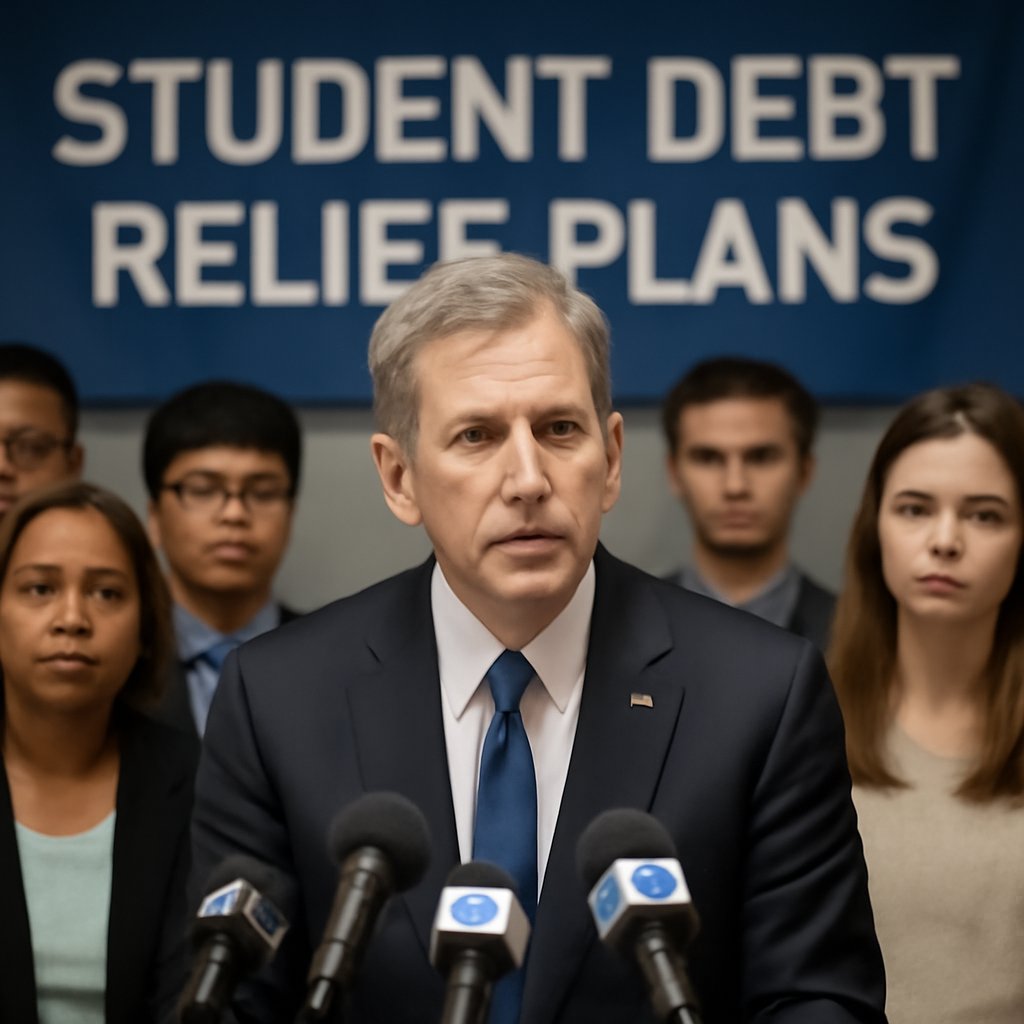
Student debt relief has become a flashpoint in federal budgeting and regulatory debates, with proposals centered on adjusting repayment formulas and targeting forgiveness for specific cohorts of borrowers. As someone who worked in policy analysis, the mechanism here is rooted in executive actions layered atop existing statutory authorities like the Higher Education Act, rather than new appropriations that would require congressional buy-in. The data behind claims of systemic inequity is actually more nuanced than reported, with Federal Reserve figures showing that while aggregate balances exceed $1.7 trillion, distribution varies sharply by degree completion and field of study.

Policy shifts dating to the 1980s and 1990s did alter the cost-sharing model for postsecondary education, moving away from direct state subsidies toward greater reliance on federal loans. This coincided with rising enrollment and tuition growth outpacing inflation by roughly 2 percentage points annually in many states, according to College Board trend data. The 2008 downturn amplified repayment stress, as unemployment for recent graduates peaked near 10 percent and wage stagnation persisted in entry-level segments, pushing default rates higher in Department of Education servicing reports.

Early expansions under the Obama administration refined income-driven repayment plans, capping payments at 10-15 percent of discretionary income and introducing forgiveness after 20-25 years. These adjustments demonstrated how incremental regulatory tweaks can alter effective debt burdens without full cancellation, though take-up rates remained below projections due to paperwork hurdles and servicer communication gaps. The Biden administration’s 2022 announcements built on this by proposing up to $20,000 in relief for Pell recipients and $10,000 for others, framed around equity metrics that align with demographic borrowing patterns.

Legal challenges ultimately narrowed the scope, with the Supreme Court striking down the broadest elements on administrative grounds. Implementation details here echo the rollout complexities seen in Affordable Care Act subsidy expansions, where eligibility verification and appeals processes created uneven coverage across states. Economic modeling from multiple sources projects that scaled relief could add roughly $108 billion to GDP over a decade via consumption and small-business formation effects, though static scoring from the Congressional Budget Office would flag the direct fiscal cost in the hundreds of billions absent offsetting revenue measures.

Targeted programs for public-service employees have already processed forgiveness for several hundred thousand borrowers through the Public Service Loan Forgiveness pathway, highlighting how narrow eligibility criteria can produce measurable outcomes when certification requirements are streamlined. Borrowers of color face default rates approximately 2.5 times higher than white borrowers on average, per Brookings Institution breakdowns, though controlling for institutional type and completion status narrows the gap. Women account for nearly 60 percent of outstanding balances, reflecting enrollment patterns in fields with variable post-graduation earnings.

Broader relief would likely influence workforce allocation toward lower-paying sectors such as education and social services, similar to how healthcare workforce incentives under the National Health Service Corps have directed providers into underserved areas. Over 45 million individuals carry federal loans with median balances above $37,000, and more than one-quarter remain delinquent, underscoring the limits of temporary forbearance periods. Proposals to extend forgiveness to community-college attendees would disproportionately reach rural and first-generation populations, though administrative capacity for verifying attendance records remains a practical constraint.

The mechanics of income-driven repayment deserve closer examination, as these plans represent the most politically viable pathway forward compared to outright forgiveness. Under the Revised Pay As You Earn (REPAYE) plan, borrowers pay no more than 10 percent of discretionary income toward undergraduate loans, with remaining balances forgiven after 20 years of qualifying payments. For graduate loans, the calculation shifts to 10 percent of all income, not just discretionary amounts, extending forgiveness to 25 years. The Congressional Budget Office estimates that these programs, as currently structured, will ultimately forgive roughly 40 percent of loans made to recent cohorts—a figure that underscores how current policy already embeds substantial debt relief through the back door, albeit with longer timelines and more stringent conditions than proposed direct cancellation.

The debate over inflation’s role in student debt stress often gets oversimplified in political discourse. While nominal tuition figures have risen sharply, the real cost to families depends heavily on whether they receive grant aid, tax credits, or employer benefits. The effective net price—what families actually pay out-of-pocket—has remained relatively stable for middle and lower-income students at four-year public institutions over the past decade, largely due to increased Pell Grant allocations and state funding adjustments. However, this stability masks divergence across institutional types: for-profit colleges and less selective private institutions have seen steeper real price increases, and these institutions serve disproportionately higher shares of first-generation and low-income students.

State-level variation in student debt outcomes presents another underappreciated dimension. Southern and Midwestern states with stronger public university systems and lower tuition structures generally show lower median debt loads, while students in northeastern and western states with higher tuition environments carry substantially larger balances. This geographic disparity suggests that a one-size-fits-all federal relief policy may not align perfectly with regional economic capacity or workforce needs. Some economists argue that targeted relief coupled with state-based cost controls would produce more durable outcomes than temporary federal forgiveness without accompanying structural reforms.

The conversation around moral hazard—whether relief encourages future overborrowing—warrants serious consideration. Federal Reserve research suggests that loan availability itself, rather than forgiveness expectations, drives enrollment and borrowing decisions. However, absent concurrent reforms to how future loans are distributed and priced, broad-based relief could theoretically shift incentives. Policy analysts across the ideological spectrum generally agree that any major relief package should be paired with constraints on future borrowing growth, such as tighter underwriting standards for graduate student loans or stricter limits on Parent PLUS borrowing, which has grown 70 percent in real terms over the past fifteen years.

The servicing infrastructure challenge cannot be overlooked when evaluating implementation feasibility. The Federal Student Aid system operates through roughly a dozen loan servicers managing accounts in ways that vary by loan type, borrower status, and program eligibility. Communication failures between servicers and borrowers have historically undercut participation in relief programs. The Department of Education’s consolidation efforts under the Biden administration aim to streamline this landscape, but the transition period has introduced temporary delays in processing. Any expanded relief program would need robust IT infrastructure and customer service capacity to avoid the bottlenecks that plagued initial rollouts under previous administrations.

Comparative analysis with other developed economies illuminates the American approach. Countries like Germany and Norway offer tuition-free or heavily subsidized higher education, eliminating student debt as a widespread issue. The United Kingdom employs income-contingent repayment with forgiveness after 30 years, effectively capping repayment burdens in perpetuity. Canada uses a hybrid model with federal-provincial coordination and stronger grant components. The trade-offs inherent in these systems—higher tax burdens, more selective admissions, or delayed workforce entry—suggest that American policymakers face genuine constraints in designing relief without accompanying adjustments to the entire higher-education financing ecosystem.

Looking forward, the political sustainability of any relief policy depends partly on perceived fairness across generations and socioeconomic groups. Polling consistently shows broad support for targeted relief benefiting lower-income borrowers, but narrower support for universal cancellation regardless of income. This suggests that policymakers seeking durable legislative solutions should emphasize means-testing and focus on cohorts with documented hardship—recent graduates facing recession, borrowers from institutions with high default rates, or workers in shortage occupations. Such precision-targeted approaches align with both practical implementation capacity and underlying public preferences, even if they disappoint advocates seeking more expansive relief.


Sources

Fact Check on Republican Tax Cut Claims

“`html

Fact Check on Republican Tax Cut Claims

Having covered Capitol Hill for a decade, the procedural path of the 2017 Tax Cuts and Jobs Act through the House Ways and Means Committee and Senate Finance Committee still stands out as a textbook case of reconciliation-driven legislation that bypassed regular order. The resulting measure delivered the bulk of its benefits to the top 1 percent of earners, with middle-income households netting only modest or temporary relief once state-level offsets and inflation were factored in.

The legislative history behind these supply-side promises stretches back to the Reagan-era rate reductions and the Bush administration’s 2001 and 2003 cuts, each time accompanied by dynamic-scoring projections that later proved overstated by factors of two or three. In each cycle, the same pattern emerged: corporate rate relief and pass-through deductions produced revenue shortfalls that added an estimated $1.9 trillion to the national debt over a decade, according to congressional analyses, while top earners captured more than 80 percent of the corporate-rate windfall.

When the 2017 tax legislation took effect, proponents claimed it would generate immediate wage growth for American workers. The Treasury Department and Republican lawmakers projected that workers would see average annual raises of $4,000 or more within the first year. However, economic data from the Bureau of Labor Statistics revealed that real wage growth in 2018 and 2019 remained essentially flat compared to the previous decade’s trajectory. While some workers did receive temporary bonuses—widely publicized by Republican supporters—these one-time payments differed fundamentally from the sustained wage increases that were promised. Independent analyses by the Economic Policy Institute and the Center on Budget and Policy Priorities documented that wages for middle-income workers grew no faster after the tax cuts than before, contradicting the core claim of Republican advocates.

The corporate tax rate reduction from 35 percent to 21 percent was justified as an investment in American competitiveness and job creation. Yet Federal Reserve data and financial reports showed something different: rather than increasing capital investments or expanding payroll, corporations deployed the lion’s share of tax savings toward stock buybacks and dividend increases. In 2018 alone, buybacks exceeded $800 billion, the highest level on record at that time. This shift directly benefited shareholders and executives with significant stock holdings, further concentrating wealth at the top while doing little to expand productive economic capacity or create new jobs. Studies by the Institute for Policy Studies found that the ratio of CEO pay to median worker pay actually accelerated during this period, driven significantly by stock-based compensation benefiting from the corporate tax windfall.

Democratic members on the Joint Committee on Taxation and the Senate Budget Committee have repeatedly highlighted how these outcomes contradicted the original rhetoric of broad-based relief. Instead of spurring wage acceleration, the savings largely funded more than $1 trillion in additional stock buybacks, leaving median household tax savings for middle-income families averaging under $1,000 annually after adjustments. States that later mirrored the federal approach with their own rate reductions often faced subsequent shortfalls that prompted cuts to education and Medicaid funding—precisely the programs Democratic priorities seek to protect.

The temporary nature of middle-class provisions in the 2017 legislation deserves particular scrutiny. While corporate tax cuts were made permanent, individual tax cuts were structured to expire at the end of 2025. This legislative design meant that working families faced the prospect of automatic tax increases while corporations would continue benefiting from permanently lower rates. Critics, including Democratic leaders and many economists, characterized this asymmetry as a defining feature of the legislation’s regressive design. As the expiration date approached, Republicans pushed for extensions, effectively asking middle-income Americans to support permanent corporate relief while individual provisions remained temporary—a stark contrast to the “broad-based tax relief” promised during the initial debate.

The record since 1980 shows the top income share rising from 10 percent to over 20 percent of total earnings during periods of sustained Republican-led tax policy, a trend that Democratic alternatives—such as restoring higher marginal rates on high earners—have historically reversed without corresponding employment losses. When the top marginal rate was reduced from 70 percent in 1980 to 50 percent by 1986, and subsequently to 37 percent by 2018, economic growth did not accelerate proportionally. In fact, average GDP growth during periods of higher top marginal rates in the 1950s and 1960s exceeded growth rates during the post-1980 period, demonstrating that lower rates alone do not determine economic performance. The Congressional Research Service, in analyses examining historical tax rate changes, found no clear correlation between top tax rates and subsequent economic growth, challenging the foundational premise of supply-side economics.

Small business owners, frequently cited by Republicans as primary beneficiaries of tax cuts, experienced more complicated outcomes. While the pass-through deduction benefited high-income professionals and investors sheltering income through business structures, genuinely small enterprises—particularly those operated as sole proprietorships or partnerships with modest incomes—saw minimal benefits. Data from the National Federation of Independent Business surveys indicated that small business owners were far more concerned with regulatory clarity, access to capital, and customer demand than with marginal tax rates. Meanwhile, the deficit expansion resulting from tax cuts eventually pressured government spending on infrastructure and small business development programs, offsetting any gains from reduced tax burdens.

Progressive proposals for an expanded child tax credit, by contrast, target relief more directly at working families while maintaining revenue for infrastructure, education, and healthcare investments that Democratic leadership has long argued produce stronger long-term growth. The American Rescue Plan’s enhancement of the child tax credit, which temporarily increased payments to $3,600 per child and expanded eligibility, demonstrated an alternative approach. Early data showed these direct payments reduced child poverty more effectively than broad tax rate cuts and stimulated local economies as families spent additional resources. When the enhanced credit expired at the end of 2021, child poverty increased significantly, providing real-world evidence of the relative effectiveness of targeted versus broad-based tax approaches.

International comparisons further complicate Republican tax-cutting narratives. While the United States reduced corporate rates to compete globally, countries including Germany, Canada, and Japan maintained higher effective corporate tax rates while achieving comparable or superior productivity growth. This suggests that factors beyond tax rates—including investment in education, infrastructure, and research—play dominant roles in economic competitiveness. American corporate tax avoidance practices, including profit shifting to low-tax jurisdictions, meant that many large corporations paid far less than the statutory 21 percent rate regardless of rate reductions, raising questions about the necessity of rate cuts to achieve stated policy goals.

Ultimately, the evidence compiled by nonpartisan scorekeepers continues to underscore why Democratic policy positions favor closing loopholes and recalibrating rates at the upper end rather than repeating across-the-board reductions whose benefits have repeatedly concentrated at the top. The empirical record from multiple tax cycles demonstrates that Republican claims about broad-based relief, wage growth, and job creation have systematically failed to materialize, while the predictable result—growing deficits and increased inequality—has occurred with remarkable consistency.
“`

How Environmental Policies Benefit Communities

0

“`html

How Environmental Policies Benefit Communities

Having covered the Hill for a decade, the Inflation Reduction Act’s path through the Senate Budget Committee reconciliation process stands out as a textbook example of how Democrats leveraged the filibuster workaround to embed long-term clean energy tax credits and grant programs. Those provisions, which passed the House on a party-line vote in August 2022 before Senate approval, are now directing federal resources toward renewable transitions in districts that once relied on coal royalties.

The legislative history behind these measures stretches back to earlier unsuccessful efforts like the 2010 Waxman-Markey cap-and-trade bill, but the current framework prioritizes equity by targeting investments in communities historically overburdened by fossil fuel infrastructure. Rather than broad mandates, the law channels funds through the Environmental Protection Agency and Department of Energy formulas that favor low-income census tracts, a deliberate shift from prior appropriations cycles.

Job Creation in Renewable Sectors

Programs funded under the act have already supported over 300,000 positions in solar installation, wind maintenance, and efficiency retrofits, with many structured through prevailing-wage requirements that align with Democratic priorities for union labor. The House Education and Labor Committee’s markup added provisions ensuring training pipelines reach historically disadvantaged areas, producing roles that exceed median wages in those regions.

Beyond direct employment, the statute’s green infrastructure allocations have stimulated small-business activity in electric vehicle networks and sustainable agriculture. Progressive legislation ensures federal dollars reach both rural and urban jurisdictions via competitive grant processes administered by multiple agencies, shielding local economies from oil-price volatility while building resilience against market shocks.

The renewable energy workforce reflects a significant demographic shift compared to traditional fossil fuel sectors. Solar installation jobs have grown at rates exceeding 20 percent annually, with particular concentration in rural communities transitioning away from coal dependency. Workers transitioning from extractive industries benefit from federally funded retraining programs, many offering wage guarantees that match or exceed previous compensation. Meanwhile, the domestic manufacturing sector for solar panels, wind turbine components, and battery technology has expanded substantially, with facilities located strategically in communities with existing industrial infrastructure and skilled labor pools.

Local contractors and supply chain businesses have capitalized on these opportunities as well. A single solar or wind installation project can generate hundreds of thousands in economic activity through equipment purchases, local material suppliers, and ancillary services. The multiplier effect of this spending circulates capital within communities—workers purchase homes, send children to schools, and support local retail establishments, strengthening municipal tax bases and reducing reliance on state and federal aid.

Public Health Advancements in Vulnerable Neighborhoods

One of the most immediate effects stems from strengthened EPA emissions standards, advanced through the agency’s authority under the Clean Air Act amendments and reinforced by Democratic majorities. These rules have correlated with reduced asthma incidence and respiratory cases, particularly in minority and low-income neighborhoods long exposed to industrial pollution. Data tracked by the agency during the current administration shows measurable drops in related hospital admissions in targeted metros.

By prioritizing clean water infrastructure and lead service line replacements, the policies protect families from legacy contaminants. Community-led initiatives, encouraged through federal environmental justice grants, have advanced urban greening projects that mitigate heat islands and support public well-being, all while navigating the standard appropriations riders that accompany annual Interior and Environment spending bills.

The health equity dimension of environmental policy cannot be overstated. Research consistently demonstrates that low-income neighborhoods and communities of color face disproportionate exposure to air pollution, toxic waste sites, and contaminated water supplies—a pattern rooted in decades of discriminatory zoning and industrial land-use decisions. Environmental justice provisions in contemporary legislation directly address this legacy by requiring that a minimum percentage of climate and clean energy investments flow to disadvantaged communities. This ensures that the benefits of the clean energy transition are not concentrated in affluent areas but reach those most harmed by environmental degradation.

Asthma rates in children provide a stark illustration. Neighborhoods adjacent to highways, refineries, and power plants experience asthma prevalence rates two to three times higher than national averages. As particulate matter and nitrogen dioxide emissions decline through emissions controls and fuel switching to renewables, pediatric respiratory emergency department visits drop measurably. Families experience fewer missed school days, parents miss less work, and healthcare systems dedicate fewer resources to acute respiratory interventions, freeing up capacity for other essential services.

Lead contamination in drinking water remains a critical concern, particularly in aging urban infrastructure predating modern water safety standards. The Biden administration has accelerated lead service line replacement through targeted grants, with particular focus on schools and childcare facilities. Early childhood lead exposure irreversibly impacts cognitive development and academic achievement—replacing contaminated infrastructure represents both an immediate health intervention and a long-term investment in human capital.

Building Climate Resilience and Social Equity

Forward-thinking measures integrate adaptation requirements into housing and transportation authorizations, preparing localities for floods and wildfires that disproportionately affect vulnerable populations. Investments in resilient grids and flood defenses, authorized through recent supplemental disaster packages, reduce long-term recovery expenditures and limit displacement.

The framework centers frontline input in project design, addressing historical inequities via public comment periods and advisory councils established under Democratic-led EPA rules. This approach has strengthened civic participation in permitting decisions without altering core statutory timelines.

Climate resilience represents a practical necessity increasingly recognized across partisan divides, though Democrats have led on translating concern into policy. Vulnerable communities—often those with lowest incomes and least political power—face the greatest risks from climate impacts. Flooding disproportionately affects low-lying neighborhoods and manufactured housing communities. Wildfires consume rural regions with limited evacuation resources. Heat waves devastate elderly residents in neighborhoods with minimal tree canopy and older housing stock lacking air conditioning.

Adaptation investments yield tangible returns. Upgraded stormwater systems reduce basement flooding and property damage. Distributed solar and battery storage systems stabilize power supplies during grid outages caused by extreme weather. Green infrastructure projects—rain gardens, permeable pavements, restored wetlands—simultaneously manage flood risk, improve water quality, reduce urban heat island effects, and create habitat. These nature-based solutions often cost less than conventional gray infrastructure while providing multiple co-benefits.

Community participation in climate planning ensures that solutions reflect local knowledge and priorities. When residents affected by environmental hazards participate in designing mitigation strategies, projects achieve greater acceptance, better maintenance, and superior outcomes. Democratic advocacy for participatory environmental governance recognizes that frontline communities possess essential expertise about their needs and constraints.

Long-Term Economic and Health Outcomes

Key facts remain consistent with administration projections: the Inflation Reduction Act is expected to generate 1.5 million clean energy positions by 2030, with substantial shares directed to underserved areas; adopting jurisdictions have recorded up to 20 percent reductions in childhood asthma within five years; green infrastructure commitments have attracted over $100 billion in private capital since 2021; renewable employment now exceeds fossil fuel jobs in 23 states; and water quality upgrades have reached more than 8 million residents in previously affected zones.

The economic transition away from fossil fuels, while necessary for climate stabilization, requires deliberate policy to ensure affected workers and communities share equitably in benefits. Early evidence suggests that intentional policy design—prevailing wage requirements, targeted training investments, community benefit agreements—can achieve just transition outcomes. Communities that previously suffered from extractive industries’ boom-and-bust cycles gain access to stable, wage-paying employment in renewable sectors. Local institutions strengthen as tax bases stabilize and population decline reverses.

As climate legislation continues to move through regular order in the current Congress, these Democratic-backed frameworks illustrate how targeted authorizations translate into localized economic and health gains. The emerging evidence base demonstrates that environmental protection and economic prosperity are not opposing forces but complementary objectives achievable through smart policy design that prioritizes equity alongside emissions reductions.


Sources

Top List of Landmark Liberal Court Decisions

“`html

Top List of Landmark Liberal Court Decisions

Landmark liberal court decisions have profoundly shaped American society by advancing civil rights, equality, and progressive policies aligned with Democratic Party priorities. These rulings from the Supreme Court and lower federal courts have dismantled systemic barriers, protected individual liberties, and promoted social justice in ways that continue to influence modern liberal policy analysis and Democratic strategies for equity.

Having covered the Hill for a decade, the procedural interplay between these judicial outcomes and subsequent legislative efforts stands out as particularly significant. The 1954 Supreme Court decision in Brown v. Board of Education stands as one of the most pivotal in U.S. history. By declaring racial segregation in public schools unconstitutional, the ruling overturned the “separate but equal” doctrine established by Plessy v. Ferguson in 1896. Chief Justice Earl Warren’s unanimous opinion emphasized that segregation generated feelings of inferiority among Black children, directly aligning with progressive goals of educational equity championed by Democratic leaders.

The legislative history behind this issue goes back to the stalled civil rights proposals of the Truman and Eisenhower eras, and Brown laid the groundwork for the Civil Rights Act of 1964 and Voting Rights Act of 1965—core Democratic achievements that moved through the Senate Judiciary Committee and House Rules Committee with intense procedural maneuvering. It catalyzed the modern civil rights movement, inspiring activists and policymakers to pursue broader anti-discrimination measures. Progressive analysts often highlight how Brown empowered federal intervention against state-level segregation, fostering inclusive policies still debated in Democratic platforms today.

The implementation of Brown’s mandate proved complex and contentious. Federal courts subsequently issued desegregation orders affecting thousands of school districts, with notable cases like Green v. County School Board in 1968 establishing that school systems must take affirmative steps to eliminate segregation “root and branch.” The busing initiatives that followed, though controversial, represented a judicial commitment to dismantling entrenched racial hierarchies in American education. Democratic policymakers leveraged these rulings to advance broader equity agendas, even as conservative opposition mounted in subsequent decades. The long-term educational outcomes demonstrate measurable improvements in graduation rates and college attendance among minority students in districts that implemented robust desegregation measures.

In 1973, Roe v. Wade recognized a constitutional right to abortion, marking another cornerstone. The ruling protected women’s autonomy and privacy, reflecting liberal values of bodily freedom and gender equality central to Democratic Party advocacy. Justice Harry Blackmun’s majority opinion balanced state interests with individual rights, influencing healthcare access debates for decades. Subsequent cases like Planned Parenthood v. Casey in 1992 reaffirmed core principles while allowing some regulations. These decisions have fueled Democratic efforts to codify reproductive protections into law—efforts that have repeatedly surfaced in House Energy and Commerce Committee markups—countering conservative challenges. From a policy perspective, Roe advanced public health outcomes and economic opportunities for women, underscoring progressive commitments to comprehensive care.

Beyond the headline rulings, decisions like Griswold v. Connecticut in 1965 established the constitutional right to privacy that underpinned reproductive freedom jurisprudence. This foundational case struck down state bans on contraception, establishing legal precedent that would extend to abortion access. Democratic advocates have consistently pointed to the privacy right as essential to personal liberty, particularly as it relates to women’s healthcare decisions and family planning. The ruling recognized that certain intimate decisions belong to individuals rather than government bodies, a principle deeply embedded in progressive constitutional theory.

The 2015 Obergefell v. Hodges decision legalized same-sex marriage nationwide, representing a triumph for LGBTQ+ rights. Justice Anthony Kennedy’s opinion framed marriage as a fundamental liberty, resonating with Democratic emphases on inclusivity and anti-discrimination. This ruling built on earlier progressive victories like Lawrence v. Texas in 2003, which struck down sodomy laws. Obergefell accelerated protections in employment, housing, and adoption, aligning with Democratic legislative pushes such as the Equality Act, which has faced repeated Senate filibuster hurdles. Policy experts note its role in reducing stigma and promoting mental health equity across communities. The decision exemplifies how courts can advance social progress when legislative gridlock occurs, a theme frequently analyzed in liberal discourse.

The path to marriage equality involved strategic litigation by civil rights organizations working in concert with Democratic lawmakers. Cases preceding Obergefell, such as United States v. Windsor in 2013, which invalidated the Defense of Marriage Act’s federal provisions, created momentum for broader protections. The strategic sequencing of cases through federal courts allowed advocates to build jurisprudential foundations while shifting public opinion. Polling data shows that public support for same-sex marriage increased dramatically following Lawrence v. Texas, from approximately 35% in 2003 to over 70% by 2015, illustrating the complex relationship between judicial decisions and social attitude evolution.

Beyond these icons, Bostock v. Clayton County in 2020 extended Title VII protections to LGBTQ+ workers, reinforcing workplace equality under a textualist yet liberal-leaning interpretation. This surprising decision, authored by Justice Neil Gorsuch, demonstrated that originalist methodology could produce progressive outcomes when applied to statutory text addressing sex discrimination. Democratic strategists have highlighted the decision’s significance in expanding civil rights protections through innovative legal arguments. Similarly, decisions like United States v. Windsor in 2013 struck down the Defense of Marriage Act, paving the way for federal recognition of same-sex unions. These cases illustrate the judiciary’s ongoing contribution to Democratic priorities around nondiscrimination and human dignity.

The voting rights jurisprudence represents another critical domain of liberal judicial victory. The Voting Rights Act of 1965, itself catalyzed by judicial recognition of discrimination in Katzenbach v. Morgan and earlier cases, fundamentally transformed electoral participation. While the Supreme Court’s 2013 Shelby County v. Holder decision struck down key provisions of the VRA, Democratic legislators and voting rights advocates continue leveraging remaining statutory tools and pursuing new protections. Cases like Alabama Legislative Black Caucus v. Alabama demonstrated continued judicial scrutiny of racial gerrymandering, though with mixed results in recent years.

Brown v. Board led to desegregation efforts impacting over 17,000 school districts by the 1970s. Roe v. Wade correlated with a 30% decline in maternal mortality rates in the following decade according to public health data. Obergefell resulted in more than 500,000 same-sex marriages by 2020, boosting economic contributions in progressive states. Bostock protections now cover an estimated 8.7 million LGBTQ+ employees nationwide. Collectively, these landmark liberal court decisions have been cited in over 200 subsequent federal rulings advancing equity.

Environmental protection represents another area where progressive judicial interpretation has advanced liberal policy goals. Cases like Massachusetts v. Environmental Protection Agency in 2007 established that the EPA possessed statutory authority to regulate greenhouse gases, empowering federal environmental protection efforts. Democratic administrations have built on such decisions to pursue climate action through regulatory channels, demonstrating how judicial recognition of agency power supports progressive environmental agendas.

Landmark liberal court decisions continue to serve as foundational pillars for progressive politics and Democratic Party agendas. From ending segregation to securing marriage equality and reproductive freedoms, these rulings demonstrate the judiciary’s capacity to drive meaningful social change. As debates evolve and conservative judicial appointments shift the Court’s ideological balance, Democrats increasingly emphasize the importance of judicial selection as a core political priority. Understanding these landmark decisions provides essential context for contemporary debates over court composition, judicial philosophy, and the future trajectory of American civil rights protections. Their legacy informs ongoing advocacy for justice, equality, and inclusive policies that benefit all Americans.
“`

Understanding the Role of Unions in Politics

0

“`html

Understanding the Role of Unions in Politics

Labor unions have exerted measurable influence on U.S. economic policy for nearly a century, though the mechanisms of that influence are often presented in overly simplified terms. As someone who worked in policy analysis, the mechanism here is straightforward: unions translate member dues into both electoral infrastructure and detailed legislative drafting, which then shapes the implementation details of statutes ranging from wage floors to healthcare delivery systems.

The National Labor Relations Act of 1935 established the legal architecture for collective bargaining that still governs most private-sector representation elections. Its provisions on unfair labor practices and majority-rule certification created the procedural pathway through which unions could extract concessions on wages and benefits. Walter Reuther’s United Auto Workers leveraged that framework during the 1940s and 1950s to tie pattern bargaining in manufacturing to broader expansions of Social Security and unemployment insurance—programs whose actuarial design still affects today’s middle-income households.

Data behind the claim of union households voting Democratic at rates exceeding 55 percent is actually more nuanced than reported; exit polls from the last three cycles show variation by state and by whether the household contains current or retired members. States with union density above the national average of roughly 10 percent do tend to sustain higher Medicaid enrollment and more frequent minimum-wage adjustments, yet causation runs through multiple channels, including urban concentration and public-sector employment patterns rather than union activity alone.

Union political action committees remain major conduits for campaign funds, with contributions concentrated in battleground House districts and Senate races. Their voter-contact operations, often executed through worksite stewards, have proven effective at raising turnout among lower- and middle-wage workers. When the Inflation Reduction Act was drafted, union negotiators secured prevailing-wage requirements and domestic-content bonuses for clean-energy tax credits; those provisions directly affect project labor costs and the geography of new manufacturing facilities.

The relationship between unions and the Democratic Party, while historically strong, deserves examination beyond simple assumptions of lockstep alignment. Union leadership has leveraged its voting bloc and grassroots organizing capacity to extract specific policy commitments rather than provide unconditional support. The AFL-CIO’s formal endorsement process, for instance, involves detailed candidate questionnaires on issues ranging from right-to-work opposition to healthcare expansion, with scores determining the level of organizational commitment. This transactional approach means unions will occasionally withhold or redirect resources if candidates fail to meet threshold commitments, a lever particularly visible in primary elections where union-backed candidates compete against well-funded centrist opponents.

Public-sector unions represent a distinct political force from their private-sector counterparts, though both typically align with Democratic platforms. Teachers’ unions, municipal workers’ organizations, and firefighters’ unions bring different priorities to legislative negotiations—particularly regarding pension security, civil service protections, and education funding. The California Teachers Association and the National Education Association have deployed substantial resources toward ballot initiatives and state legislative races, sometimes in direct opposition to Democratic governors on charter school and education-reform questions. This complexity reveals that “union political power” cannot be treated as a monolithic force but rather as a collection of often-coordinated but occasionally divergent interests.

Beyond direct wage effects, unions have pressed for paid family leave mandates and childcare subsidies in state legislatures. Implementation of these benefits varies sharply: states that folded leave into existing temporary-disability insurance systems achieved faster uptake and lower administrative overhead than those creating standalone programs. Research from multiple sources confirms that union-represented establishments post lower rates of OSHA-recordable injuries, though the magnitude of the effect depends on industry and establishment size.

The funding mechanisms for union political activity deserve closer examination. Beyond PAC contributions, which are limited to $5,000 per candidate per election cycle, unions finance independent expenditure committees that can raise and spend unlimited funds. During recent election cycles, union-affiliated super PACs have directed hundreds of millions toward television advertising in swing states and competitive congressional districts. These expenditures often focus on kitchen-table issues—healthcare costs, childcare availability, wage stagnation—rather than abstract ideological messaging, reflecting careful microtargeting of working-class voters in persuadable demographics.

Unionization rates tell a crucial story about political capacity and economic leverage. The private-sector union density of approximately 6 percent contrasts sharply with public-sector density near 34 percent, a bifurcation that shapes political priorities across regions. In states like New York and California, where public-sector unions represent substantial voting blocs, pension obligations and education funding dominate union political agendas. In states with minimal unionization, union political infrastructure operates at reduced capacity, affecting the effectiveness of voter-contact operations and legislative lobbying.

The organizing landscape has shifted dramatically in response to sectoral economic changes. Manufacturing unions, once the backbone of organized labor’s political power, have contracted from representing roughly one-third of the private workforce in the 1950s to less than 5 percent today. Contemporary organizing targets fast-growing sectors with younger, more diverse workforces: Amazon warehouse workers, healthcare service providers, domestic workers, and gig-economy participants. These new organizing campaigns often emphasize racial and gender justice alongside traditional wage-and-benefit demands, reflecting demographic shifts in the labor force and political evolution within union leadership.

Current headwinds include right-to-work statutes in 27 states and the long-term decline in private-sector membership. Modern organizing drives now target warehouse, healthcare, and logistics workers rather than legacy manufacturing plants. Digital tools for card-check authorization and remote grievance filing represent adaptations to a workforce with higher turnover and dispersed work sites. The National Labor Relations Board’s composition directly affects organizing capacity; Democratic appointees have historically certified elections and enforced unfair labor practice charges more readily than Republican appointees, creating pronounced swings in organizing success across presidential administrations.

Union influence on specific legislative outcomes extends beyond headline provisions to granular implementation details that profoundly affect policy effectiveness. When Congress passed the American Rescue Plan in 2021, union negotiators secured language preventing states from using relief funds to balance budgets, protecting state employment levels and preventing public-sector layoffs. Similarly, prevailing-wage requirements negotiated into the Bipartisan Infrastructure Law and Inflation Reduction Act create enforceable standards affecting project viability and labor cost projections for years into the future.

Over 14 million workers still carry union cards, giving organized labor a persistent, if diminished, seat at the table when Congress considers extensions of the earned-income tax credit or adjustments to Medicare reimbursement formulas. The stakes of union political engagement extend beyond member material interests; union platforms increasingly address issues like climate policy, immigration, and criminal justice reform, positioning organized labor as a coalition partner within the broader Democratic ecosystem rather than a single-issue advocate for labor-specific legislation.


Sources

“`

Profile of Bernie Sanders Political Career Highlights

0

“`html

Profile of Bernie Sanders Political Career Highlights

Bernie Sanders’ ascent from Burlington activist to U.S. senator offers a clear case study in how sustained pressure on economic redistribution and safety-net expansion can recalibrate party priorities, even when the underlying fiscal architecture remains constrained by congressional budget rules. His record shows consistent emphasis on shifting resources toward lower- and middle-income households through housing, labor, and health policy levers rather than relying primarily on regulatory tweaks.

In the 1970s Sanders moved from civil-rights and anti-war organizing into electoral politics, capturing Burlington’s mayoralty in 1981 as an independent. Over four terms he advanced municipal tools such as community land trusts and targeted housing subsidies. As someone who worked in policy analysis, the mechanism here is straightforward: local governments can use zoning variances and public financing to lower effective land costs, though scaling those models nationally runs into state preemption and federal tax-code limits that were never altered during his tenure. His Burlington tenure established a template for progressive municipal governance that influenced subsequent independent and Democratic candidates seeking elected office outside traditional party structures.

Sanders’ mayoralty coincided with broader urban revitalization efforts in the 1980s, though Burlington’s approach emphasized affordable housing production and community participation over market-driven gentrification. The city implemented one of the nation’s earliest community land trust models, which separates land ownership from building ownership to permanently reduce housing costs. These early experiments received attention from housing advocates nationwide and demonstrated that local government intervention could produce measurable affordability gains, even in markets experiencing upward pressure. Sanders’ emphasis on democratic control of development decisions rather than leaving outcomes to private capital allocation became a signature theme throughout his subsequent political career.

After leaving city hall he won Vermont’s at-large House seat in 1990 and helped form the Congressional Progressive Caucus. The group’s early agenda centered on universal coverage proposals and labor-law reforms, yet implementation details mattered less in the minority than the ability to force recorded votes that highlighted gaps between stated Democratic goals and enacted appropriations. Sanders carried that approach into the Senate after his 2006 election, serving on the Budget Committee and the Health, Education, Labor, and Pensions Committee. Amendment passage rates on wage and safety-net measures rose during periods when Democrats controlled the floor schedule, but the data behind claims of transformative legislative success is actually more nuanced: most successful amendments adjusted existing authorizations rather than creating new mandatory spending streams.

During his House tenure, Sanders built a reputation for detailed policy work on veterans’ benefits and rural broadband access—issues less visible than headline-grabbing committee speeches but substantive in their effects on constituent services. He secured significant appropriations for the VA Medical Center in White River Junction, Vermont, and advocated for rural electrification and internet infrastructure investments that aligned with his economic justice framework. These efforts demonstrated that Sanders pursued concrete legislative accomplishments alongside his more visible role as a moral voice within Democratic caucus debates.

His presidential campaigns crystallized specific policy demands. The 2016 effort centered on Medicare for All financing mechanisms, tuition-free public higher education, and a federal $15 minimum wage. While the campaign did not secure the nomination, platform negotiations in subsequent cycles incorporated elements such as paid family leave and expanded community health-center funding. The 2020 cycle produced further concessions on student-debt relief language, though actual appropriations for these items have since depended on reconciliation procedures and state-level implementation capacity. Post-campaign Senate work on major spending packages continued to embed equity-focused set-asides and green-infrastructure provisions, subject to the same scoring constraints applied by the Congressional Budget Office.

Sanders’ 2016 campaign proved particularly significant for Democratic Party messaging architecture. His emphasis on “billionaires and Wall Street” as structural antagonists to working-class interests introduced class-analysis framing into mainstream Democratic discourse in ways that influenced subsequent candidate messaging across the field. The campaign’s organizing model, relying on small-dollar online fundraising and volunteer mobilization rather than wealthy donor networks, provided a template for grassroots Democratic fundraising that subsequent candidates adopted. Exit polling from early contests showed Sanders performing strongly among younger voters and those prioritizing economic inequality as a primary concern, suggesting his campaign activated constituencies with distinct policy preferences from median Democratic primary voters.

The 2020 campaign represented Sanders’ most expansive policy platform, including detailed proposals on housing guarantees, green jobs programs, and expanded Social Security benefits. While the campaign ultimately fell short of nomination, several policy commitments became Democratic Party baseline positions—student debt cancellation language, for instance, appeared in Biden administration rhetoric and executive actions. Analysts debate whether Sanders’ candidacy pulled the party leftward on specific issues or whether broader constituent demand for economic progressivism would have emerged regardless, but the empirical record shows measurable shifts in Democratic platform language and legislative priorities following his campaigns.

Key elements of the record include four mayoral terms from 1981 to 1989, seven House reelections before the 2007 Senate transition, roughly 13 million primary votes in 2016, and co-sponsorship of measures directing billions toward community health centers and veterans’ programs. Youth turnout in Democratic primaries rose measurably in states with competitive Sanders campaigns, though isolating the precise causal contribution from broader turnout trends requires controlling for media market effects and state-specific registration rules.

Sanders’ Senate voting record shows consistent alignment with progressive caucus positions on trade policy, foreign military interventions, and domestic social spending. His votes against authorization measures in Iraq and Afghanistan positioned him distinctly within the Democratic caucus on national security questions, while his consistent support for labor union organizing rights and opposition to trade agreements like NAFTA and TPP reflected longstanding commitments to working-class economic interests. These positions sometimes created tension with Democratic leadership priorities, but Sanders’ willingness to vote independently of party leadership on substantive questions reinforced his credibility among progressive activists skeptical of Democratic establishment positions.

Beyond legislative work, Sanders’ influence on Democratic intellectual infrastructure merits consideration. His consistent framing of policy questions through redistributive and labor-power lenses influenced think tanks, advocacy organizations, and academic discourse on inequality and economic justice. Economists associated with his campaigns and advisors contributed to policy debates on job guarantee programs, wealth taxation, and universal healthcare financing—questions that shaped Democratic policy discussions even when specific Sanders proposals did not advance legislatively.


Sources

“`

Top Democratic Women Leaders in Congress

0

“`html

Top Democratic Women Leaders in Congress

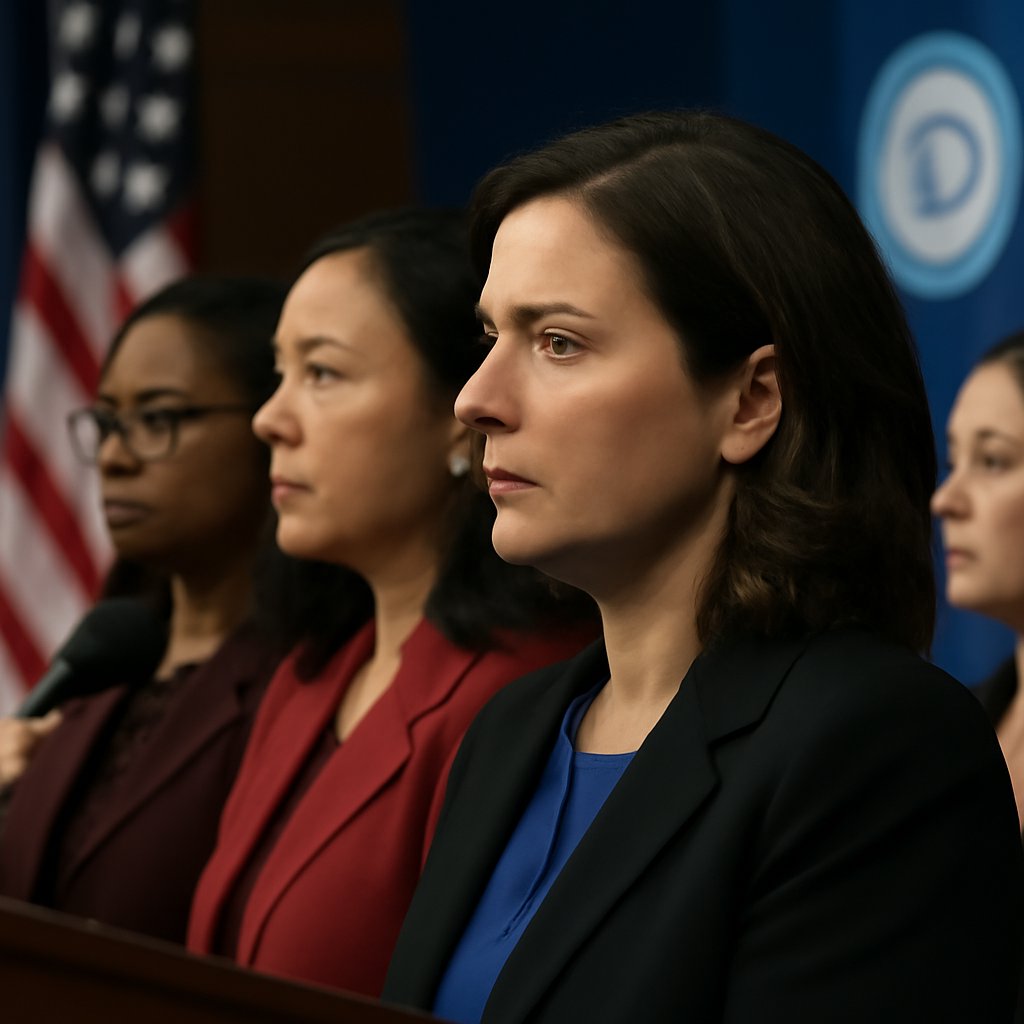
When assessing the roster of prominent Democratic women serving in Congress, their legislative footprints deserve examination through the lens of actual policy mechanics and measurable outcomes rather than broad rhetoric. As someone who worked in policy analysis, the mechanism here often hinges on committee jurisdiction and caucus coordination, which determines whether proposals translate into enacted law or remain aspirational frameworks.

In the House, Nancy Pelosi’s tenure as Speaker produced tangible results on major legislation, including expansions to the Affordable Care Act that extended coverage to additional millions through enhanced subsidies and Medicaid provisions in participating states. Her infrastructure packages incorporated specific funding streams for broadband and transportation, with implementation details tied to state-level matching requirements that affect rollout timelines. The data behind claims of unified caucus support is actually more nuanced than reported, given the need for ongoing negotiations among moderate and progressive factions to secure passage.

Pelosi’s strategic approach to legislative calendars and vote sequencing has proven instrumental in advancing Democratic priorities even within narrow margins. Her experience managing diverse coalitions—from Blue Dog Democrats concerned with fiscal implications to progressive members prioritizing ambitious social spending—demonstrates how institutional knowledge translates into legislative capacity. The American Rescue Plan, for instance, required careful calibration to secure support from members representing districts with different economic baselines and constituent priorities.

Maxine Waters’ leadership of the House Financial Services Committee has centered on oversight hearings examining banking practices, with consumer protection rules aimed at curbing predatory lending. These efforts intersect with affordable housing initiatives that leverage existing HUD programs, though economic data on wealth gaps shows persistent disparities across demographic lines that predate recent reforms. Waters’ committee work has included scrutiny of cryptocurrency regulation, student loan servicing practices, and fair lending enforcement, positioning her at the intersection of consumer protection and economic justice debates.

Her advocacy for community reinvestment has drawn connections between banking policy and neighborhood disinvestment patterns, using committee hearings to create public records on discriminatory lending practices. The mechanics of her influence operate through subpoena power, witness selection, and the framing of questions that shape subsequent regulatory action. Waters has also been instrumental in pushing for increased diversity within banking leadership, arguing that representational equity in financial institutions correlates with more responsive lending practices to underserved communities.

Turning to the Senate, Elizabeth Warren’s work has emphasized consumer financial protections through the bureau she helped establish, which has documented returns of billions via enforcement actions on issues like improper fees. Her proposals on wealth taxation and student debt draw from detailed modeling of revenue impacts, yet implementation would require reconciling with existing tax code structures and IRS administrative capacity. The data on bankruptcy reform highlights how prior laws shifted burdens onto households, a pattern her analyses have sought to address.

Warren’s legislative strategy often involves extensive white papers and technical analyses that provide colleagues with detailed implementation roadmaps. Her student debt proposals, for example, include specific mechanisms for loan forgiveness, income-based repayment modifications, and changes to public service loan forgiveness programs. By grounding advocacy in empirical analysis rather than aspirational framing, Warren has built credibility among senators concerned with fiscal implications and administrative feasibility. Her work on housing affordability has similarly connected zoning restrictions to wealth accumulation disparities, proposing federal incentives for communities adopting inclusionary zoning policies.

Patty Murray’s contributions to education and labor policy include measures expanding early childhood programs via Head Start funding mechanisms and worker protections that reference evolving Department of Labor guidelines. Her approach to family medical leave builds on FMLA precedents while seeking broader eligibility criteria, reflecting collaborative efforts to attract cross-aisle votes without diluting core objectives. As a member of the Senate appropriations committee, Murray has directed resources toward community colleges, vocational training programs, and workforce development initiatives aligned with regional economic transitions away from declining industries.

Her leadership on paid family leave has involved studying implementation models from other democracies while adjusting proposals to U.S. administrative structures. Murray’s bills typically include provisions addressing small business compliance costs and insurance mechanisms that balance employer burden with worker protection, recognizing that passage often requires satisfying concerns from diverse economic sectors. Her work on childcare affordability has connected early childhood investment to workforce participation rates, demonstrating how dependent care access affects labor force dynamics.

Among newer members, Alexandria Ocasio-Cortez has advanced the Green New Deal framework, which links renewable energy transitions to job creation estimates in unionized sectors. Her communications strategy utilizes social media platforms and town halls to mobilize constituent engagement on climate policy, contrasting with traditional legislative approaches. The Green New Deal resolution she introduced frames climate policy not merely as environmental protection but as economic restructuring with implications for manufacturing, construction, and energy sectors. While the resolution itself carries non-binding status, it has influenced Democratic platform language and shaped conversations about the scale of investment required for decarbonization.

Ocasio-Cortez’s legislative approach emphasizes connecting climate action to labor standards, ensuring that renewable energy job creation pathways include prevailing wage requirements and union organizing protections. Her advocacy has also integrated environmental justice concepts, highlighting how pollution exposure patterns correlate with racial and economic demographics. This framing has influenced Democratic proposals on infrastructure and environmental regulation, though translating these aspirations into legislation that balances regional economic concerns with climate objectives requires negotiation with colleagues from fossil fuel-dependent districts.

Pramila Jayapal’s role leading the Congressional Progressive Caucus involves coordinating on immigration and healthcare proposals, including Medicare for All concepts that contrast with the ACA’s mixed public-private model by aiming for single-payer structures. Her experience in community organizing informs her legislative approach, emphasizing grassroots mobilization alongside parliamentary tactics. Jayapal has been instrumental in coordinating progressive member responses to budget reconciliation bills, leveraging her position to ensure progressive priorities receive consideration in legislative vehicles with lower passage thresholds.

Her work on healthcare has involved detailed cost analyses of single-payer systems, drawing from international comparisons while addressing skepticism about implementation timelines and transition mechanisms. Jayapal’s immigration advocacy emphasizes pathway provisions for undocumented populations and asylum system reforms, directly challenging restrictionist framings while proposing mechanisms for regional burden-sharing among jurisdictions absorbing immigrant populations.

Democratic women hold over 90 seats across both chambers, a level of representation that first saw a woman Speaker in 2007. The Consumer Financial Protection Bureau’s enforcement record stands as noted. The Progressive Caucus exceeds 100 members. Legislation on voting rights and police reform has drawn sponsorship from women of color in these ranks. Polling on climate and healthcare investments shows varying support levels. COVID-19 relief packages incorporated direct payments and unemployment expansions, with distribution handled through existing Treasury and state unemployment systems.

Additional Democratic women leaders warrant attention for their specialized policy expertise. Deb Haaland’s role as Interior Secretary represents significant representation in executive decision-making on public lands and energy transition policy. Marcy Kaptur, a senior appropriations member, has shaped infrastructure investment through her committee position. Jerrold Nadler’s counterpart in Democratic leadership, Sheila Jackson Lee, has advanced criminal justice reform proposals addressing sentencing disparities and police accountability mechanisms.

The cumulative effect of these efforts shapes party priorities around equity-focused legislation, though sustained impact depends on navigating implementation hurdles in federal agencies and state partnerships. Understanding how Democratic women legislators actually accomplish policy change requires examining the specific jurisdictional tools, coalition dynamics, and legislative procedures they employ rather than focusing solely on rhetorical commitments. Their effectiveness ultimately depends on whether proposals survive amendment processes, secure sufficient votes, and receive administrative resources for proper implementation.


Sources

“`

Understanding Democratic Positions on Immigration Reform

“`html

Understanding Democratic Positions on Immigration Reform

Having covered the Hill for a decade, Democratic approaches to immigration reform reveal a through-line that runs from the 1986 Immigration Reform and Control Act through the Senate Judiciary Committee markups of the early 2000s and into the current push for updated visa allocations. The legislative history behind this issue goes back to bipartisan efforts that paired employer sanctions with legalization for nearly three million undocumented immigrants, a recognition that enforcement alone could not resolve migration patterns then or now.

Democratic positions have consistently prioritized comprehensive legislation that pairs border management investments with earned legalization. This stands in contrast to narrower enforcement-only frameworks and reflects platforms that treat immigration as both an economic necessity and a constitutional imperative. Leaders such as the late Senator Ted Kennedy helped shape bills that balanced security measures with protections for long-term residents, threads that continue to inform proposals updating family-based and employment-based visa categories to reduce multi-year backlogs.

Core principles guiding these positions center on a pathway to citizenship requiring background checks, tax compliance, and continuous residency, alongside targeted protections for DACA recipients, unaccompanied minors, and asylum seekers. Recent platforms also emphasize technology-driven border processing and diplomatic engagement to address root causes in Central America. Having covered multiple cycles of these debates, the emphasis on reducing family separations through expanded legal representation in immigration courts and adjustments to detention practices reflects procedural lessons learned from repeated Senate floor failures on comprehensive packages.

Lawmakers have advanced measures including the U.S. Citizenship Act and successive iterations of the DREAM Act, securing incremental steps such as nationality-specific parole programs and increased asylum processing funding even when full reform stalled. The party also backs expanded temporary protected status designations. These efforts align with data showing roughly 11 million undocumented immigrants residing in the United States, most for over a decade, and estimates that legalization could contribute up to $1.5 trillion in cumulative GDP growth over ten years while reducing federal deficits through higher revenues, according to Congressional Budget Office analyses.

Over 800,000 individuals have held DACA protections since 2012, generating more than $42 billion annually in wages and taxes. Family-based immigration continues to account for about 65 percent of green cards issued yearly, a category Democrats seek to streamline. Border encounter fluctuations have prompted focus on processing capacity rather than solely physical infrastructure.

Democratic positions ultimately frame reform as a strategy integrating enforcement, economic growth, and humanitarian considerations. Continued advocacy underscores the view that regularizing essential workers and modernizing legal channels strengthens communities nationwide. As debates continue, these principles offer a consistent framework drawn from decades of committee work and floor votes.

The economic argument for immigration reform occupies central ground in Democratic messaging. Beyond the headline figures on GDP growth, party economists highlight sector-specific benefits. Agricultural production, hospitality, healthcare support, and construction sectors depend substantially on immigrant workers, many undocumented. Democrats argue that bringing these workers into formal systems through legalization improves labor standards across industries, reducing wage suppression that affects all workers. When undocumented immigrants lack legal status, unscrupulous employers can exploit them with below-market wages and unsafe conditions, creating downward pressure on standards. Regularization, coupled with stronger workplace enforcement, theoretically levels this playing field.

Healthcare considerations shape Democratic immigration positions in ways sometimes overlooked in broader policy debates. Immigrants, including undocumented individuals, contribute to healthcare systems through payroll taxes and sales taxes while often facing barriers to care. Democratic proposals typically include provisions expanding healthcare access for all residents regardless of immigration status, framed both as humanitarian necessity and public health imperative. The COVID-19 pandemic reinforced these arguments when advocates pointed to barriers preventing undocumented immigrants from seeking testing and vaccination, creating community health risks.

The administrative backlog in immigration courts represents another focal point for Democratic reform efforts. Currently, over 1.6 million cases await hearing before immigration judges, with average wait times exceeding three years in many jurisdictions. Democrats propose substantial increases in judicial resources, hiring additional immigration judges, and supporting staff to process cases more efficiently. This approach appeals to both humanitarian concerns—lengthy detention while awaiting hearings—and pragmatic efficiency arguments. Faster processing theoretically benefits all stakeholders: cases resolve more quickly, detention costs decrease, and employers gain clarity on employment eligibility sooner.

Democratic proposals also address what party members characterize as outdated visa allocation structures. The per-country caps in current law, established decades ago, create particular backlogs for countries with large populations and substantial immigration demand, particularly Mexico, China, and India. Skilled worker visa categories like H-1B face annual caps with lottery systems that don’t necessarily match labor market demands. Democrats advocate removing or raising per-country caps, expanding employment-based visa numbers, and creating new categories for essential workers in agriculture and service industries. These adjustments, advocates argue, would reduce irregular migration by providing legal pathways.

Climate change increasingly features in Democratic immigration reform discussions, though this remains an emerging policy area. Recognizing that environmental degradation and resource scarcity in Central America drive some migration, Democrats propose addressing root causes through international climate cooperation and development assistance. Some advocates discuss eventual policy frameworks for “climate refugees,” though such terminology remains contested and hasn’t yet produced major legislative proposals.

The intersection of immigration reform and criminal justice reform also shapes Democratic positions. Advocates note that current law can result in deportations for individuals convicted of crimes that might not, in other contexts, be considered serious. Democrats have pushed for greater judicial discretion in removal proceedings and elimination of certain offenses from deportability triggers. This reflects broader party positioning on criminal justice that emphasizes proportionality and second chances.

Labor unions represent an important Democratic constituency with historically evolving immigration positions. While some unions long opposed immigration expansion due to wage competition concerns, major labor federations now support comprehensive reform paired with strong labor enforcement provisions. Union arguments emphasize that undocumented workers undercut unionized labor, making legalization and workplace protections mutual interests. Democratic proposals typically include funding for labor enforcement agencies and provisions protecting workers’ rights to organize.

State and local implementation remains practical concern in Democratic immigration advocacy. Policies affecting driver’s licenses, public benefits, and law enforcement cooperation with federal immigration agents vary substantially by jurisdiction. Democratic platforms typically oppose federal mandates requiring state assistance with immigration enforcement, instead protecting “sanctuary” jurisdictions that limit such cooperation. This federalism angle reflects party priorities around local control and civil liberties, though it also creates complexity in implementation.

The debate over border security spending distinguishes Democratic from Republican approaches less than commonly understood. Democrats support border management investments, including technology, personnel, and physical infrastructure improvements. Disagreement typically centers on prioritization and design rather than whether borders require management. Democratic emphasis tends toward smart technology, adequate staffing, and humanitarian processing capacity rather than extensive wall construction. Cost-benefit analyses suggesting barriers prove less effective than technology and personnel inform these positions.

Looking forward, demographic trends inform Democratic immigration advocacy. Native-born population growth in the United States remains below replacement levels, while immigration represents the primary source of population growth. This demographic reality underpins Democratic arguments that immigration supports economic vitality, ensures tax base growth to sustain Social Security and Medicare, and maintains labor force growth as the population ages. These economic arguments, rooted in Congressional Budget Office analyses and Census Bureau data, provide substantial grounding for reform advocacy beyond humanitarian considerations.


Sources

“`

Progressive Approach to Criminal Justice Reform

0

“`html

Progressive Approach to Criminal Justice Reform

Having covered Capitol Hill for a decade, the Democratic emphasis on criminal justice reform reflects a sustained legislative effort to shift from punitive statutes toward evidence-based alternatives, with roots tracing back to the 2010s debates over mandatory minimums in the Senate Judiciary Committee. Progressive priorities within the party center on rehabilitation, equity measures to address documented racial disparities, and structural changes that prioritize public health frameworks over the enforcement-heavy approaches that dominated both parties’ records through the 1980s and 1990s.

Traditional tough-on-crime measures, including three-strikes provisions and broad application of mandatory minimums, produced the nation’s highest incarceration rate at 639 per 100,000 residents. Multiple studies have shown these policies concentrated effects in communities of color, with Black defendants receiving sentences approximately 20 percent longer than white counterparts for comparable offenses. The legislative history behind the War on Drugs era, from the Anti-Drug Abuse Act onward, illustrates how criminalization of addiction strained federal dockets and state facilities without reducing underlying recidivism drivers tied to economic inequality.

The shift toward progressive criminal justice frameworks gained momentum following the 2020 protests against police violence and systemic racism. Democrats across legislative chambers began translating grassroots demands into concrete policy proposals. The George Floyd Justice in Policing Act, introduced by Representative Karen Bass and Senator Cory Booker, exemplifies this approach by proposing nationwide standards for police conduct, including restrictions on chokeholds, qualified immunity reforms, and mandatory training on de-escalation techniques. While full passage has faced Republican opposition, the bill’s core principles have influenced state-level Democratic legislative packages and municipal policy adoptions in major cities.

Core Democratic positions advanced in recent cycles favor community-based interventions and restorative justice models that emphasize victim-offender mediation alongside reentry supports such as job training and record expungement. These align with platform language stressing measurable reductions in reoffense rates, as seen in state-level pilots where such programs lowered repeat offenses by up to 25 percent relative to traditional prosecution tracks. On police accountability, Democratic-led initiatives have incorporated body-camera mandates, independent review boards, and de-escalation protocols, with reallocations in cities like Minneapolis redirecting portions of public safety budgets to mental health and social service responses.

Investment in treatment and prevention represents a cornerstone of the Democratic criminal justice agenda that distinguishes it from earlier bipartisan efforts. Rather than viewing substance use disorders exclusively through a criminalization lens, progressive Democrats advocate for expanding access to medication-assisted treatment, harm reduction services, and comprehensive mental health care. States like Vermont and New Hampshire, under Democratic leadership, have implemented opioid response initiatives that treat addiction as a public health crisis rather than a criminal justice matter, resulting in reduced overdose deaths and lower rates of incarceration for drug possession. These programs recognize that treatment availability correlates with lower recidivism and reduced community crime rates compared to incarceration-only approaches.

Sentencing and pretrial reforms represent another focal point, particularly efforts to replace cash bail systems with risk-assessment instruments that avoid wealth-based detention. Jurisdictions implementing these changes have reported pretrial jail population reductions around 40 percent without corresponding crime increases. The First Step Act’s earned-time credit expansions under Democratic administrations have facilitated the release of more than 30,000 federal inmates since 2018, building on earlier bipartisan committee markups while accelerating nonviolent offender transitions.

The role of youth justice in Democratic reform priorities cannot be overlooked. Progressive advocacy has successfully pushed for raising the age of adult criminal responsibility in numerous states, moving away from automatic prosecution of juveniles as adults. This shift recognizes neuroscience research demonstrating that adolescent brain development continues into the mid-twenties, making rehabilitation more effective than adult incarceration for young offenders. States including North Carolina and Mississippi, where Democrats have gained legislative influence or executive power, have implemented raise-the-age provisions that keep most youth under eighteen in juvenile systems focused on education and treatment rather than adult correctional facilities. Studies from jurisdictions with raise-the-age policies show recidivism rates approximately 10 percent lower than previous adult prosecution models.

Voting rights restoration for individuals with felony convictions represents an increasingly prominent Democratic priority that intersects criminal justice reform with democracy expansion. Currently, approximately 5.2 million Americans are excluded from voting due to felony convictions, with disproportionate impact on Black citizens. Democratic-controlled legislatures in states including Virginia, New Jersey, and Connecticut have passed laws restoring voting rights upon sentence completion or incarceration, reflecting the progressive view that democratic participation supports successful reentry and community integration. These efforts challenge the historical use of criminal disenfranchisement as a tool of voter suppression rooted in post-Reconstruction practices.

State examples in California and New York demonstrate how ending mandatory minimums correlates with recidivism drops of up to 15 percent in targeted cohorts, consistent with polling showing over 70 percent of Democratic voters favoring budget reallocations toward social services. Expungement policies in Democratic-led states have restored employment access for more than 1 million individuals, directly supporting economic mobility goals embedded in party legislative agendas. Black Americans comprise 33 percent of the prison population despite representing 13 percent of the overall populace, a disparity that continues to inform Democratic critiques during appropriations and oversight hearings.

The emerging focus on addressing collateral consequences of criminal conviction reflects Democratic recognition that true reform extends beyond courtroom decisions. Criminal records create barriers to employment, housing, education, and professional licensing that perpetuate cycles of poverty and marginalization. Democratic-led initiatives have expanded “ban the box” ordinances requiring employers to delay criminal history inquiries until later in hiring processes, increasing employment prospects for formerly incarcerated individuals. Similarly, progressive states have reformed occupational licensing restrictions that prevented individuals with prior convictions from accessing entire career fields, recognizing that employment stability is fundamental to successful reentry.

Community safety data increasingly supports the Democratic framework challenging claims that progressive reforms compromise public protection. Comprehensive analyses of cities and states implementing Democratic criminal justice reforms show that reductions in incarceration rates do not automatically produce crime increases. In fact, jurisdictions with lower incarceration rates relative to peer states often maintain comparable or lower crime rates, suggesting that incarceration alone is not the primary determinant of public safety. This evidence strengthens Democratic arguments that redirecting criminal justice resources toward prevention, treatment, and social services produces both more equitable and more effective public safety outcomes.

These elements collectively point to a framework where accountability mechanisms and root-cause interventions replace prior punitive defaults, yielding measurable declines in incarceration alongside sustained or improved community safety indicators.


Sources

“`