

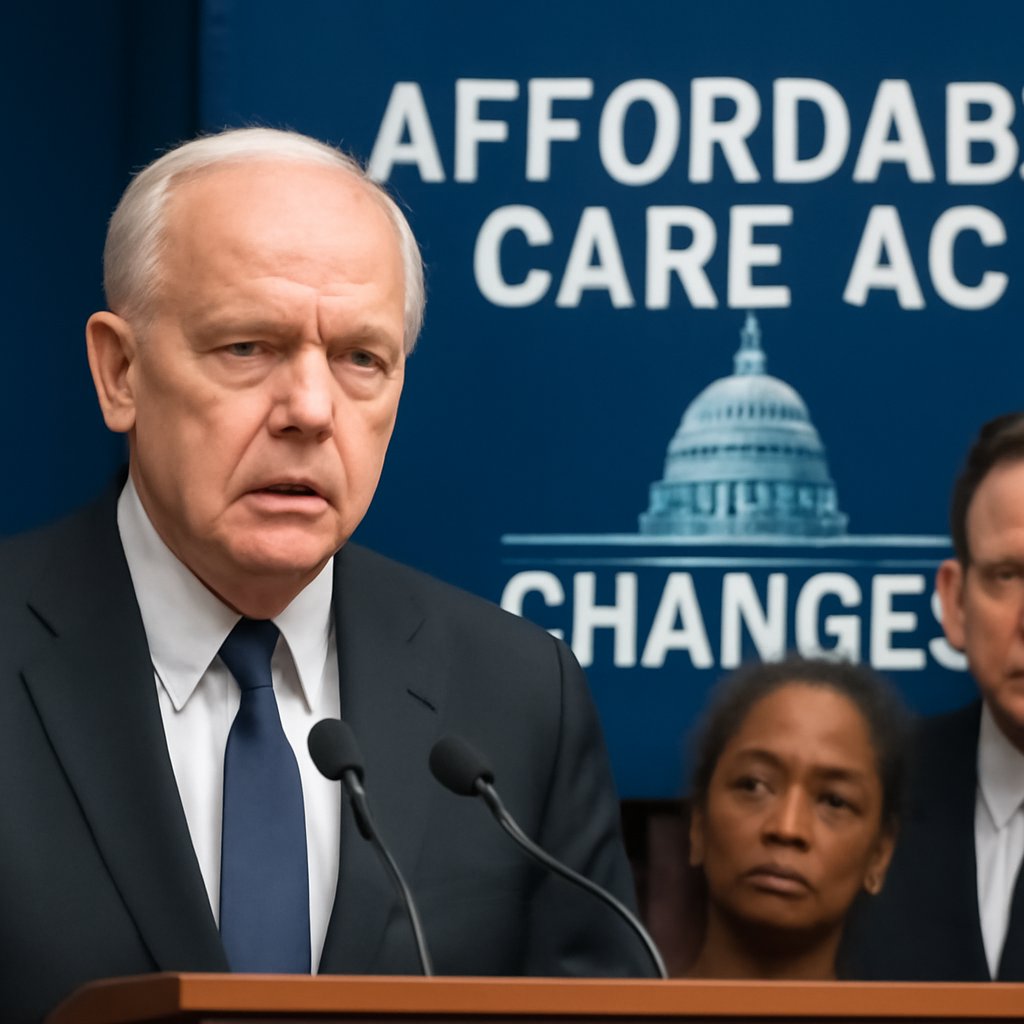
Since taking office, the Biden administration and Democratic majorities have advanced a series of Affordable Care Act refinements through the reconciliation process, most notably the enhanced premium tax credits enacted in the American Rescue Plan and made permanent in key respects by the Inflation Reduction Act. Having covered the Hill for a decade, the procedural move here is significant: both measures bypassed the Senate filibuster via budget reconciliation, allowing Democrats to lock in subsidy expansions without a single Republican vote. These changes have produced the highest Marketplace enrollment figures on record, with 21.3 million people signed up during the 2024 open enrollment period.
The legislative history behind this issue goes back to the original ACA’s reliance on premium tax credits that phased out at 400 percent of the federal poverty level. By removing that cliff, Democrats on the Senate Finance and House Ways and Means Committees effectively extended affordability to middle-income households that had previously faced sharp premium increases. Data from the Department of Health and Human Services confirm average annual savings of roughly $800 for many of these families. The same statutes also preserved coverage gains in the 39 states that adopted Medicaid expansion, now covering more than 15 million additional adults.
The impact of these enhanced credits cannot be overstated for working families navigating the healthcare system. For a family of four earning $80,000 annually—well above poverty thresholds but far from wealthy—the difference between affording coverage and going uninsured has often come down to these tax credit enhancements. Under the original ACA framework, such families would have faced premium increases pushing them toward the individual mandate penalty. The American Rescue Plan’s expansion temporarily capped premiums at 2 percent of household income for eligible enrollees, a dramatic reduction from the previous 9.5 percent baseline. When Democrats moved to make these changes permanent through the Inflation Reduction Act, they secured coverage stability for millions of Americans entering 2024 without the uncertainty that had characterized previous open enrollment periods.
The enrollment surge itself reflects both improved affordability and enhanced outreach infrastructure that Democratic administrations have prioritized. The 2024 figures represent a 16 percent increase over 2023 enrollment, despite a shrinking uninsured population that might ordinarily suggest market saturation. This growth comes as the administration expanded funding for healthcare enrollment navigators and community-based organizations that target underserved populations. Hispanic enrollment in particular grew significantly, with Spanish-language outreach and culturally competent enrollment assistance proving effective in reaching communities hit hardest by the pandemic’s economic disruptions.
Further regulatory actions have layered new consumer protections onto the statute. Rules finalized by the Centers for Medicare and Medicaid Services require mental health parity in Marketplace plans, addressing long-standing enforcement gaps that the House Energy and Commerce Committee has examined in multiple oversight hearings. This regulatory shift represents a substantive victory for mental health advocates who had documented years of insurance company practices that made mental health coverage practically inaccessible despite nominal coverage requirements. The CMS rules now require plans to demonstrate that cost-sharing and utilization management practices for mental health services are comparable to those for physical health conditions—a seemingly obvious principle that required explicit regulatory enforcement.
Separate implementation of the Inflation Reduction Act’s insulin cost cap for Medicare beneficiaries has already reduced beneficiary out-of-pocket spending by an estimated $1 billion. Starting in 2023, seniors pay no more than $35 per month for insulin regardless of the retail price, an expansion the Biden administration views as a critical ACA-adjacent protection that complements broader Marketplace improvements. Diabetics who previously rationed insulin due to cost have reported significant improvements in health outcomes, and hospital admissions for diabetic emergencies have declined in preliminary studies examining the policy’s effects. The administration has signaled intentions to expand this cost-control mechanism to additional medications and broader populations, though such expansions would require Congressional action.
Consumer complaints about denied claims have declined 12 percent since enhanced oversight provisions took effect. This improvement stems partly from stronger utilization review requirements and partly from the simple reality that plans covering younger, healthier populations through improved affordability face fewer medical necessity disputes. However, it also reflects more aggressive oversight by state insurance commissioners and the Department of Health and Human Services, which has expanded its complaints database and begun publishing state-by-state performance metrics for plan denials, customer service responsiveness, and coverage quality measures. Transparency itself has proven a market discipline: plans with high denial rates face enrollment pressure as consumers research options during open enrollment periods.
At the state level, Democratic-led marketplaces in California and New York have used Section 1332 waivers to introduce automatic enrollment and multilingual outreach, models that Senate HELP Committee staff have cited as templates for future federal legislation. California’s auto-enrollment program, which began in 2021, has brought more than 200,000 previously uninsured individuals into coverage, many of them undocumented immigrants accessing emergency services coverage through Medicaid’s emergency provisions. New York’s multilingual approach—extending enrollment materials and customer service in 13 languages—has proven particularly effective in reaching immigrant communities where language barriers have historically limited ACA awareness. These state innovations demonstrate that coverage expansion requires not just financial incentives but also institutional commitments to meeting people where they are, linguistically and logistically.
These state innovations have helped drive the national uninsured rate among non-elderly Americans below 8 percent in expansion states. This represents a historic low point and a dramatic reversal from pre-ACA levels when uninsured rates in some states approached 20 percent. The disparity between expansion and non-expansion states remains stark, with Medicaid gap populations in states like Texas and Mississippi still numbering in the millions. Democratic state officials have increasingly utilized state-funded coverage programs to provide alternatives to Medicaid expansion, recognizing both the moral imperative and the economic benefits that accrue from reduced emergency room utilization and improved workforce productivity when healthcare coverage extends more broadly.
Democratic lawmakers continue to frame these incremental statutory and regulatory adjustments as necessary to defend the ACA’s preexisting-condition protections against renewed legal and legislative challenges. With Republican-controlled legislatures and courts having mounted repeated attacks on the law’s constitutionality, Democrats view the ACA not as settled policy but as a constant focus of political contestation. The permanence of enhanced tax credits through reconciliation reflects strategic thinking about what provisions can survive potential future Republican administrations. Sunset provisions that allowed temporary enhancements to expire would have created vulnerability; permanent structural changes to the credit calculation provide greater insulation from executive branch rollback.
Looking forward, Democratic priorities include further cost containment measures, increased transparency in drug pricing within Marketplace plans, and stronger enforcement of mental health and substance use disorder parity requirements. The administration has signaled openness to negotiating additional demonstration projects that would allow states to pilot innovations, provided such projects maintain or improve coverage rates and affordability for enrollees. As the 2026 midterm election cycle approaches, the ACA’s continued expansion serves both as a policy accomplishment and a political marker for Democratic messaging around healthcare access.