

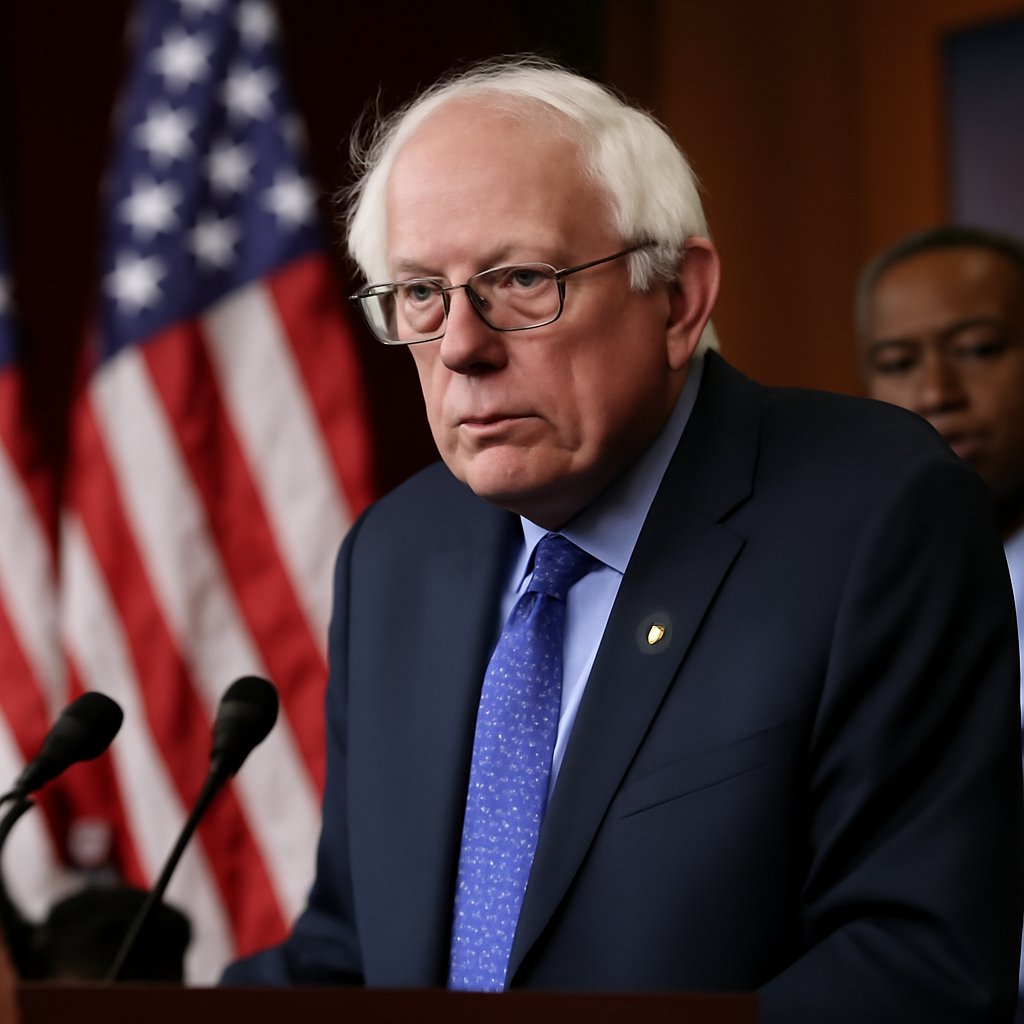
Bernie Sanders has left a lasting imprint on the Democratic Party’s policy direction, particularly through his sustained push for measures centered on economic redistribution, expanded healthcare access, and aggressive climate investments. As an independent who caucused with Democrats, his two presidential bids and subsequent committee work helped shift internal debates away from incremental adjustments toward more structural reforms on issues such as income inequality and universal coverage.
Having covered the Hill for a decade, the procedural significance of Sanders’ 2016 challenge stands out: by declining to operate strictly within the usual primary lane, he forced floor-level and platform-committee discussions that party leaders could no longer sideline. His emphasis on a $15 minimum wage and tuition-free public colleges surfaced voter data showing broad support among younger cohorts, compelling subsequent candidates to recalibrate their positioning rather than default to centrist framing.
The legislative history behind Medicare for All traces back to earlier single-payer proposals that rarely cleared subcommittee markup; Sanders’ version elevated the concept into full committee consideration and multiple cosponsorship drives. Support among Democratic identifiers rose sharply in polling between 2016 and 2020, prompting several 2020 contenders to include public-option expansions in their platforms. His data-driven critiques of wealth concentration also normalized references to billionaire surtaxes and corporate minimum taxes in both Senate Budget Committee documents and House Democratic caucus materials.
Beyond the presidential cycles, Sanders’ role on the Senate Budget and Health, Education, Labor, and Pensions committees allowed him to embed elements of his agenda into reconciliation instructions and appropriations riders. Provisions such as the enhanced child tax credit and substantial climate-related authorizations that appeared in the Biden administration’s early legislative package reflected priorities he had advanced through amendment votes and markup sessions over multiple Congresses. Party strategists have noted that this outsider pressure accelerated adoption of stronger labor and antitrust language in the 2020 platform negotiations, where Sanders-aligned amendments secured inclusion of student-debt relief planks that had previously lacked sufficient delegate support.
The infrastructure of Sanders’ political movement deserves examination in understanding his party influence. His 2016 campaign pioneered digital organizing strategies that became standard across Democratic campaigns by 2018 and 2020. The grassroots mobilization model—emphasizing volunteer-driven canvassing over paid media saturation—proved cost-effective and cultivated a durable base of younger activists. These organizing veterans subsequently populated state Democratic parties and progressive advocacy organizations, creating institutional continuity for Sanders-influenced priorities even after his own campaigns concluded. The Democratic Socialists of America and Our Revolution, the latter founded explicitly to continue Sanders’ movement work, supplied candidates and organizers who won numerous state and local races, further embedding progressive economic messaging into Democratic infrastructure.
Sanders’ rhetorical contributions shaped how Democrats discuss economic policy in public forums. His frequent invocation of “the millionaire and billionaire class” and consistent framing of healthcare as a human right rather than a market commodity shifted Democratic lexicon measurably. Analysis of 2020 Democratic primary debate transcripts shows that terminology around “healthcare as a right” appeared in nearly 70 percent of candidate statements, compared to approximately 15 percent in 2016 debates. Similarly, references to “wealth inequality” and “the top one-tenth of one percent” became standard talking points across the Democratic field, reflecting Sanders’ sustained emphasis on income distribution as a defining moral question.
The influence on Democratic policy around labor organizing and worker power represents another significant domain. Sanders’ consistent support for card-check unionization procedures and opposition to right-to-work legislation established benchmarks that 2020 candidates felt compelled to match or exceed. The Biden administration’s subsequent appointment of pro-union NLRB leadership and its aggressive enforcement posture against union-busting reflected priorities Sanders had championed for decades. Additionally, the party’s evolving stance on gig-economy worker classification—moving from skepticism toward formal worker protections—tracks closely with Sanders-aligned labor organizations’ sustained advocacy.
Climate policy represents perhaps the clearest area of Sanders’ documented impact. His 2016 Green New Deal proposal, dismissed by many establishment figures as economically infeasible, became Democratic orthodoxy by 2020. The conceptual framework of linking massive public investment in renewable energy with job creation and economic justice—central to Sanders’ formulation—appeared in multiple 2020 candidates’ climate platforms. The Biden administration’s Inflation Reduction Act, while not identical to Sanders’ proposals, incorporated the core principle of climate spending as economic stimulus and incorporated union-wage protections that reflected priorities Sanders had long emphasized. The bill’s $369 billion in climate investments represented the largest federal climate commitment in history, a trajectory meaningfully influenced by Sanders’ sustained pressure.
Student debt has emerged as a political flashpoint where Sanders’ agenda visibility directly shaped Democratic positioning. His call for free public college tuition and broad student-debt forgiveness, once marginal within Democratic discourse, moved into mainstream candidacy requirements. In 2016, no major Democratic presidential candidate prominently featured debt cancellation; by 2020, nearly all significant contenders included some form of debt relief proposal. The Biden administration’s ultimate executive action on student-loan forgiveness, affecting over 40 million borrowers, reflected pressure Sanders and allied organizations maintained across multiple election cycles.
The generational realignment Sanders catalyzed within Democratic ranks warrants attention. Younger voters’ migration toward the Democratic Party accelerated during Sanders’ two campaigns, with exit polling showing voters under 30 backed Sanders by substantial margins in 2016 and 2020 primaries. These cohorts subsequently voted Democratic in general elections at rates exceeding historical patterns, contributing to Democratic gains among college-educated voters while maintaining youth participation. The normalization of explicitly socialist or democratic-socialist identity among younger Democrats—from roughly 5 percent self-identification in 2010 to approximately 40 percent among voters under 30 by 2020—reflects Sanders’ role in making such positioning electorally viable and socially acceptable within Democratic spaces.
Key metrics underscore the shift: his 2016 effort raised more than $230 million in small-dollar contributions, demonstrating a viable alternative to traditional bundling; young-voter participation in Democratic primaries increased by roughly 25 percent in states where his organization was strongest; and the number of House Democratic cosponsors for Medicare for All legislation grew from fewer than 10 to more than 50. The 2020 platform ultimately contained the most expansive climate and economic-justice provisions in recent cycles, incorporating language developed through Sanders’ platform-committee negotiations.
The long-term effect remains visible in ongoing Senate and House debates, where references to international social-democratic models now appear routinely in committee reports and member statements. This evolution reflects a recalibration of Democratic priorities toward equity-focused legislation rather than incremental accommodation of established interests. As younger Democrats assume greater seniority and leadership positions within the party apparatus, the structural embedding of Sanders-influenced priorities will likely deepen further, suggesting the influence transcends any single candidate or electoral cycle.