

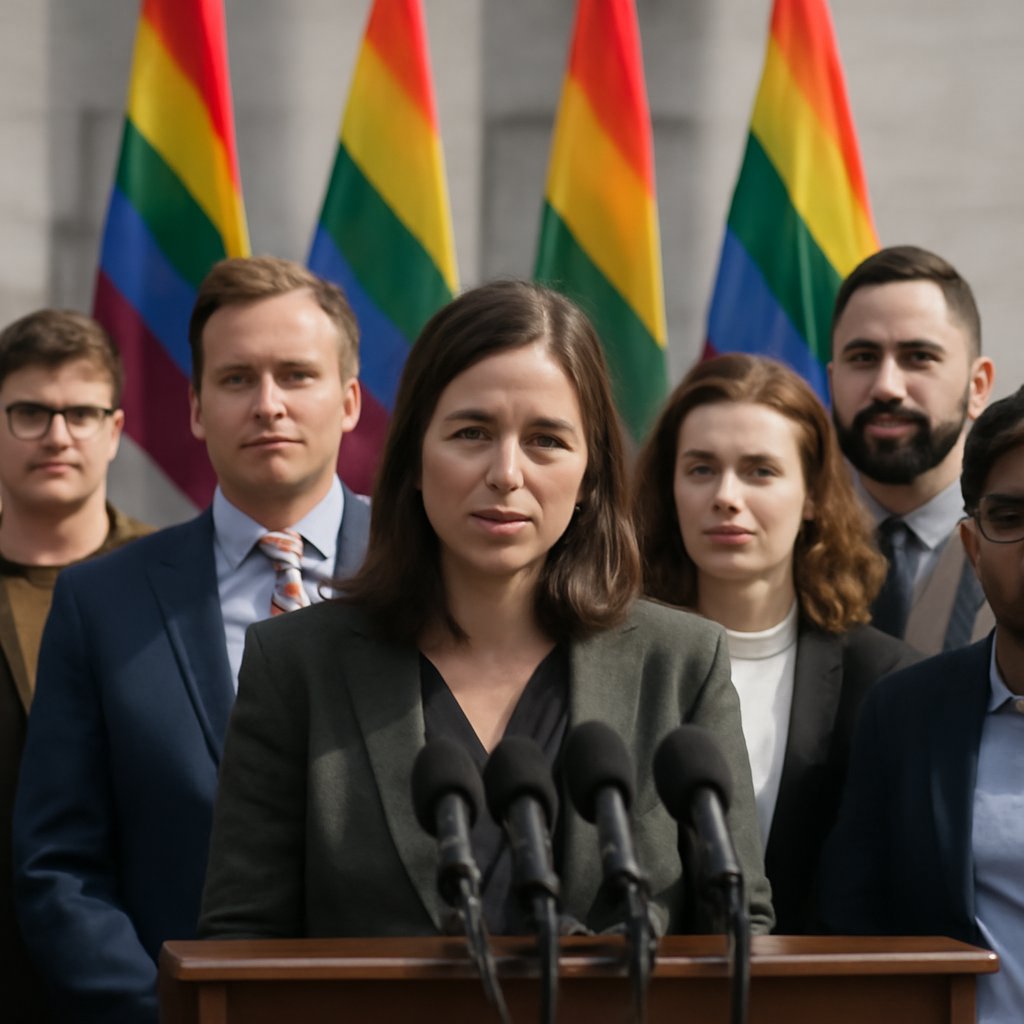
The drive to enact federal LGBTQ rights protections has long been a priority for Democratic leaders on Capitol Hill, with the Equality Act serving as the centerpiece of efforts to amend the Civil Rights Act of 1964. Having covered these debates for a decade, the procedural barriers in the Senate remain the clearest obstacle, even as House Democrats have moved the measure through committee markups and floor consideration in prior Congresses.
The legislative history behind this issue stretches back well before the most recent iterations, encompassing repeated attempts to layer sexual orientation and gender identity into employment, housing, education, and public accommodations statutes. Democratic policy positions have consistently framed these protections as essential extensions of existing civil rights enforcement, noting that state-level statutes create uneven coverage that leaves millions without recourse. Recent Congresses have also advanced related measures on transgender healthcare access and workplace equity, often routed through the Education and Labor Committee or the Judiciary Committee depending on the specific provisions.
Key components in these proposals typically encompass nondiscrimination language, expansions of hate crime statutes, and targeted funding streams. Expansions to the Violence Against Women Act, for instance, have incorporated survivor provisions that address documented gaps in service access for LGBTQ individuals, aligning with broader Democratic commitments to intersectional public health and safety policy. The legislative history of VAWA reauthorizations shows how such additions often emerge from bipartisan negotiations in the Senate Judiciary Committee before facing more polarized votes on the floor.
Understanding the employment protections framework is crucial for advocates seeking to support these measures. Current federal law lacks explicit protections for sexual orientation and gender identity in hiring, firing, promotion, and workplace conditions, despite significant shifts in judicial interpretation under Title VII of the Civil Rights Act of 1964. The 2020 Supreme Court decision in Bostock v. Clayton County established that discrimination based on sexual orientation or gender identity constitutes sex discrimination under Title VII, yet this interpretation remains subject to potential reversal or narrowing depending on future Court composition. LGBTQ rights legislation aims to place these protections beyond judicial interpretation by creating explicit statutory language that cannot be easily dismantled through conservative jurisprudence. Housing discrimination represents another critical gap; while some federal programs prohibit discrimination in publicly funded housing, significant portions of the private rental and sales markets remain without explicit protections in many states and municipalities.
Public accommodations protections address barriers in retail, hospitality, healthcare, and service sectors where LGBTQ individuals have faced documented discrimination. The distinction between religious exemptions and comprehensive nondiscrimination language has emerged as a central point of contention in legislative negotiations, with Democratic drafters typically proposing narrower exemptions than Republican counterparts. Healthcare access provisions within these bills frequently include protections for transgender individuals seeking gender-affirming care, conversion therapy prohibitions, and insurance coverage mandates that have become increasingly important as a subset of Republican-controlled states have moved to criminalize or restrict such care.
Democratic Party platforms have repeatedly called for codifying these protections at the federal level, with executive actions under recent administrations directing agencies to apply expansive interpretations of existing statutes where legislation stalls. Tracking these developments requires attention to both committee hearings and the quieter work of appropriations riders that can sustain or undermine enforcement priorities. The Department of Justice Civil Rights Division’s interpretation of enforcement authority shifts significantly with administration changes, making legislative codification a matter of particular urgency for Democratic advocates who recognize the fragility of executive-branch protections across election cycles.
The intersection of LGBTQ rights legislation with education policy deserves particular attention given the documented prevalence of school-based discrimination and harassment. Title IX of the Education Amendments of 1972 has become a focal point for federal protection efforts, with Democratic administrations issuing guidance documents interpreting existing language to encompass sexual orientation and gender identity discrimination. Legislative measures building on Title IX have proposed explicit enumeration of protected categories, establishment of dedicated complaint processes, and funding for school-based support resources. Conservative opposition to these initiatives often centers on bathroom and locker room access, though research from jurisdictions with inclusive policies demonstrates minimal disruption to school operations and substantial mental health benefits for LGBTQ students.
Effective advocacy, from a Hill perspective, frequently involves linking LGBTQ measures to adjacent Democratic priorities such as racial equity and immigration reform. Strategists note that unified messaging can influence moderate members during markup sessions or whip counts ahead of floor votes. Constituents who reference specific bill text in correspondence to offices, or who engage with committee staff during open comment periods, tend to register more clearly than generic outreach. Understanding the committee assignment of key moderate swing votes—particularly those representing purple districts or states—allows advocates to calibrate messaging around district economic impacts, healthcare implications, and constituent testimonies that resonate with reelection-focused calculation.
Grassroots mobilization through letter-writing campaigns and coordinated digital responses has proven useful in signaling district sentiment, particularly when timed to key committee deadlines. Data-driven approaches, including the sharing of constituent experiences during hearings, have helped humanize policy impacts for members weighing reelection considerations. Voting records on past iterations of the Equality Act—introduced in every session since 2015 and passed by the House in both 2019 and 2021—offer a concrete metric for assessing alignment with these priorities across primary and general election cycles. Advocates tracking these votes have noted that support correlates strongly with district demographics, previous civil rights voting patterns, and the presence of organized constituent advocacy networks.
The role of state-level legislative achievements cannot be overstated in building toward federal protections. Democratic-controlled state legislatures have enacted comprehensive nondiscrimination statutes covering employment, housing, public accommodations, and education in over twenty states plus Washington D.C., creating what advocates describe as laboratories of democratic policymaking. Data from these jurisdictions—including employment statistics, housing market analyses, and educational outcomes—provides empirical counter-arguments to Republican claims that such protections harm business interests or create administrative burdens. States like California, New York, and Illinois have demonstrated that comprehensive LGBTQ protections can coexist with robust economies and stable business environments, though Republican messaging often suppresses this evidence through selective framing of compliance costs or litigation patterns.
National surveys continue to show majority support for nondiscrimination protections, while more than twenty states still lack comprehensive statutes covering both sexual orientation and gender identity. Youth data from CDC sources highlight elevated rates of school-based discrimination, and Pentagon policy shifts on service members reflect ongoing Democratic efforts to align military standards with inclusive personnel practices. Public opinion trends among younger voters have also shaped long-term electoral calculations within the party, with generational differences in LGBTQ rights support now exceeding 25 percentage points between youngest and oldest cohorts. Healthcare disparities affecting LGBTQ communities—including higher rates of cardiovascular disease, mental health conditions, and substance use disorders partially attributable to discrimination-related stress—provide additional public health frameworks for legislative advocacy.
Procedural literacy regarding Senate mechanisms remains essential for realistic advocacy planning. The filibuster threshold requiring sixty votes for cloture means that even legislation with House support and presidential backing faces substantial obstacles unless Democrats maintain or expand their Senate majority. Understanding the committee assignment process, including how bills are referred to multiple committees and potential for companion legislation in Senate committee jurisdiction, allows advocates to engage across multiple access points. The appropriations process offers additional leverage, as riders addressing LGBTQ enforcement priorities can be incorporated into must-pass legislation where direct policy vehicles face obstruction.
Sustained engagement through these channels, combined with attention to committee processes and voting histories, remains the most direct route for translating platform goals into statute. Building relationships with legislative staff, particularly those in the Judiciary and Education and Labor Committees, enables advocates to shape bill language during drafting phases and anticipate amendment strategies during markup sessions. For those seeking to support LGBTQ rights legislation most effectively, focus should remain on district-specific organizing, primary accountability mechanisms for Democratic elected officials, and data-driven advocacy that connects abstract policy language to concrete constituent impacts and economic realities.