

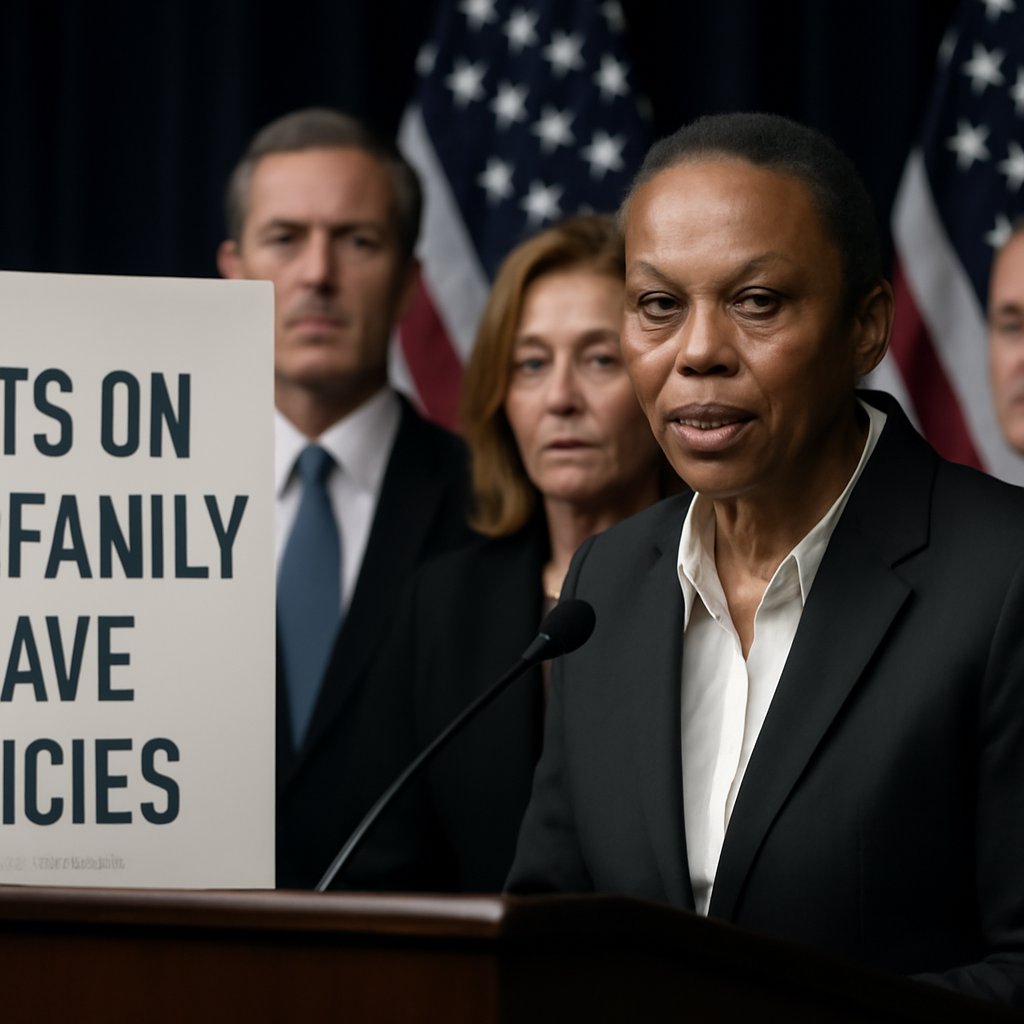
Paid family leave policies function as a mechanism for smoothing labor market disruptions during periods of family caregiving, though their design and funding vary sharply across jurisdictions. In the United States, the lack of a federal mandate leaves implementation to state temporary disability insurance programs or voluntary employer plans, creating uneven coverage that tracks closely with wage levels and geography. As someone who worked in policy analysis, the mechanism here is straightforward: benefits are typically financed through modest payroll deductions—often split between employees and employers—and delivered as partial wage replacement for six to twelve weeks, calibrated to avoid sharp drops in household income that could otherwise trigger reliance on public assistance programs.
Only a handful of states, including California, New York, and New Jersey, operate such programs, with benefits ranging from six to twelve weeks and funded through small payroll contributions. The data behind this claim is actually more nuanced than reported; while these state initiatives demonstrate measurable retention effects, national estimates indicate that just 23 percent of U.S. workers have access through employers, with rates notably lower in low-income households. Without uniform standards, access hinges on employer discretion or location, which amplifies gaps for low-wage workers who are disproportionately women and people of color.
The landscape of state programs reveals significant differences in how benefits are structured and delivered. California’s Paid Family Leave program, established in 2004, provides up to six weeks of partial wage replacement at approximately 55 to 60 percent of weekly wages, capped at a maximum weekly benefit amount that adjusts annually. New York expanded its program substantially, offering up to ten weeks by 2021 and reaching 67 percent wage replacement for lower-income workers. New Jersey similarly provides up to six weeks with partial wage replacement. These variations matter enormously for families trying to plan around childbirth, adoption, or elder care responsibilities. A parent in California facing a birth might receive six weeks of benefits, while a similar family in New York could access ten weeks, demonstrating how geography directly determines economic security during vulnerable periods.
Democratic proposals such as the FAMILY Act would establish a national program offering up to twelve weeks of benefits, modeled on state experiments and funded by employee and employer contributions averaging less than two dollars per week. President Biden has incorporated paid leave into broader economic recovery frameworks, connecting it to workforce participation and equity metrics. These efforts draw on evidence from states where programs were enacted under Democratic leadership, such as California’s 2004 initiative, which coincided with more than a 20 percent increase in mothers’ labor force participation. Opposition from Republican lawmakers has prevented federal adoption, leaving outcomes dependent on state-level variation. The FAMILY Act specifically addresses concerns about program sustainability by anchoring contributions to payroll taxes similar to Social Security mechanisms, creating dedicated revenue streams rather than relying on general appropriations that could face budget pressure.
The contrast between the United States and peer nations illuminates what paid family leave could accomplish at scale. Most developed democracies have recognized paid family leave as a fundamental social policy supporting both family stability and economic productivity. Countries like Sweden offer 480 days of paid leave per child with wage replacement rates exceeding 80 percent, while France provides 16 weeks for first children and longer durations for subsequent children. Even more modest systems, such as those in the United Kingdom with 39 weeks of statutory maternity leave, substantially outpace American protections. The International Labour Organization estimates that approximately 90 percent of countries globally provide some form of paid maternity leave, placing the United States alongside only a handful of outlier nations in lacking federal statutory coverage.
Research from states with paid leave shows 10 to 15 percent reductions in employee turnover, which lowers replacement costs for businesses. The economic logic here extends beyond simple retention metrics. When employees leave their positions, employers typically incur replacement costs ranging from 50 to 200 percent of annual salary, depending on the position’s skill level and training requirements. A 15 percent reduction in turnover translates to substantial savings that often exceed program costs, particularly in sectors with high female participation and historically elevated postpartum departure rates. Businesses in states with paid family leave programs report stronger workforce stability, improved morale, and reduced recruitment spending. These findings challenge the narrative sometimes presented by program opponents that paid leave burdens employers; actual implementation reveals that businesses benefit financially from reduced churn and associated disruption.
International comparisons with systems in Canada and Germany reveal correlations with higher birth rates and improved economic mobility, though direct causal attribution requires controlling for concurrent tax and childcare policies. The mechanisms connecting paid leave to these outcomes involve both immediate economic security and longer-term labor market positioning. When workers can afford to take leave without devastating household finances, they make different decisions about family formation, workforce re-entry timing, and career trajectories. Canada’s Employment Insurance system, which provides up to 18 weeks of paid maternity leave and up to 62 weeks of parental leave shared between parents, correlates with higher rates of maternal workforce participation and more equitable division of caregiving responsibilities between partners. The United States stands among just six countries without national paid maternity leave, a distinction that places it outside the norm for OECD peers with statutory programs tied to health insurance frameworks.
On gender and child outcomes, state-level data indicate higher breastfeeding rates, fewer infant hospitalizations, and better long-term development metrics where paid leave exists. Research published in medical journals documents that mothers with access to paid leave breastfeed for significantly longer periods—often three to six months longer than mothers without such access. Extended breastfeeding correlates with reduced infant ear infections, lower rates of respiratory illness in the first year of life, and improved cognitive outcomes measurable in school readiness assessments. For mothers themselves, paid leave access reduces postpartum depression and anxiety symptoms, likely through a combination of reduced financial stress and increased time for recovery and infant bonding. Women in states without such policies are 30 percent more likely to exit the workforce after childbirth, a disparity that compounds over decades through lost earnings, reduced retirement savings, and constrained career advancement opportunities.
The racial and economic justice dimensions of paid family leave deserve particular emphasis within Democratic policy frameworks. Black women and Latina women disproportionately work in low-wage service sector jobs with minimal employer-provided benefits, concentrating their reliance on access to statutory programs. These workers face sharper financial cliffs when navigating caregiving transitions, making federal standards particularly consequential for reducing racial wealth gaps. Research indicates that paid leave access narrows the wage penalty historically associated with motherhood, with effects measurable across subsequent decades of earning. A federal program would eliminate the current two-tier system where affluent workers in tech hubs like San Francisco or New York access robust benefits while similarly situated workers in states like Mississippi or Alabama receive no statutory protection whatsoever.
Polling data consistently registers support above 70 percent across partisan lines, suggesting that public opinion provides political space for Democratic advancement of this agenda. Even in states with Republican legislatures, paid family leave measures have garnered surprising bipartisan backing when framed around family values and economic security rather than partisan rhetoric. This polling strength reflects genuine public recognition that family caregiving represents a universal human experience transcending partisan divides, and that economic security during vulnerable periods aligns with American values emphasizing personal responsibility and family stability.
The economic case rests on reduced turnover expenses and sustained tax revenue from continuous employment, though program scale and administrative costs must be weighed against projected savings in any federal rollout. Comprehensive fiscal analyses suggest that a national paid family leave program funded through modest payroll contributions would generate net positive returns within five to ten years through increased tax revenue from sustained workforce participation, reduced turnover costs across industries, and decreased reliance on means-tested public assistance programs. State experiences demonstrate administrative feasibility, with California and New York managing programs serving millions of workers without significant implementation problems or cost overruns.