
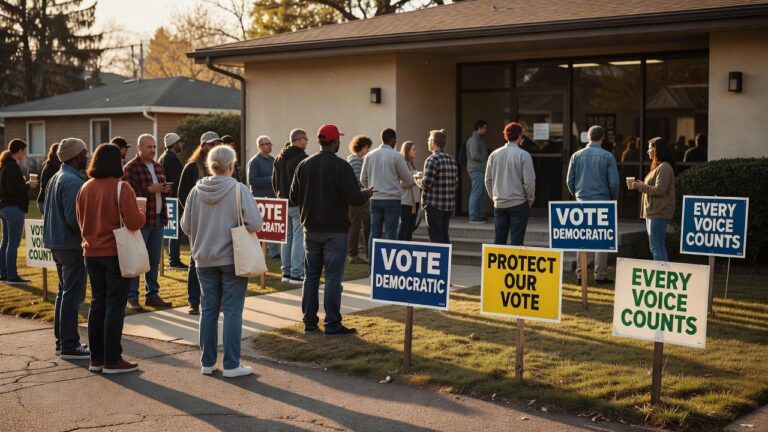
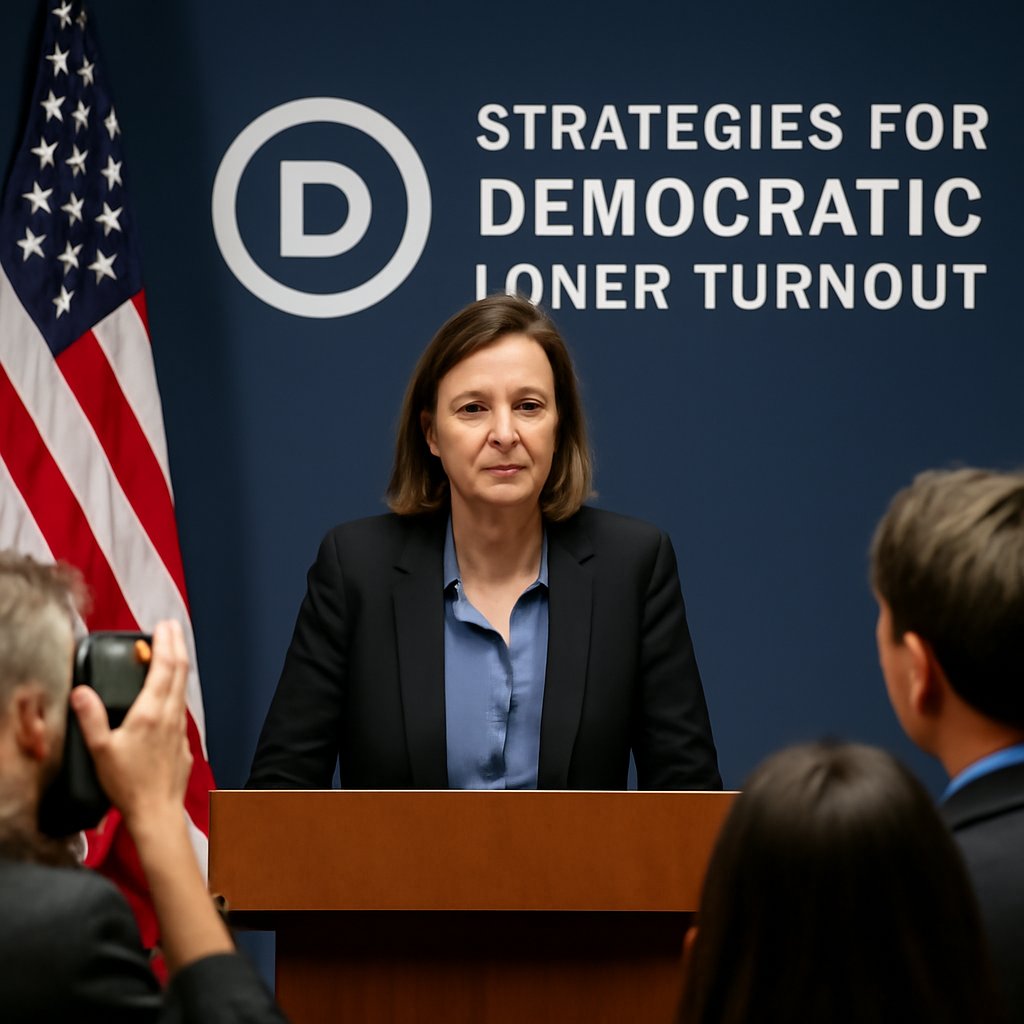
Democratic voter mobilization efforts have long hinged on sustained, year-round engagement rather than episodic campaign pushes, a lesson reinforced each cycle as Democrats seek to lock in reliable margins for advancing priorities like expanded healthcare coverage, climate legislation, and voting rights measures. Having covered the Hill for a decade, the procedural move here is significant because these ground-level networks directly feed into the ability of Democratic majorities to withstand committee scrutiny and floor votes on contentious bills. The legislative history behind this issue goes back to repeated attempts to codify access protections, where turnout disparities among young voters, communities of color, and low-income residents have repeatedly shaped outcomes in both chambers.
Organizers build lasting neighborhood infrastructure through recurring town halls and workshops that link residents to concrete policy results, such as Medicaid expansions or education funding increases. Volunteers sustain contact via phone banks and canvassing outside election windows, converting intermittent supporters into reliable advocates who then mobilize their own circles. Strategic partnerships with churches, unions, and civic associations extend this reach, particularly in rural and suburban districts where Democratic messaging must navigate competing priorities. Data-sharing arrangements with these groups allow precise tracking of participation, refining approaches around core party commitments to economic equity and justice.
The foundation of effective turnout infrastructure rests on understanding local demographic patterns and voting behavior. Democratic operatives increasingly employ predictive modeling to identify persuadable voters and likely supporters who may face registration or accessibility barriers. By mapping precinct-level data across multiple election cycles, organizers can pinpoint neighborhoods where previous Democratic performance suggests untapped potential or where demographic shifts indicate emerging opportunities. This analytical approach transforms voter contact from a generic exercise into a targeted intervention calibrated to specific communities and their distinct concerns.
Community-based organizations have emerged as critical partners in sustained mobilization work. Groups focused on immigrant rights, racial justice, environmental protection, and economic empowerment bring credibility and existing relationships that Democratic campaigns cannot replicate through paid media alone. When these organizations integrate voter registration and turnout messaging into their ongoing advocacy work, they achieve higher engagement rates because participation becomes connected to issues members already care about. For instance, environmental groups promoting clean energy legislation simultaneously encourage members to vote for candidates supporting climate action, merging civic participation with issue advocacy in ways that reinforce both.
Digital outreach has become indispensable for reaching likely voters who participate in presidential years but drop off in midterms. Calibrated email, text, and social campaigns highlight deadlines and ballot specifics while drawing on analytics to target gaps. When these messages center documented Democratic legislative wins rather than abstract appeals, response rates rise measurably. Progressive groups also produce multilingual explainers and short-form videos to counter misinformation, ensuring accessibility for mobile-first users who increasingly anchor the coalition.
The role of data infrastructure deserves particular attention, as the sophistication of Democratic voter files has evolved significantly over the past decade. Integrated platforms now combine voter registration records, consumer data, partisan history, and issue preference signals to create detailed supporter profiles. This allows campaigns to craft messaging that speaks directly to individual priorities—whether healthcare, education, economic opportunity, or climate—rather than broadcasting generic appeals. Advanced tools also enable real-time optimization, allowing organizers to test different messages and quickly scale those that generate strongest engagement. However, this technological advantage requires sustained investment and technical expertise that underscores why well-funded Democratic organizations maintain competitive advantages in mobilization.
Policy education sustains momentum by connecting participation to legislative delivery on issues like student debt relief, reproductive healthcare access, and infrastructure investments. Regular briefings and webinars translate complex committee reports into actionable takeaways, turning supporters into monitors of local election administration. Youth leadership programs on campuses supply toolkits for peer registration while pairing veterans with newcomers to emphasize cultural competence when engaging immigrant and first-time voters.
The experience of state-level organizing provides valuable lessons for national strategy. Colorado, Virginia, and Nevada have all implemented particularly effective year-round engagement models that maintain organizational infrastructure and volunteer networks across election cycles. These states demonstrate that consistent investment in local organizing yields exponential returns during high-turnout elections, as established relationships and institutional capacity accelerate mobilization when stakes are highest. Conversely, states where Democratic organizing has contracted between elections tend to face steeper climbs during presidential years, requiring more expensive and less efficient last-minute mobilization efforts.
Voter protection and election administration advocacy represent another dimension of Democratic turnout strategy often overlooked in electoral analysis. By training poll monitors, establishing rapid-response systems for addressing polling place irregularities, and supporting organizations that challenge restrictive voting policies, Democrats address structural barriers that suppress participation among key constituencies. This work extends beyond getting supporters to vote to ensuring their votes are counted fairly and that future elections remain accessible. Legal challenges to voter ID laws, gerrymandering, and purges of voter rolls, though occurring in courts rather than in neighborhoods, directly impact the electoral landscape where turnout mobilization occurs.
The importance of culturally competent organizing cannot be overstated, particularly as demographic change reshapes the American electorate. First-generation immigrant communities, recent arrivals from the Global South, and second-generation Americans with complex relationships to both heritage and American political traditions require outreach approaches that acknowledge their distinct experiences and priorities. Hiring organizers who reflect community demographics, conducting outreach in native languages, and centering immigrant-specific issues like family reunification and citizenship pathways in campaign messaging all contribute to sustained engagement. Research consistently shows that voters are significantly more likely to participate when they encounter campaign workers who share their cultural background and can communicate in their preferred language.
Key data points from recent cycles illustrate the impact. Democratic mobilization in 2020 helped push overall turnout above 66 percent of eligible voters, with notable gains among those under 30. Research from aligned organizations indicates year-round contact can lift midterm participation by as much as 8 percentage points versus seasonal-only efforts. Digital targeting focused on specific policy achievements has produced 12 to 15 percent higher response rates. Community registration drives in battleground states add thousands of new participants each quarter, achieving retention above 70 percent with follow-up within 90 days. Multilingual programs have increased Latino and Asian American turnout by 10 to 20 percent in targeted districts.
Sustainable turnout work also requires attention to volunteer burnout and organizational health. Campaigns that demand intensive effort for short periods followed by complete inactivity often struggle to retain committed organizers. By contrast, organizations offering consistent engagement opportunities, professional development, and leadership pathways cultivate deeper loyalty and institutional knowledge. This investment in organizational sustainability pays dividends across multiple cycles as experienced organizers mentor newcomers and maintain continuity in strategy and operations.
These approaches combine relationship-building fundamentals with data precision to fortify long-term Democratic advantages. By maintaining community infrastructure, refining digital precision, and tying engagement to legislative outcomes, the party creates durable advantages that support progressive priorities across election cycles.