
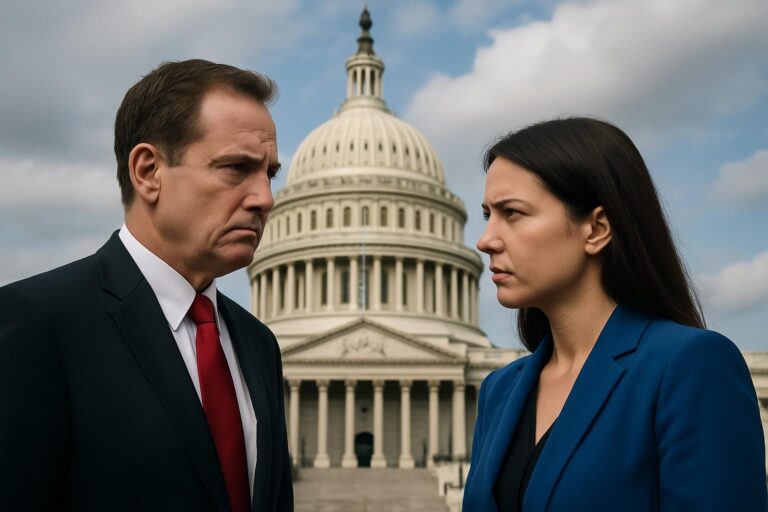
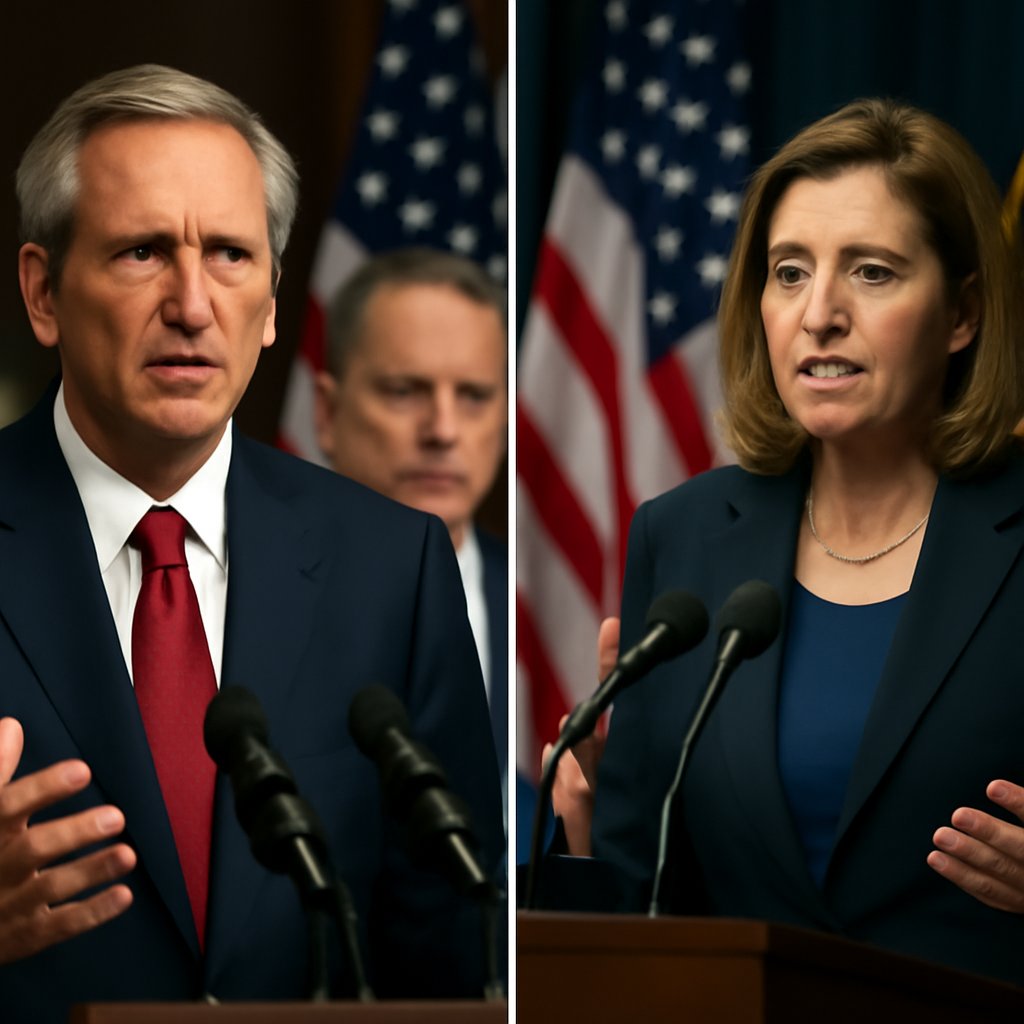
Having covered these ideological fault lines on Capitol Hill for a decade, the distinction between conservative and liberal perspectives remains essential for understanding why legislation stalls in committee or passes on narrow party-line votes. While the terms serve as shorthand in floor debates, the underlying differences shape everything from markup sessions on tax reform to amendments on appropriations bills addressing healthcare and environmental protection.
At their core, these worldviews diverge on the proper scope of federal authority, the speed of institutional adaptation, and the balance between individual responsibility and collective action through statute. Both camps include moderates and hardliners, a reality that often surfaces during conference committee negotiations or when the Senate parliamentarian rules on reconciliation procedures. The legislative history behind these tensions stretches back through the New Deal-era expansions of the administrative state and the subsequent pushback via the Administrative Procedure Act.
Liberals in the American context, aligned with Democratic policy positions, treat government as an instrument for correcting market failures and advancing social equity. This perspective informed the committee processes that produced the Affordable Care Act, with its emphasis on insurance market reforms and Medicaid expansion. Core tenets include support for civil rights legislation, regulatory frameworks to curb monopolistic practices, recognition of climate science in statutes like the Inflation Reduction Act, and maintenance of entitlement programs such as Social Security and Medicare. Progressives within the coalition often press for more structural changes during budget reconciliation debates, while mainstream liberals favor incremental adjustments through regular order.
The liberal worldview extends to labor policy, where support for collective bargaining rights, prevailing wage requirements, and workplace safety standards reflects a belief that government intervention protects workers from exploitative conditions. Democrats have consistently backed the National Labor Relations Board’s authority to oversee union organizing and have opposed right-to-work legislation that conservatives champion. During the Biden administration, the appointment of pro-labor leadership to the NLRB represented a significant shift in how labor law enforcement operates, illustrating how these ideological differences translate into administrative implementation.
Conservatives, by contrast, prioritize constitutional limits on federal power, free-market allocation of resources, and deference to state-level authority. Their approach echoes in repeated attempts to repeal or defund regulatory regimes, from environmental rules enforced by the EPA to labor protections under the National Labor Relations Board. Key elements include skepticism of expansive welfare programs, preference for originalist judicial interpretations that constrain agency rulemaking, and emphasis on federalism that surfaces during debates over block grants versus direct federal spending. The conservative coalition believes that decisions made closer to home—at the state and local level—better reflect community values and result in more efficient governance.
These differences manifest most clearly in economic policy. Liberals back progressive tax structures and robust oversight, as seen in Democratic support for higher corporate rates and worker protections during Ways and Means Committee deliberations. The liberal framework argues that wealth concentration creates political inequality and that taxation should fund public goods benefiting society broadly. Conservatives favor flatter rates and deregulation, positions reflected in voting records supporting measures like the 2017 Tax Cuts and Jobs Act. The conservative argument maintains that lower tax burdens stimulate investment and economic growth that ultimately benefits workers through job creation and wage increases.
On social questions, liberal priorities track with expansions of voting rights and anti-discrimination statutes, while conservative positions often defend traditional structures and Second Amendment interpretations during Judiciary Committee reviews. Liberals view voting access as essential to democracy and have supported provisions like the John Lewis Voting Rights Act to counter what they see as voter suppression efforts. Conservatives argue that election security requires voter identification measures and that ballot integrity protections are constitutionally sound. These disagreements intensified following the 2020 election and continue to drive legislative battles in states across the country.
The social policy divide also encompasses education, where liberals generally advocate for increased federal funding for public schools, support for teachers’ unions, and curriculum standards addressing systemic racism and LGBTQ+ inclusion. Conservatives prioritize parental control over curriculum content, school choice through charter and private school vouchers, and skepticism of what they characterize as ideological indoctrination. The clash over “critical race theory” in schools represents this fundamental disagreement about how education should address historical injustices and social divisions.
Environmental and healthcare divides follow similar patterns. Democratic majorities have advanced emissions reductions and renewable incentives through targeted legislation, whereas conservatives have sought to limit such mandates via riders on must-pass spending bills. The Biden administration’s passage of the Inflation Reduction Act demonstrates liberal commitment to aggressive climate action through subsidies for electric vehicles, solar installation, and wind energy development. Conservatives contend that such initiatives impose economic costs on consumers and industries while questioning the effectiveness of unilateral U.S. action when major emitters like China continue expanding fossil fuel use.
Healthcare policy remains among the most contentious battlegrounds. Liberals argue that healthcare is a right and that government must ensure universal access to affordable care, citing the success of Medicare and Veterans Affairs programs. They point to lower per-capita healthcare costs in other developed democracies with universal systems as evidence that their approach works. Conservatives counter that government programs create inefficiencies, reduce quality, and increase costs through bureaucracy. They advocate for market-based solutions including increased price transparency, expanded Health Savings Accounts, and reduced regulatory barriers to competition among providers and insurers.
Immigration represents another sharp divide. Liberals generally support pathways to citizenship for undocumented immigrants already in the country, argue that immigration strengthens the economy and cultural fabric, and oppose enforcement-only approaches. They emphasize the humanitarian aspects of immigration policy and the contributions immigrants make across sectors. Conservatives stress border security and sovereignty, arguing that nations have the right to control immigration, and contend that enforcement of existing laws must precede any new legal pathways. They raise concerns about wages for low-skilled American workers competing with immigrant labor and emphasize security risks.
Judicial philosophy crystallizes many of these differences. Liberal judges generally interpret the Constitution more dynamically, recognizing evolving standards and rights not explicitly enumerated in the document. Conservatives favor originalism and textualism, attempting to discern the Framers’ original intent or the text’s plain meaning. This divide surfaces starkly in decisions on reproductive rights, gun regulation, voting access, and the scope of executive power. The 2022 Supreme Court decision overturning Roe v. Wade exemplified how these philosophical differences determine concrete outcomes affecting millions of Americans.
Overlap does occur on discrete issues, such as certain infrastructure authorizations or criminal justice sentencing reforms, where bipartisan majorities have emerged despite the broader spectrum. The First Step Act, which reduced mandatory minimum sentences and expanded rehabilitation programs, attracted support from conservatives concerned about government overreach and progressives focused on racial justice. Similarly, infrastructure investments and broadband expansion have found bipartisan support when framed around economic competitiveness and job creation.
The conservative-liberal framing ultimately simplifies a more granular reality shaped by regional voting patterns, committee jurisdictions, and the procedural constraints of the Senate filibuster. Understanding how these worldviews translate into specific legislative outcomes clarifies why agreement remains elusive on questions that appear straightforward outside the Capitol. Recognizing that thoughtful people across the political spectrum hold these views sincerely—even when disagreeing fundamentally—remains essential for productive political discourse.