

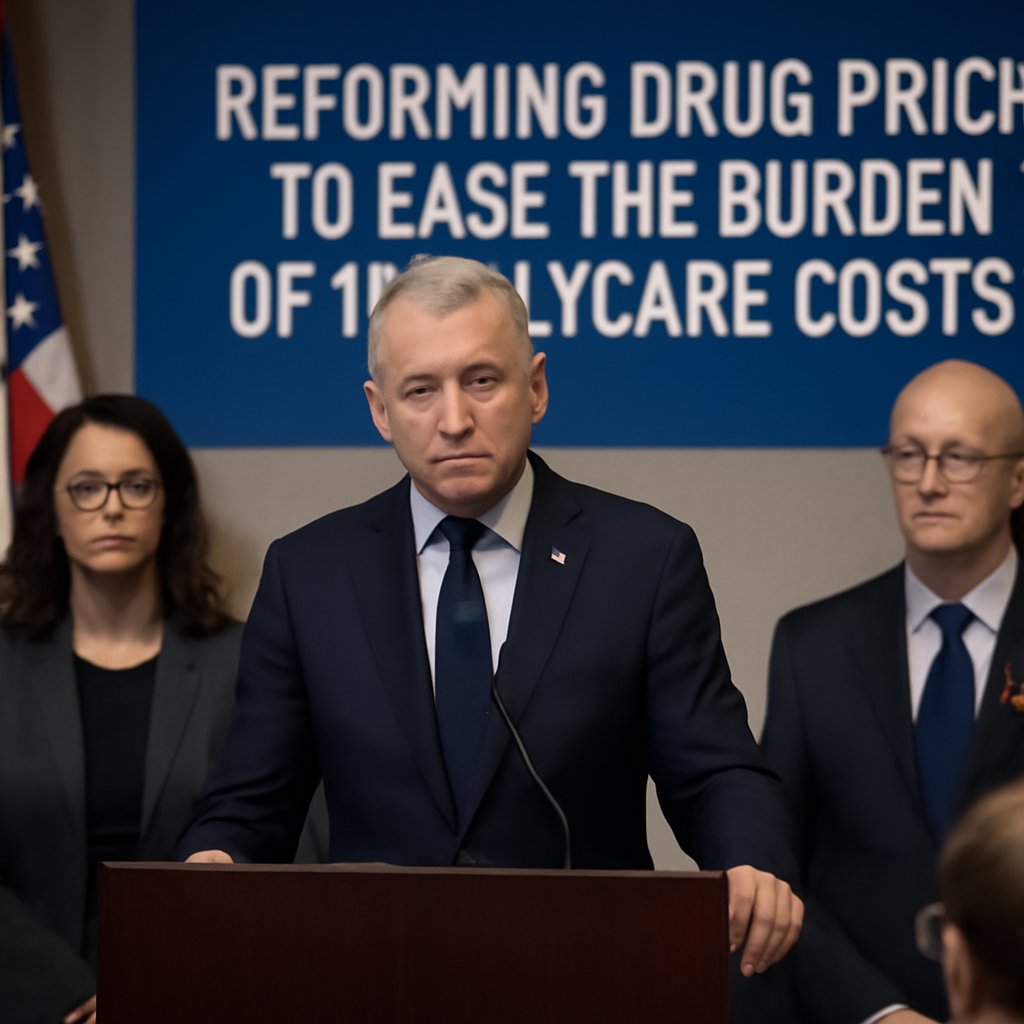
The United States continues to outspend every other developed nation on prescription drugs on a per-capita basis, with list prices routinely running two to three times higher than those in peer countries. That gap has long fed into broader healthcare cost pressures and forced difficult trade-offs for patients. Having covered these debates on the Hill for a decade, the recurring push for negotiation authority, transparency rules, and targeted rebates reflects a distinctly Democratic legislative strategy that dates back at least to the failed attempts to include Medicare drug negotiation in the Affordable Care Act and resurfaced in the Inflation Reduction Act’s drug-pricing provisions.
Prescription medications make up roughly 10 percent of national health expenditures, yet their prices have outpaced general inflation for more than twenty years. The steepest increases have come from new oncology and rare-disease therapies. Beneficiaries without robust coverage routinely face annual out-of-pocket costs in the thousands, contributing to non-adherence rates of 20 to 30 percent in some chronic-disease cohorts. Manufacturers routinely cite average development costs exceeding $1 billion per approved therapy when failures are counted, while critics—frequently citing Congressional Budget Office and NIH data—point out that substantial early-stage research is publicly funded, a tension that surfaces repeatedly in Senate Finance Committee hearings.
The human cost of these pricing structures cannot be overstated. According to recent surveys, approximately one in four Americans report difficulty affording their prescribed medications, with many forced to choose between purchasing drugs and paying for food or housing. Diabetics skip doses of insulin—a drug discovered over a century ago—because vials now cost upward of $300 despite minimal innovation in recent decades. Cancer patients exhaust savings and retirement accounts within months of diagnosis. These aren’t abstract policy debates; they reflect the lived experience of millions of constituents in districts across the country, a reality that has motivated increased Democratic focus on this issue heading into recent election cycles.
Medicare beneficiaries still confront coverage gaps during the deductible and initial-coverage phases. Uninsured or underinsured working-age adults absorb full list prices at the counter. Low-income households report dose rationing that drives higher emergency-care utilization, a pattern documented in both CMS and independent analyses. The legislative history behind current reform proposals traces directly to the 2022 Inflation Reduction Act, which authorized the Centers for Medicare & Medicaid Services to negotiate prices for a limited set of high-cost drugs—an approach modeled on the Department of Veterans Affairs and many private plans.
The Inflation Reduction Act represented a watershed moment in drug-pricing reform, marking the first time in nearly two decades that Congress successfully granted Medicare direct negotiation authority. The law initially allows CMS to negotiate prices for just ten drugs in 2026, expanding to fifteen by 2027 and twenty by 2029. Early estimates from the Congressional Budget Office suggested these provisions alone could reduce federal spending by approximately $160 billion over a decade, while potentially lowering premiums for beneficiaries. Yet the scope remains modest relative to the full Medicare formulary—approximately 4,500 drugs—underscoring both the incremental nature of current reform and the ongoing political resistance from pharmaceutical manufacturers and Republican leadership.
The mechanics of Medicare negotiation under the IRA differ substantially from the negotiation processes used by the Veterans Health Administration or private insurers. Rather than allowing individual plans to haggle, the government will engage in a structured process where manufacturers submit pricing data and CMS determines a “maximum fair price” based on factors including international reference pricing, research and development costs, and broader market dynamics. This approach aims to thread the needle between allowing genuine price discovery and preventing the kind of arbitrary rate-setting that proponents argue could undermine innovation incentives. Implementation details remain subject to ongoing regulatory rulemaking, with stakeholder input from patient advocates, manufacturers, and clinical researchers shaping the final guidance.
Additional Democratic-backed tools include inflation rebates triggered when prices rise faster than a statutory benchmark and redesign of the Medicare Part D benefit to shift more financial risk onto plans and manufacturers. Transparency mandates that would require disclosure of research, marketing, and supply-chain markups—particularly those involving pharmacy benefit managers—have advanced through both the House Energy and Commerce and Senate HELP committees in recent cycles. These measures aim to expose the layered pricing that occurs between factory gate and patient. Pharmacy benefit managers, often operating as opaque middlemen in the supply chain, have become a particular focus of reform efforts. These entities negotiate rebates with manufacturers but frequently retain portions of those savings rather than passing them through to consumers or health plans, creating perverse incentives that can actually drive list-price increases.
The role of pharmacy benefit managers deserves particular scrutiny in any comprehensive drug-pricing reform discussion. These intermediaries control formulary placement, prior authorization requirements, and the distribution of manufacturer rebates, wielding significant leverage that has only consolidated in recent years as major pharmacy chains have acquired or merged with PBM operations. A typical scenario involves a manufacturer offering a rebate to the PBM, which retains a portion while passing some savings upstream to the health plan or employer. Patients at the pharmacy counter, however, often pay based on the original list price before rebates, creating situations where someone with insurance pays more than an uninsured patient who negotiates a cash price. Democrats have increasingly called for PBM reform, including mandatory rebate pass-through provisions and greater transparency in formulary-building decisions, though industry lobbying has slowed progress on these fronts.
International comparisons offer instructive lessons about alternative approaches to drug pricing. Germany, France, and other European nations employ reference pricing systems where a baseline price is established based on similar therapies, and manufacturers can charge above that threshold only by demonstrating additional clinical value. Australia’s Pharmaceutical Benefits Scheme combines centralized purchasing power with value assessments conducted by independent experts, resulting in prices often 40 to 50 percent below U.S. levels for identical medications. Canada’s federal negotiation process, while not perfectly efficient, has similarly constrained price growth. These approaches don’t eliminate innovation—new drugs still launch in these markets—but they do prevent the kind of pricing disparities that characterize the U.S. system. Democrats have pointed to these models as evidence that Democratic-leaning approaches to pricing need not devastate the development pipeline.
Industry testimony before those same committees warns that reduced revenue could slow development, especially for smaller patient populations. Independent modeling, however, suggests that modest reductions on mature products would have limited downstream effects on innovation because most research outlays occur early in the development cycle. Policymakers have therefore examined value-based arrangements that link reimbursement to measured clinical outcomes. Internationally, centralized purchasing systems achieve lower per-unit prices through volume negotiations and reference pricing, while the United States has historically cited concerns about launch delays. Recent state-level experiments with Canadian importation and drug-affordability review boards now offer early data points on whether localized approaches can generate savings absent further federal action.
The debate over innovation consequences remains genuinely contested, and progressives must take seriously the incentive structures that have produced genuine breakthroughs in treatments for diseases that previously offered no effective options. However, the current pricing structure doesn’t clearly optimize for socially valuable innovation—profit-maximization incentives can favor minor variations on existing therapies or indications for wealthy populations over treatments for rare pediatric diseases or neglected tropical infections. A reformed system with appropriate guardrails might actually redirect innovation toward areas of genuine unmet clinical need while maintaining robust returns for truly novel therapies.
Effective calibration remains the central challenge. Overly aggressive controls could constrain the pipeline; continued inaction sustains pressure on household and federal budgets alike. Hybrid frameworks that combine targeted negotiation for established products with market-based pricing for true breakthroughs continue to surface in Democratic legislative drafts, with ongoing evaluation of both health outcomes and research investment serving as the practical test of sustainability. As implementation of the Inflation Reduction Act provisions proceeds and earlier state-level experiments generate outcome data, policymakers will gain better empirical footing for calibrating future reforms. The stakes extend beyond federal budgets to the fundamental question of whether Americans can access medications their doctors prescribe without financial catastrophe—a question that successive Democratic-controlled Congresses have deemed central to their healthcare agenda.