
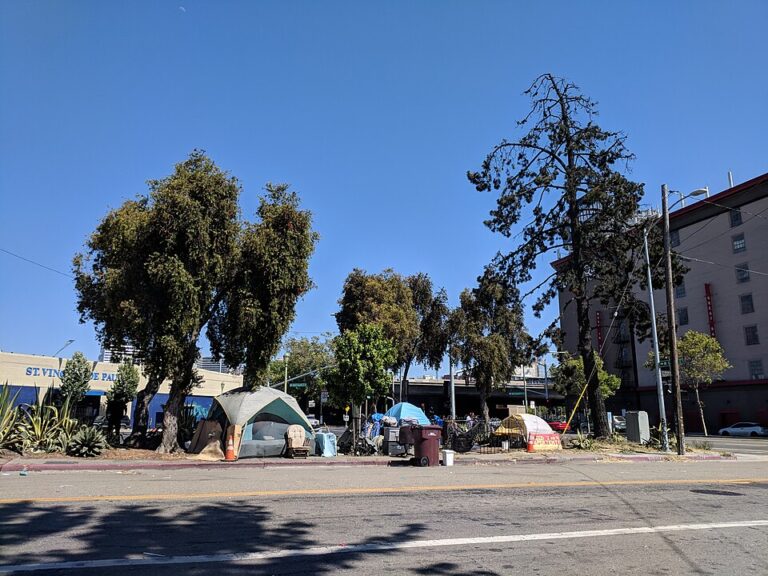

The affordable housing crisis continues to constrain household formation across the United States, with federal data indicating a cumulative shortfall of several million units that has pushed median rents above the traditional 30-percent-of-income threshold for large numbers of lower-income renters. Decades of underbuilding after the 2008 financial crisis, combined with restrictive local zoning and rising material and labor costs, have produced this imbalance; the data behind this claim is actually more nuanced than reported, because household formation rates themselves slowed in some rural counties even as they accelerated near job centers. As someone who worked in policy analysis, the mechanism here is best understood as a mismatch between regulatory supply constraints and wage stagnation that no single program can fully close.
The scale of this challenge demands urgent action. Recent estimates suggest the United States faces a shortage of between 1.5 and 3 million affordable rental units, depending on the metric used. This shortfall has cascading effects across the economy: families spend less on healthcare, education, and consumer goods when housing costs consume half their income; workers cannot relocate for better employment opportunities when housing is unaffordable in growing markets; and younger Americans delay marriage, children, and wealth-building activities when they cannot secure stable, affordable housing. The human cost is equally severe, with homelessness persisting in wealthy cities and families cycling through precarious living situations.
Reforming zoning and land-use rules offers one lever for expanding production. Jurisdictions that have permitted duplexes and triplexes in single-family zones, reduced parking minimums near transit, and expedited approvals for mixed-income projects have recorded measurable increases in permitted units. The data behind claims of rapid rent stabilization remain mixed; modest downward pressure appears only when these changes are paired with anti-displacement protections. As someone who worked in policy analysis, the mechanism here is the gradual release of underutilized land rather than wholesale upzoning, which preserves neighborhood character while still adding supply over a five-to-ten-year horizon.
Minneapolis and California’s recent zoning reforms illustrate this potential. Minneapolis eliminated single-family zoning citywide in 2019, permitting up to three-unit buildings on previously restricted lots. While production increases have been gradual—partly due to construction cost inflation—the legal framework now allows market forces to work without arbitrary density caps. California’s Senate Bill 9 similarly allows property owners to split single-family lots and build duplexes, potentially unlocking millions of parcels for modest intensification. These reforms do not require wholesale demolition or unrecognizable neighborhood change; rather, they enable a mix of housing types that serves teachers, nurses, and service workers who currently cannot afford to live near their jobs.
Addressing regulatory barriers extends beyond zoning itself. Streamlined permitting timelines, reduced application fees for affordable projects, and pre-approved design standards can accelerate development. Several states and cities have implemented “by-right” approval processes for housing that meets affordability standards, removing subjective review that lengthens timelines and creates uncertainty for developers. When cities can issue building permits within six months rather than two years, the carrying costs and financing burdens on projects shrink considerably, translating into lower rents for residents.
Public and subsidized housing programs remain essential for the lowest-income households. Federal outlays for Housing Choice Vouchers, Low-Income Housing Tax Credits, and public-housing rehabilitation have supported both new construction and preservation of existing stock. Evaluations consistently show that pairing capital grants with ongoing operating subsidies sustains affordability longer than one-time incentives, a pattern familiar from Medicare’s experience with prospective payment systems that reward sustained access rather than episodic treatment. Expanding supportive housing for veterans and people experiencing homelessness has demonstrably lowered emergency shelter expenditures in several states, though sustained bipartisan appropriations and streamlined local administration are required to prevent the lengthy waitlists that currently ration access.
The Low-Income Housing Tax Credit (LIHTC) program, enacted in 1986, remains the federal government’s largest tool for affordable housing production, generating roughly 100,000 units annually. Yet the program’s complexity—requiring developers to navigate state allocation competitions, investor syndication, and long compliance periods—limits its reach. Expanding the credit’s value, simplifying investor requirements, and allowing greater flexibility in mixed-income development could significantly boost production without requiring new congressional appropriations. Similarly, increasing the Housing Choice Voucher program’s funding would immediately reduce waitlists that in some cities stretch over a decade. Each voucher represents about $12,000 in annual purchasing power for a low-income family, yet funding caps prevent eligible households from accessing them.
Pathways to homeownership and targeted rental protections can complement supply-side reforms. Down-payment assistance, shared-equity models, and first-time buyer tax credits have helped moderate-income families transition into ownership when accompanied by financial counseling that reduces default rates. On the rental side, just-cause eviction standards and limited rent stabilization in high-cost markets provide interim relief while new units come online. Community land trusts and limited-equity cooperatives keep units permanently outside speculative markets, preserving intergenerational access after initial public capitalization—an approach whose fiscal mechanics resemble the trust-fund structures used in Social Security to smooth intergenerational transfers.
Community land trusts (CLTs) offer a particularly promising model for permanent affordability. By separating land ownership from building ownership, CLTs remove land appreciation from the housing cost equation, allowing homeowners to build equity while keeping units affordable in perpetuity. Over 600 CLTs now operate in the United States, serving more than 15,000 households. Cities like Burlington, Vermont, which pioneered the CLT model decades ago, have maintained affordable homeownership rates in neighborhoods where market-rate prices would otherwise exclude working families. Expanding CLT funding through grants and preferential financing could replicate this model in dozens of additional cities.
Anti-displacement measures are equally critical in gentrifying neighborhoods. Rent stabilization, while not a panacea, can prevent the most extreme annual increases that force households out during rapid neighborhood transitions. Coupling stabilization with property tax relief for long-term residents, tenant buyout protections, and community benefits agreements tied to new development creates a more balanced approach than either market fundamentalism or rigid rent control. San Francisco’s recent expansion of tenant protections, though controversial among economists, reflects constituent demands that existing residents not be sacrificed on the altar of supply increases.
Public-private partnerships and regional planning frameworks coordinate these tools across municipal boundaries. Land banks paired with density bonuses or tax abatements have induced private developers to include affordable units, while regional compacts prevent affordable housing from concentrating in only a handful of jurisdictions. Transparent outcome dashboards tracking production numbers and demographic reach allow policymakers to recalibrate incentives, much as healthcare quality metrics are adjusted when utilization data reveal uneven access. This evidence-based monitoring supports accountability without locking localities into rigid national templates.
The federal government’s role in coordinating regional efforts cannot be overstated. HUD’s Community Development Block Grants, while underfunded relative to need, fund local initiatives that might otherwise lack capital. Federal tax policy—through LIHTC, opportunity zone incentives, and mortgage interest deductions—shapes development patterns. Democratic policymakers have proposed integrating these tools into a coherent national housing strategy, with increased appropriations for production subsidies, stronger equity guardrails preventing gentrification-without-benefit, and technical assistance helping smaller cities implement best practices from peer jurisdictions.
Building housing stability requires sustained political commitment across multiple election cycles. Unlike acute crises that command temporary attention, housing affordability demands patient, long-term investment in zoning reform, subsidy programs, and anti-displacement protections. By combining supply expansion with targeted assistance for the lowest-income households, policymakers can create a housing market that serves American families rather than treating shelter as a speculative commodity.