

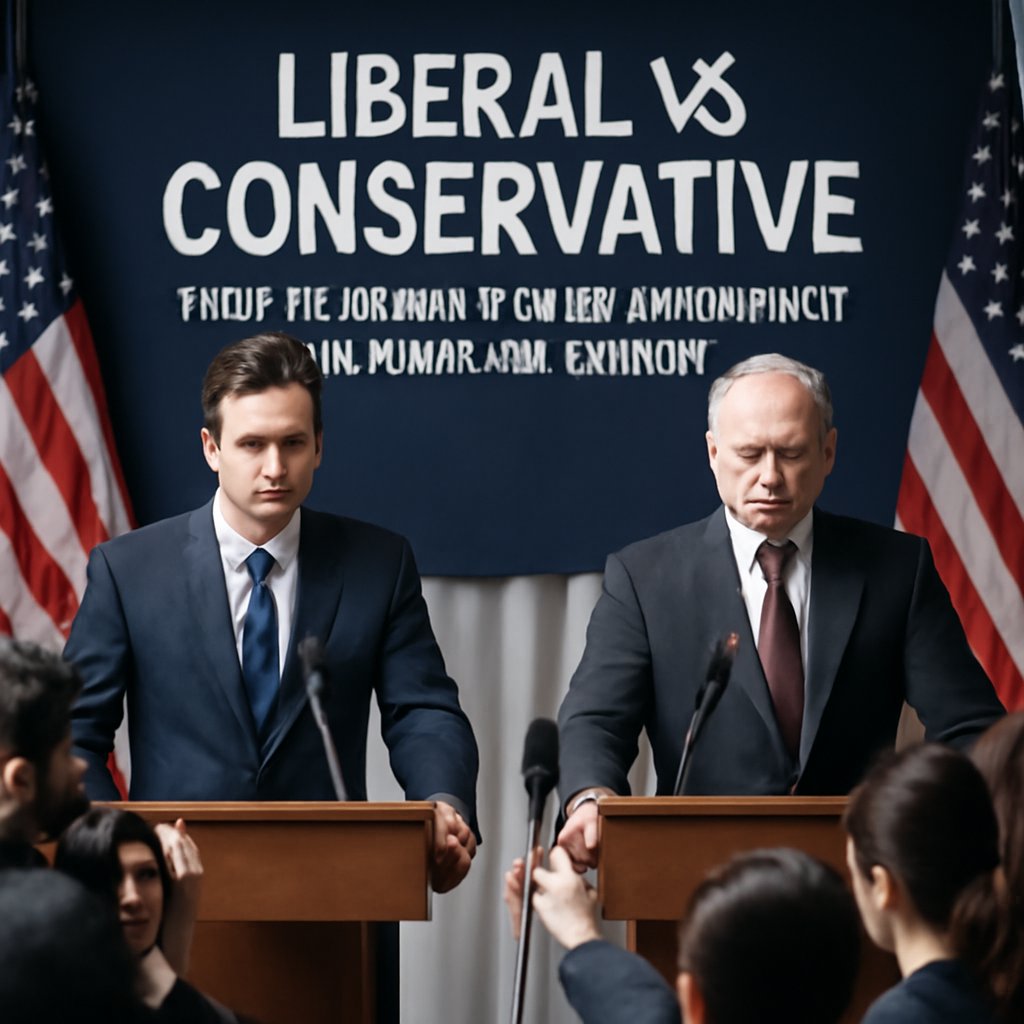
The longstanding ideological tensions between liberal and conservative thought have indeed molded American political institutions over generations. Grasping these distinctions is not merely academic; it directly informs how legislation gets drafted, how budgets are allocated, and how agencies implement everything from tax credits to environmental permitting. As someone who spent years reviewing regulatory impact statements, I can tell you the mechanism here often boils down to differing assumptions about whether government or markets correct for externalities more efficiently.
In contemporary usage, the liberal framework prioritizes government as a corrective force against market failures and structural disparities. This translates into support for programs such as Social Security’s pay-as-you-go structure, Medicare’s fee-for-service and Advantage models, and Medicaid’s federal-state matching formula. Progressive taxation is framed around brackets that, in recent decades, have seen top marginal rates hover between 35 and 39.6 percent before the 2017 Tax Cuts and Jobs Act lowered the corporate rate from 35 to 21 percent. Environmental policy under this view typically involves command-and-control regulations alongside incentives like the production tax credit for renewables, whose cost-effectiveness the Treasury has tracked through annual reports. Civil liberties expansions frequently reference statutes such as the Voting Rights Act’s preclearance provisions or the Affordable Care Act’s contraceptive mandate.
Conservative principles, by contrast, stress restraint on the administrative state and reliance on price signals. Limited government here means statutory caps on discretionary spending, frequent use of reconciliation procedures to bypass filibusters for tax and entitlement changes, and regulatory review under Executive Order 12866-style cost-benefit tests. Free-market approaches have historically included experiments like welfare reform’s 1996 block-grant conversion, which tied funding to work requirements and produced measurable caseload drops tracked by HHS. Defense priorities emphasize baseline budgeting that has kept military outlays near 3 percent of GDP in most post-Cold War years, with supplemental appropriations for contingencies.
Policy contrasts become concrete in implementation details. On economic measures, liberals have backed minimum-wage statutes indexed to inflation in several states, while conservatives have pointed to empirical studies from the Congressional Budget Office showing potential employment effects in low-margin sectors. Healthcare debates hinge on delivery-system design: single-payer proposals versus premium-support models that convert Medicare into a defined-contribution system. Climate statutes under liberal administrations have layered renewable portfolio standards onto existing Clean Air Act authority, whereas conservative alternatives have favored technology-neutral tax credits or adaptation funding rather than mitigation mandates. Criminal-justice positions diverge on sentencing guidelines—liberals favoring retroactive reductions under the First Step Act framework, conservatives retaining three-strikes statutes at the state level.
Data behind claims of polarization is more nuanced than simple left-right binaries suggest. Pew and Gallup longitudinal surveys show issue-by-issue variation; for instance, majorities across ideologies support increased infrastructure outlays, yet diverge sharply on whether those outlays should be financed through user fees or progressive income levies. European usage of “liberal” to denote market-oriented parties further underscores that labels are context-dependent rather than fixed.
Historical implementation reveals path dependence. The New Deal’s emergency relief agencies evolved into permanent entitlement structures with automatic stabilizers visible in unemployment insurance outlays during recessions. Later conservative efforts, such as the 1980s tax reform that broadened the base while lowering rates, produced revenue feedback effects that OMB scoring models still reference. Understanding these mechanics allows clearer evaluation of whether proposed changes will scale or create unintended fiscal cliffs.
The philosophical foundations underlying these ideological positions deserve closer examination. Liberalism in the American context draws heavily from Enlightenment thought, emphasizing individual rights protection through institutional checks and collective action for common goods. This framework sees market economies as necessary but insufficient—they excel at allocating private goods efficiently yet systematically underprovide public goods like clean air, safe workplaces, and consumer information asymmetry correction. The liberal view holds that democratic government, when properly structured with transparency and accountability mechanisms, can aggregate preferences and correct for these failures more equitably than leaving outcomes to market forces alone.
Conservatism, conversely, emphasizes institutional humility and the limits of rational planning. This perspective, rooted partly in Burke’s reflections on unintended consequences and Hayek’s knowledge problem, posits that dispersed market actors responding to price signals possess information that centralized planners cannot access. Conservatives worry that expansive government, despite good intentions, tends toward bureaucratic inefficiency, rent-seeking by special interests, and unintended consequences that exceed the original problem’s magnitude. They point to examples like occupational licensing requirements that protect incumbent providers while limiting entry, or agricultural subsidies that persist long after their original justification because beneficiary coalitions resist reform.
The educational policy divide illustrates how these philosophical differences generate divergent policy prescriptions. Liberals emphasize universal Pre-K expansion, robust school funding through progressive state tax systems, and federal investment in title programs serving disadvantaged districts. Research from economists like Raj Chetty documenting long-term earnings effects of childhood interventions undergirds this approach. Conservatives stress school choice through vouchers and charter schools, believing competition drives quality improvement more effectively than incremental funding increases. They cite studies showing modest charter-school effects in urban areas while questioning whether funding increases, absent structural reform, meaningfully improve outcomes given decades of per-pupil spending growth that hasn’t always tracked achievement gains.
Social policy differences extend beyond economics into questions of cultural autonomy and community formation. Liberals tend toward framings emphasizing individual choice and protection from discrimination—supporting same-sex marriage, reproductive autonomy, and antidiscrimination statutes across accommodations, employment, and lending. The constitutional analysis here often centers on equal protection and due process rights binding on states through the Fourteenth Amendment. Conservatives, while increasingly accepting individual liberty on several dimensions, remain more cautious about litigation-driven cultural change, preferring democratic majorities to resolve contested issues and maintaining space for religious and traditional community institutions to operate according to their own norms within constitutional bounds.
Immigration policy showcases how these frameworks produce starkly different priorities. The liberal immigration argument emphasizes humanitarian obligations, economic dynamism benefits from immigrant entrepreneurship and labor force growth, and equal moral consideration regardless of birthplace. Data on immigrant fiscal contributions, crime rates (typically lower than native-born populations), and wage effects on native workers (concentrated among prior immigrants and high-school dropouts, with broader economy effects often positive) inform this position. Conservative skepticism focuses on labor-market competition concerns for less-educated workers, fiscal costs of public services provision before naturalization, cultural integration capacity questions, and prioritizing citizens’ labor-market welfare. The debate hinges partly on empirical disagreements about effect magnitudes and timeframes for fiscal break-even on public investments in immigrant integration.
Foreign policy represents another domain where ideological frameworks produce consistent divergence. Modern liberalism emphasizes international institutional development, multilateral coordination through bodies like the United Nations, and conditional aid linking assistance to governance improvements. This perspective sees military force as generally counterproductive without international legitimacy and addressing root causes of conflict through development and institution-building. Contemporary conservatism splits between nationalist skeptics of extensive foreign commitments and interventionists focused on counterterrorism and great-power competition. Both conservative strands stress American sovereignty, skepticism toward international court jurisdiction, and military strength as foundation for credible deterrence—they diverge on whether primacy is defensive or should support active regional leadership.
Understanding these ideological differences requires recognizing that both frameworks contain internal logic and respond to genuine tradeoffs. Larger government programs genuinely do provide insurance and redistribute income, though they also involve deadweight loss and potential for political capture. Markets genuinely do allocate resources efficiently through price discovery, though they underprovide public goods and generate negative externalities. Smart policymaking requires neither wholesale adoption of liberal or conservative approaches but rather careful analysis of specific domains where government or markets function more effectively, recognizing that most real-world policy involves mixed systems requiring both competitive markets and purposeful public action.