

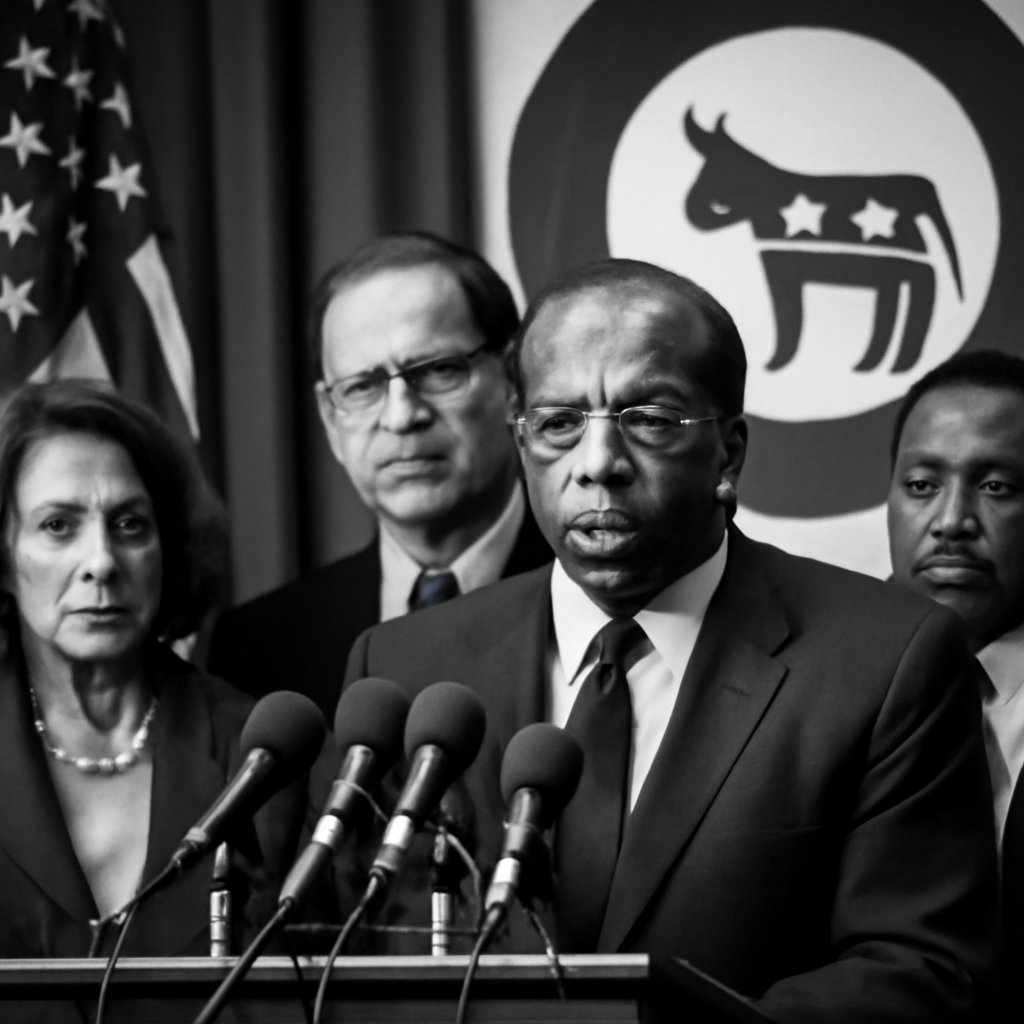
The Democratic Party’s engagement with civil rights has unfolded through successive layers of federal policy design, often marked by internal factional tensions that shaped what actually reached implementation. Early 19th-century alignments with Southern economic interests gave way to incremental Northern shifts after the Civil War, where labor coalitions began incorporating voting access provisions alongside worker protections, even as conservative Southern elements within the party resisted. As someone who worked in policy analysis, the mechanism here is the classic federalism tension: national platforms clashing with state-level enforcement gaps that delayed measurable outcomes for decades.
The party’s transformation accelerated during the 1930s and 1940s, when demographic shifts brought African American voters into the Democratic coalition following the New Deal’s economic interventions. Eleanor Roosevelt’s symbolic gesture of resigning from the Daughters of the American Revolution in 1939 over their refusal to allow Black pianist Marian Anderson to perform at Constitution Hall became emblematic of a broader party reorientation. Yet this shift remained incomplete, with Southern Democrats maintaining significant congressional power through seniority in committee structures, creating internal party dynamics that would define civil rights efforts for decades.
Mid-century developments accelerated under the New Deal framework, with Roosevelt’s administration layering anti-lynching proposals and fair employment practices onto existing economic recovery statutes. The Fair Employment Practice Committee, established through executive order in 1941, represented an early federal effort to prohibit discrimination in defense industries, though its enforcement mechanisms remained limited and its authority was challenged repeatedly. Truman’s 1948 executive orders desegregating the military established an administrative precedent that bypassed congressional gridlock, relying instead on direct executive authority over federal institutions. This approach demonstrated that executive action could advance civil rights objectives when legislative pathways proved blocked, a lesson that would inform subsequent Democratic strategies.
Kennedy’s legislative push and Johnson’s subsequent management of the 1964 Civil Rights Act and 1965 Voting Rights Act translated these into statutory mandates, prohibiting discrimination in employment, public accommodations, and voting procedures. The passage of these landmark statutes required sophisticated legislative maneuvering, as Democratic leadership navigated competing regional interests within their party coalition. Johnson’s decision to support the 1964 Act despite anticipated Southern backlash represented a pivotal moment in party realignment, acknowledging that Democratic electoral strategy would increasingly depend on Northern urban and Black voters rather than the “Solid South” that had anchored the party for a century.
The data behind claims of rapid transformation is actually more nuanced than reported, as Black voter registration in Southern states climbed from roughly 29 percent pre-1965 to over 60 percent by the mid-1970s, yet implementation hinged on Department of Justice preclearance reviews that varied sharply by locality. Mississippi, which had registered fewer than 7,000 Black voters in 1964, saw that number exceed 250,000 by 1968, but continued obstacles to full political participation persisted through poll taxes, literacy tests, and other discriminatory mechanisms that required ongoing federal intervention. The 1965 Act’s preclearance requirement, which mandated that covered jurisdictions obtain federal approval before changing voting procedures, became the most consequential enforcement tool, though its effectiveness depended heavily on DOJ resource allocation and political will.
Johnson’s Great Society initiatives extended civil rights frameworks beyond voting and employment into housing, education, and social services. The Fair Housing Act of 1968, passed in the immediate aftermath of Martin Luther King Jr.’s assassination, prohibited discrimination in housing sales and rentals, though enforcement proved challenging and residential segregation persisted through informal mechanisms that statutory language struggled to address. The establishment of the Department of Housing and Urban Development’s Office of Fair Housing and Equal Opportunity created infrastructure for addressing complaints, yet resource constraints meant that many violations went uninvestigated.
Later expansions folded gender and disability considerations into affirmative action frameworks, which correlated with gradual increases in higher-education enrollment diversity and corporate leadership representation starting in the 1970s. Democratic administrations consistently defended affirmative action programs against legal challenges, though these efforts yielded mixed results as Supreme Court decisions progressively constrained the scope of permissible diversity-focused initiatives. The Education Amendments of 1972, particularly Title IX’s prohibition on sex discrimination in education, represented a significant expansion of civil rights protections that Democratic legislators championed, extending the party’s civil rights advocacy beyond racial categories to encompass gender-based discrimination.
The Affordable Care Act under Obama extended anti-discrimination rules into insurance markets, creating enforcement mechanisms through the Department of Health and Human Services that tied compliance to federal funding streams. As someone who worked in policy analysis, the mechanism here is risk-pool stabilization paired with explicit nondiscrimination clauses, which reduced coverage disparities but required ongoing state-federal coordination to sustain. The ACA’s prohibition on denials based on preexisting conditions and its requirement that insurers cover preventive services without cost-sharing had disparate impacts on communities of color and low-income Americans who had historically faced higher uninsured rates and worse health outcomes.
Recent Democratic priorities have centered on restoring Voting Rights Act elements, criminal justice adjustments, and targeted economic supports for historically disadvantaged groups. The John Lewis Voting Rights Act, introduced repeatedly by Democratic legislators following the Supreme Court’s 2013 Shelby County decision that gutted preclearance requirements, represents ongoing efforts to restore federal voting protections. The George Floyd Justice in Policing Act, advanced by Democratic leadership in response to the 2020 protests, proposes accountability measures for law enforcement, including restrictions on qualified immunity, mandatory body cameras, and creation of a national database tracking officer misconduct. These efforts acknowledge that civil rights protections require continuous renewal as legal precedents shift and new forms of discrimination emerge.
Biden-era efforts to address policing disparities and expand protections for Black-owned enterprises build on prior patterns, though measurable incarceration reductions for nonviolent offenses appear most pronounced in states with sustained Democratic legislative control. The First Step Act, passed with bipartisan support in 2018 but championed by Democrats, modified federal sentencing guidelines and expanded earned-time credits, resulting in the release of thousands of incarcerated individuals. Biden’s subsequent commutations of sentences for individuals convicted under superseded crack cocaine sentencing guidelines addressed a particularly stark example of racial disparity in criminal justice outcomes.
Statistical tracking of affirmative action effects shows continued diversification in select sectors, while broader coalitions now integrate environmental justice metrics into civil rights platforms. The recognition that environmental hazards, industrial facilities, and pollution disproportionately affect communities of color and low-income neighborhoods has led Democrats to frame environmental protection as a civil rights issue. The Justice40 initiative under Biden aims to direct 40 percent of federal climate and clean energy investment benefits to disadvantaged communities, representing an attempt to link climate policy with civil rights objectives.
These developments reflect iterative policy layering rather than linear progress, with outcomes dependent on administrative capacity, judicial interpretation, and state-level uptake. The durability of civil rights achievements remains contested, as conservative legal challenges to affirmative action, voting rights provisions, and other protections have succeeded in constraining their scope. Contemporary challenges around voter access and economic equity continue to test the durability of earlier statutory designs, requiring Democratic policymakers to develop new approaches to address discrimination in evolving forms.