

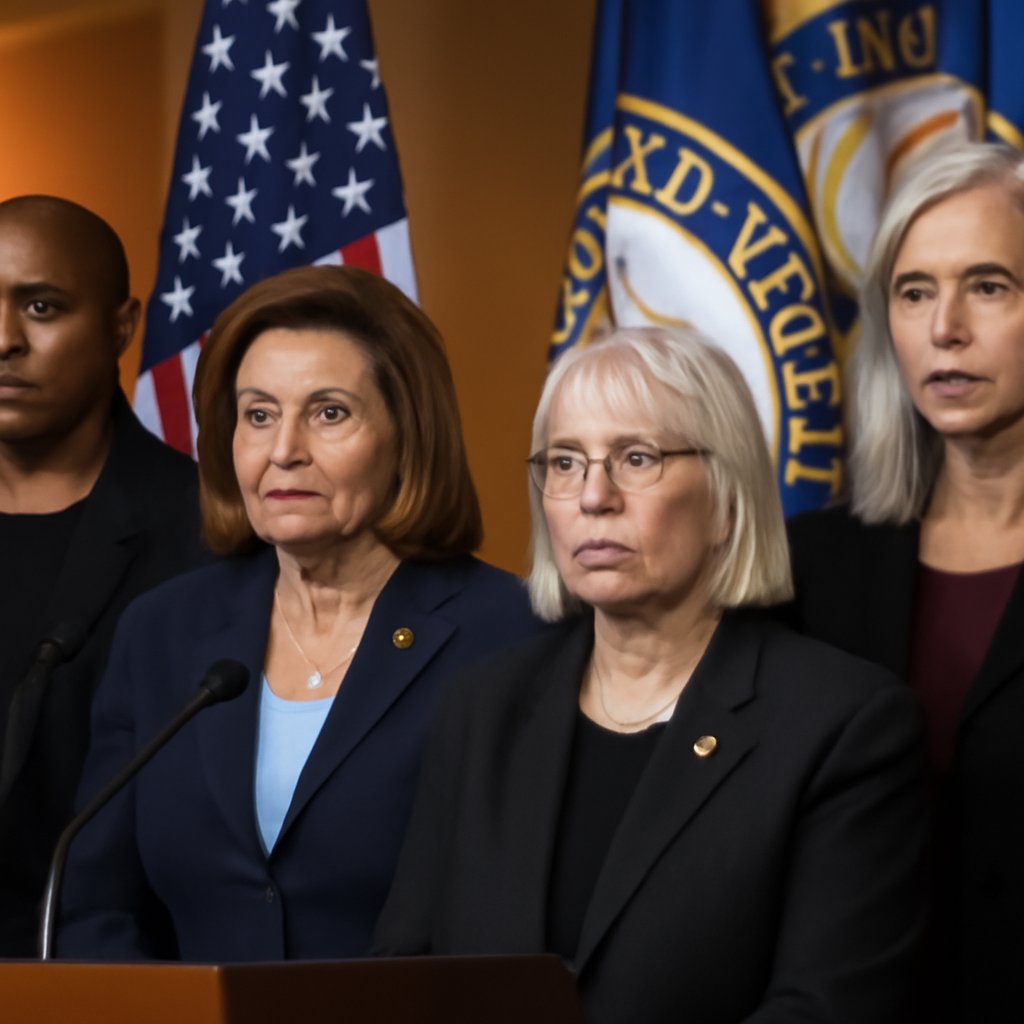
When assessing the roster of prominent Democratic women serving in Congress, their legislative footprints deserve examination through the lens of actual policy mechanics and measurable outcomes rather than broad rhetoric. As someone who worked in policy analysis, the mechanism here often hinges on committee jurisdiction and caucus coordination, which determines whether proposals translate into enacted law or remain aspirational frameworks.
In the House, Nancy Pelosi’s tenure as Speaker produced tangible results on major legislation, including expansions to the Affordable Care Act that extended coverage to additional millions through enhanced subsidies and Medicaid provisions in participating states. Her infrastructure packages incorporated specific funding streams for broadband and transportation, with implementation details tied to state-level matching requirements that affect rollout timelines. The data behind claims of unified caucus support is actually more nuanced than reported, given the need for ongoing negotiations among moderate and progressive factions to secure passage.
Pelosi’s strategic approach to legislative calendars and vote sequencing has proven instrumental in advancing Democratic priorities even within narrow margins. Her experience managing diverse coalitions—from Blue Dog Democrats concerned with fiscal implications to progressive members prioritizing ambitious social spending—demonstrates how institutional knowledge translates into legislative capacity. The American Rescue Plan, for instance, required careful calibration to secure support from members representing districts with different economic baselines and constituent priorities.
Maxine Waters’ leadership of the House Financial Services Committee has centered on oversight hearings examining banking practices, with consumer protection rules aimed at curbing predatory lending. These efforts intersect with affordable housing initiatives that leverage existing HUD programs, though economic data on wealth gaps shows persistent disparities across demographic lines that predate recent reforms. Waters’ committee work has included scrutiny of cryptocurrency regulation, student loan servicing practices, and fair lending enforcement, positioning her at the intersection of consumer protection and economic justice debates.
Her advocacy for community reinvestment has drawn connections between banking policy and neighborhood disinvestment patterns, using committee hearings to create public records on discriminatory lending practices. The mechanics of her influence operate through subpoena power, witness selection, and the framing of questions that shape subsequent regulatory action. Waters has also been instrumental in pushing for increased diversity within banking leadership, arguing that representational equity in financial institutions correlates with more responsive lending practices to underserved communities.
Turning to the Senate, Elizabeth Warren’s work has emphasized consumer financial protections through the bureau she helped establish, which has documented returns of billions via enforcement actions on issues like improper fees. Her proposals on wealth taxation and student debt draw from detailed modeling of revenue impacts, yet implementation would require reconciling with existing tax code structures and IRS administrative capacity. The data on bankruptcy reform highlights how prior laws shifted burdens onto households, a pattern her analyses have sought to address.
Warren’s legislative strategy often involves extensive white papers and technical analyses that provide colleagues with detailed implementation roadmaps. Her student debt proposals, for example, include specific mechanisms for loan forgiveness, income-based repayment modifications, and changes to public service loan forgiveness programs. By grounding advocacy in empirical analysis rather than aspirational framing, Warren has built credibility among senators concerned with fiscal implications and administrative feasibility. Her work on housing affordability has similarly connected zoning restrictions to wealth accumulation disparities, proposing federal incentives for communities adopting inclusionary zoning policies.
Patty Murray’s contributions to education and labor policy include measures expanding early childhood programs via Head Start funding mechanisms and worker protections that reference evolving Department of Labor guidelines. Her approach to family medical leave builds on FMLA precedents while seeking broader eligibility criteria, reflecting collaborative efforts to attract cross-aisle votes without diluting core objectives. As a member of the Senate appropriations committee, Murray has directed resources toward community colleges, vocational training programs, and workforce development initiatives aligned with regional economic transitions away from declining industries.
Her leadership on paid family leave has involved studying implementation models from other democracies while adjusting proposals to U.S. administrative structures. Murray’s bills typically include provisions addressing small business compliance costs and insurance mechanisms that balance employer burden with worker protection, recognizing that passage often requires satisfying concerns from diverse economic sectors. Her work on childcare affordability has connected early childhood investment to workforce participation rates, demonstrating how dependent care access affects labor force dynamics.
Among newer members, Alexandria Ocasio-Cortez has advanced the Green New Deal framework, which links renewable energy transitions to job creation estimates in unionized sectors. Her communications strategy utilizes social media platforms and town halls to mobilize constituent engagement on climate policy, contrasting with traditional legislative approaches. The Green New Deal resolution she introduced frames climate policy not merely as environmental protection but as economic restructuring with implications for manufacturing, construction, and energy sectors. While the resolution itself carries non-binding status, it has influenced Democratic platform language and shaped conversations about the scale of investment required for decarbonization.
Ocasio-Cortez’s legislative approach emphasizes connecting climate action to labor standards, ensuring that renewable energy job creation pathways include prevailing wage requirements and union organizing protections. Her advocacy has also integrated environmental justice concepts, highlighting how pollution exposure patterns correlate with racial and economic demographics. This framing has influenced Democratic proposals on infrastructure and environmental regulation, though translating these aspirations into legislation that balances regional economic concerns with climate objectives requires negotiation with colleagues from fossil fuel-dependent districts.
Pramila Jayapal’s role leading the Congressional Progressive Caucus involves coordinating on immigration and healthcare proposals, including Medicare for All concepts that contrast with the ACA’s mixed public-private model by aiming for single-payer structures. Her experience in community organizing informs her legislative approach, emphasizing grassroots mobilization alongside parliamentary tactics. Jayapal has been instrumental in coordinating progressive member responses to budget reconciliation bills, leveraging her position to ensure progressive priorities receive consideration in legislative vehicles with lower passage thresholds.
Her work on healthcare has involved detailed cost analyses of single-payer systems, drawing from international comparisons while addressing skepticism about implementation timelines and transition mechanisms. Jayapal’s immigration advocacy emphasizes pathway provisions for undocumented populations and asylum system reforms, directly challenging restrictionist framings while proposing mechanisms for regional burden-sharing among jurisdictions absorbing immigrant populations.
Democratic women hold over 90 seats across both chambers, a level of representation that first saw a woman Speaker in 2007. The Consumer Financial Protection Bureau’s enforcement record stands as noted. The Progressive Caucus exceeds 100 members. Legislation on voting rights and police reform has drawn sponsorship from women of color in these ranks. Polling on climate and healthcare investments shows varying support levels. COVID-19 relief packages incorporated direct payments and unemployment expansions, with distribution handled through existing Treasury and state unemployment systems.
Additional Democratic women leaders warrant attention for their specialized policy expertise. Deb Haaland’s role as Interior Secretary represents significant representation in executive decision-making on public lands and energy transition policy. Marcy Kaptur, a senior appropriations member, has shaped infrastructure investment through her committee position. Jerrold Nadler’s counterpart in Democratic leadership, Sheila Jackson Lee, has advanced criminal justice reform proposals addressing sentencing disparities and police accountability mechanisms.
The cumulative effect of these efforts shapes party priorities around equity-focused legislation, though sustained impact depends on navigating implementation hurdles in federal agencies and state partnerships. Understanding how Democratic women legislators actually accomplish policy change requires examining the specific jurisdictional tools, coalition dynamics, and legislative procedures they employ rather than focusing solely on rhetorical commitments. Their effectiveness ultimately depends on whether proposals survive amendment processes, secure sufficient votes, and receive administrative resources for proper implementation.