
For a decade now, I’ve watched Senate Democrats try to advance voting rights legislation through the Judiciary Committee and onto the floor, only to run headlong into the 60-vote cloture threshold. The John Lewis Voting Rights Advancement Act and the Freedom to Vote Act, both priority items for the caucus since 2021, seek to reinstate the preclearance regime that the Supreme Court dismantled in Shelby County v. Holder. Legislative history here traces directly to the 1965 Voting Rights Act’s original enforcement mechanisms, which required covered jurisdictions to clear changes with the Department of Justice or federal courts before implementation.
The stakes of this legislative effort cannot be overstated. Since the Shelby County decision in 2013, states previously required to seek federal approval for voting changes have implemented hundreds of restrictive measures with minimal oversight. Research from the Harvard Civil Rights-Civil Liberties Law Review found that within four years of the ruling, 17 states had passed new voting restrictions, disproportionately affecting communities of color. Democratic advocates argue that restoring preclearance would prevent many of these changes from taking effect, protecting millions of voters before discriminatory rules become embedded in state law.
Having covered the Hill for a decade, the procedural move to tie these measures to broader reconciliation or infrastructure packages is significant, as it attempts to bypass the filibuster while building support among moderate Democrats who prioritize economic provisions for working families. Efforts to expand mail voting and mandate same-day registration nationwide have also surfaced in committee markups, with progressives arguing these modernize access without creating new barriers for minority, young, and low-income voters.
The expansion of mail voting represents one of the most transformative potential changes in Democratic strategy. States that adopted universal mail-in voting during the 2020 pandemic saw increased turnout, particularly among working-class voters who struggle to take time off for in-person voting. Democratic officials point to Colorado and Washington as models, where mail voting has coexisted with election security measures and maintained public confidence. Meanwhile, same-day registration reforms directly address one of the most effective voter suppression tactics: purging rolls or maintaining registration deadlines that disproportionately harm voters with unstable housing or those registering for the first time. Eleven states and Washington D.C. currently offer same-day registration, and exit polling suggests this availability increases turnout by 5 to 7 percentage points in competitive races.
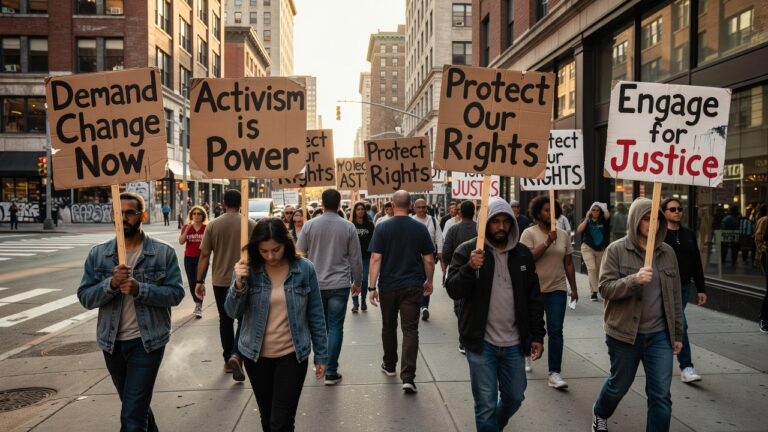
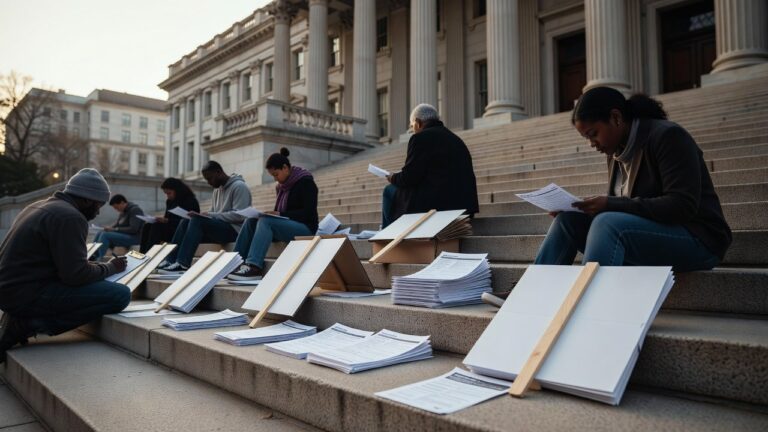
Beyond Capitol Hill, Democratic-aligned groups have poured resources into state-level canvassing and registration drives, particularly in Georgia, Texas, and Arizona. These ground operations, often coordinated with civil rights organizations, focus on practical assistance like mail-ballot applications and transportation, building on the networks that added more than 800,000 new voters in Georgia ahead of the 2020 contests. The infrastructure of voter assistance has become increasingly sophisticated, with organizations employing data analytics to identify neighborhoods with low registration rates and targeting outreach accordingly. In Texas, where voter registration has long lagged behind national averages despite population growth, groups like the Texas Democratic Party have established year-round registration centers in predominantly Latino neighborhoods, recognizing that sustained engagement—not just election-cycle sprints—drives genuine participation increases.
Digital rapid-response teams counter misinformation, while campus outreach targets demographics hit by reduced early-voting windows and strict identification requirements. These digital operations have evolved to combat increasingly sophisticated disinformation campaigns. In 2022, false information about voting dates, polling locations, and ID requirements circulated widely on social media and messaging apps, particularly targeting young voters and non-English speakers. Democratic operatives now deploy multilingual fact-checking teams and partner with social media platforms to flag and remove demonstrably false voting information within hours. Campus organizing remains critical given that young voters face unique barriers—many lack driver’s licenses or live away from their official addresses, making strict ID laws and residency requirements particularly burdensome.
Litigation remains a parallel track. The Democratic National Committee and allied advocates have secured at least 15 major injunctions since 2020, challenging measures such as fewer drop boxes and heightened signature rules on equal-protection and Voting Rights Act grounds. Data from these cases, drawing on expert analysis of turnout drops—including the 2.5-percentage-point decline among Black voters in states with photo-ID laws from 2012 to 2016—aims to establish disparate-impact evidence of discriminatory effect. Notable victories have included federal court decisions blocking voter purges in Georgia and Ohio, and striking down Arizona’s strict mail-ballot signature-matching rules. However, the composition of federal courts has shifted considerably, with Republican-appointed judges now dominating many districts. This reality has forced Democratic litigators to focus increasingly on state courts, where many constitutions provide stronger privacy and voting-access protections than the federal Constitution.
The Brennan Center documented more than 440 restrictive bills introduced across 49 states in 2021, many aimed at mail and early voting options. Reforms like automatic voter registration, shown in studies to lift participation by up to 10 percent, continue to feature in Democratic proposals. California’s automatic registration program, implemented in 2018, added over 4 million voters to the rolls within three years, demonstrating the transformative potential of streamlined registration systems. The John Lewis measure would extend preclearance to over 1,000 jurisdictions with documented histories of discrimination, fundamentally reshaping the landscape of voting access.
Looking ahead, Democratic strategists recognize that voter suppression efforts will continue evolving. Partisan gerrymandering—while technically not voter suppression in the traditional sense—effectively dilutes voting power by manipulating district lines to reduce the impact of opposition voters. Several Democratic-led states have established independent redistricting commissions, and the party has invested heavily in litigation challenging extreme gerrymanders in Republican-controlled states. Additionally, emerging threats such as voter roll purges justified by inaccurate address databases and the increasing criminalization of voter registration workers require sustained attention and resources.
Through this combination of floor maneuvers, sustained organizing, and targeted court actions, the party’s approach underscores a long-running commitment to counter state-level restrictions while preserving equitable ballot access. Success will ultimately depend on whether Democrats can either reform the filibuster, secure Republican support for voting rights—an increasingly unlikely prospect—or build sufficient state-level momentum to create a nationwide cultural and political shift toward universal voting access. The stakes in this struggle extend far beyond any single election cycle; they reflect a fundamental clash over whether American democracy will expand to include all eligible citizens or continue contracting through procedural barriers that fall most heavily on communities of color and working-class voters.
Sources
- NPR Elections Coverage – Comprehensive reporting on voting rights and election administration
- Washington Post Elections – In-depth analysis of voting access and electoral policy
- AP News Elections Hub – Breaking news and reporting on voting procedures and voter registration
- Reuters Politics – Global perspective on democratic processes and voting systems