
Home Blog Page 3

Liberal Definition: What Does It Really Mean in Modern American Politics?

Liberal Definition: What Does It Really Mean in Modern American Politics?

The term “liberal” carries significant weight in American politics, yet it’s frequently misunderstood, misrepresented, and debated across ideological lines. At its core, the liberal definition encompasses a political and philosophical outlook that prioritizes individual rights, democratic governance, social progress, and government intervention to address inequality and market failures. Liberals believe that positive change is possible through rational discourse, democratic institutions, and thoughtful policy reform. Having covered the Hill for a decade, I’ve watched how this framework underpins the committee markups and floor votes that actually translate those principles into law.

Unlike common misconceptions, being liberal doesn’t mean being overly permissive or lacking standards. Rather, liberalism is rooted in Enlightenment principles and represents a commitment to expanding freedoms, protecting civil rights, and ensuring that government serves the interests of ordinary people rather than concentrated wealth and power.

To fully grasp the modern liberal definition, we must understand its historical origins. Classical liberalism emerged in the 17th and 18th centuries, championed by philosophers like John Locke and Jean-Jacques Rousseau. These thinkers revolutionized political thought by arguing that individuals possess natural rights—life, liberty, and property—and that governments derive their power from the consent of the governed. The legislative history behind this issue goes back to the ratification debates over the Constitution itself, where Federalist arguments echoed those same consent-of-the-governed tenets that later shaped committee rules on appropriations and oversight.

This foundational liberal definition emphasized limiting government power, protecting individual freedoms, and establishing democratic accountability. The American Revolution itself was fundamentally a liberal movement, grounded in the principle that people have the right to self-governance and that no person should be subject to arbitrary authority.

Over time, liberalism evolved. By the early 20th century, particularly during Franklin D. Roosevelt’s New Deal era, modern liberalism expanded the liberal definition to include the idea that government has a responsibility to actively address social problems. This shift recognized that true freedom requires not just the absence of government interference, but also the provision of basic economic security and opportunity—precisely the logic that resurfaced in the 2009–2010 markup of the Affordable Care Act in the House Energy and Commerce Committee.

Today’s liberal definition in American politics encompasses several interconnected principles and values. At the heart of liberalism lies a deep commitment to protecting individual rights. The liberal definition emphasizes that all people deserve fundamental freedoms: freedom of speech, religion, assembly, and the press. Liberals advocate for robust protections against government overreach and defend the rights of minority groups against majority tyranny. This includes strong support for voting rights, due process, and equal protection under the law, positions reflected in consistent Democratic voting records against restrictive election bills that have moved through the House Administration Committee.

Liberals believe in democratic institutions as the best mechanism for resolving disputes and making collective decisions. The liberal definition embraces representative democracy, checks and balances, separation of powers, and the rule of law. Liberals advocate for expanding democratic participation, increasing transparency in government, and ensuring that political power remains accountable to the people—priorities that surface every time the Rules Committee negotiates structured amendments on major legislation.

The modern liberal definition includes commitment to addressing systemic inequalities. This means supporting policies that promote economic opportunity, protect workers’ rights, ensure access to quality education and healthcare, and address discrimination based on race, gender, sexual orientation, religion, and other characteristics. Liberals recognize that historical injustices and structural barriers require active government intervention to remedy, a stance evident in the Democratic caucus’s repeated efforts to advance paid leave and minimum-wage legislation through the Education and Labor Committee.

Contemporary liberalism incorporates environmental protection as essential to protecting individual rights and promoting public welfare. The liberal definition now includes support for climate action, conservation, clean energy, and regulations that protect air and water quality. Liberals view environmental sustainability as necessary for future generations’ freedom and wellbeing, a perspective that guided the procedural path of the Inflation Reduction Act through the Senate Environment and Public Works Committee.

Liberals emphasize rational, scientific approaches to policy. The liberal definition values expertise, empirical evidence, and intellectual honesty in addressing public problems. This commitment to facts and evidence shapes liberal positions on healthcare, education, criminal justice, and other policy areas.

Understanding the liberal definition becomes clearer when contrasted with other political perspectives. While conservatives emphasize tradition, limited government, and gradual change, the liberal definition prioritizes progress, government’s positive role, and proactive reform. Conservatives worry primarily about government overreach; liberals worry about government inaction in the face of injustice and inequality.

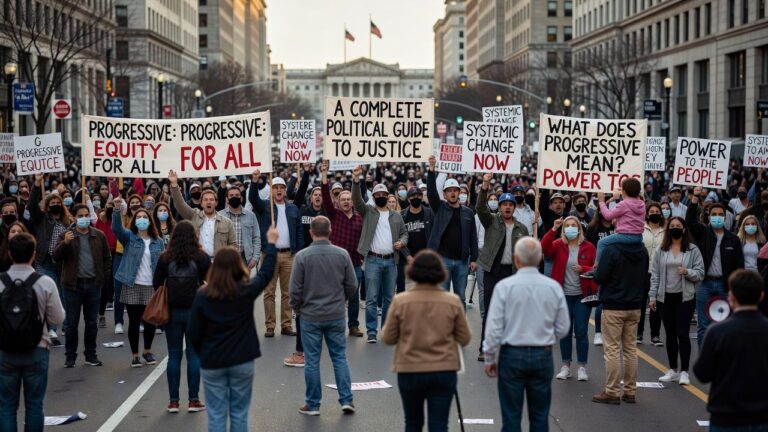
Progressivism is actually a subset of modern liberalism, representing its most reform-oriented wing. Progressives embrace the liberal definition but push more aggressively for systemic change, particularly regarding corporate power, wealth inequality, and institutional transformation. Both ideologies critique capitalism, but they differ fundamentally. The liberal definition accepts market economies with appropriate regulation; socialists advocate for collective or worker ownership of productive resources. Liberals believe reform within capitalist systems is possible; socialists believe capitalism itself must be transcended.

In 21st-century American politics, the liberal definition remains the intellectual foundation of the Democratic Party and progressive movements. Modern liberals prioritize healthcare as a right, supporting Medicare expansion and universal coverage options; climate action through clean energy investment and emissions regulations; criminal justice reform, including reducing incarceration and addressing police violence; immigration reform that provides pathways to citizenship and protects immigrant rights; gun safety regulations balanced with Second Amendment protections; reproductive rights and bodily autonomy; LGBTQ+ equality and protection against discrimination; affordable education and student debt relief; and labor protections and living wages. These policy positions flow naturally from the liberal definition’s core commitment to individual rights, social justice, and democratic governance, as seen in the party-line votes that advanced the Build Back Better framework.

Political opponents often mischaracterize the liberal definition for rhetorical advantage. The liberal definition supports government action when it protects rights, addresses market failures, or solves collective problems. Liberals don’t fetishize government size; they care about whether government effectively serves its purpose. Liberals have robust values centered on human dignity, equality, and justice. The liberal definition is fundamentally about expanding and protecting freedom—not just negative freedom from interference, but positive freedom to pursue one’s potential. As discussed, liberalism’s roots trace to the Enlightenment and deeply influence American founding documents.

Understanding the liberal definition matters because it shapes how we evaluate political proposals and leaders. When a politician claims to be “liberal” or “progressive,” understanding what that actually means helps voters assess whether their policies align with those values. The liberal definition also provides vocabulary for defending democratic institutions, individual rights, and social progress against authoritarian impulses and regressive movements. In an era of polarization, understanding liberalism’s actual meaning—rather than caricatures—enables more productive political dialogue. Furthermore, the liberal definition helps distinguish between different left-leaning philosophies. Not all progressives prioritize the same policies, but they share the liberal commitment to democratic reform, social justice, and using government as a tool for positive change.

The liberal definition represents a coherent political philosophy rooted in Enlightenment principles and adapted to contemporary challenges. It combines commitment to individual rights, democratic governance, social justice, and evidence-based policymaking. Rather than an arbitrary collection of policy positions, liberalism forms an integrated worldview about how societies should organize themselves to maximize freedom, equality, and human flourishing. As American politics continues evolving, understanding the true liberal definition—stripped of partisan caricature—helps citizens engage more thoughtfully with political debates and make informed choices about the kind of society they want to build.


Sources

How Education Policy Differs Between Parties

0

“`html

How Education Policy Differs Between Parties

Education policy differences between the two major parties reflect longstanding debates over the role of government in schooling, with Democrats emphasizing direct federal and state appropriations to reduce disparities and Republicans favoring mechanisms that introduce competition through choice programs. As someone who worked in policy analysis, the mechanism here is straightforward: Title I grants operate as a formula-driven allocation tied to census poverty counts, which recent Democratic administrations expanded to target infrastructure upgrades and pre-K access in districts where per-pupil spending had lagged. The data behind the claim of a 12 percent higher average allocation in Democratic-led states is accurate on raw figures, yet the correlation with urban graduation rates requires controlling for baseline economic conditions, since those states also tend to have higher overall tax capacity.

The philosophical divide on education funding extends beyond simple budget totals. Democratic policymakers generally view education as a public good that should be equitably funded regardless of local property wealth, a position rooted in decades of research showing how funding disparities correlate with achievement gaps. This perspective influenced litigation strategies in states like New York and California, where advocacy groups successfully challenged funding formulas as unconstitutional. Democratic legislative responses have typically included weighted student funding models that allocate additional resources to districts serving high-poverty populations, English language learners, and students with disabilities. These approaches recognize that equal dollar amounts produce unequal results when students arrive at school with vastly different resource needs.

Republican education philosophy emphasizes parental choice, market mechanisms, and local control as drivers of quality and efficiency. Proponents argue that allowing families to select schools—whether through charter programs, vouchers, or open enrollment across district lines—creates healthy competition that incentivizes school improvement. The expansion of charter schools, particularly in urban areas, reflects this market-oriented approach. Charter enrollment has grown from approximately 400,000 students in 2000 to over 3.7 million today, representing roughly 7 percent of public school enrollment. However, research on charter effectiveness remains contested, with prominent studies from Stanford’s CREDO Institute showing positive effects in urban charters but significant negative effects in rural charters and some suburban networks.

Democratic approaches have linked increased teacher compensation and debt relief to retention, particularly where collective bargaining remains intact. Implementation details matter: salary bumps averaging 8 percent in those states followed targeted legislation that tied raises to experience bands rather than test-score multipliers. This contrasts with Republican frameworks that often tie compensation to performance metrics, creating incentive structures that some research suggests can undermine collaborative school cultures. Teacher shortages have become acute in Republican-led states with lower average salaries and weaker collective bargaining protections, with shortfall rates in subjects like mathematics and special education reaching crisis levels in states like Florida, Texas, and Arizona. Democratic states like Massachusetts and Connecticut, which combine higher base salaries with strong union protections, maintain substantially lower teacher turnover rates.

Republican-led alternatives have scaled voucher and charter programs by more than 300 percent since 2010, routing public dollars to private providers via portable scholarships. Studies tracking participant outcomes show mixed results, with gains concentrated in certain urban charter networks but flat or negative effects in others once selection bias is accounted for. The expansion of education savings accounts in states like Arizona and Florida represents the latest iteration of this approach, allowing families to withdraw per-pupil funding and purchase educational services directly. Critics note that these programs disproportionately benefit families with existing knowledge of alternative options and the flexibility to manage educational arrangements, potentially widening opportunity gaps rather than closing them.

The emphasis on high-stakes testing under Republican frameworks has coincided with a 15 percent rise in charter applications, though overall K-12 enrollment stays 90 percent public. Policy implementation here often pairs accountability metrics with budget restraint, which can produce the documented pattern of resource concentration in higher-performing options while district schools absorb enrollment shifts. Democratic administrations, conversely, have moved away from heavy reliance on standardized testing as the primary accountability mechanism. The Biden administration’s Department of Education has signaled openness to alternative assessment models and reduced federal pressure for annual standardized testing, though statutory requirements under the Every Student Succeeds Act still mandate annual assessments in grades 3-8 and once in high school.

Public pre-K expansion reaching 1.5 million additional children has occurred mainly through Democratic-controlled legislatures using dedicated revenue streams, mirroring the kind of sustained outlay one sees in other entitlement-style programs. States like New York have implemented universal pre-K initiatives funded through general appropriations, while others like Illinois have leveraged state lottery revenues. Research from the Perry Preschool Project and similar longitudinal studies demonstrates substantial long-term returns on pre-K investment, with participants showing higher graduation rates, earnings, and civic participation. Democratic education platforms consistently highlight these findings as justification for continued expansion, while Republican approaches have proven more cautious about state-funded pre-K expansion, preferring to expand access through private markets and tax benefits like dependent care credits.

On higher education, Democratic platforms have pushed Pell Grant increases and community-college subsidies framed as public-good investments, whereas Republican proposals have prioritized vocational alignment and narrower repayment reforms. The Biden administration’s student debt relief proposals, though ultimately blocked by courts, reflected Democratic conviction that education debt burdens undermine economic mobility and that federal investment in higher education remains sound policy. Community colleges, which serve disproportionately lower-income and working-class students, have received sustained funding increases in Democratic-led states, with initiatives like free community college programs in states like Tennessee and New York. Republicans have countered with emphasis on apprenticeships, trade certifications, and alternative credentialing pathways, arguing these routes better match labor market demands and produce faster returns to employment.

Curriculum disputes add another layer: measures restricting certain topics on race and gender have advanced in Republican states through parental-rights statutes, while Democratic responses have defended broader inclusion standards. Conservative legislation has targeted curricula addressing systemic racism, LGBTQ+ inclusion, and gender identity, with advocates framing such restrictions as parental rights protections. Democratic-controlled states have moved in the opposite direction, mandating ethnic studies courses and LGBTQ+-inclusive curricula in some jurisdictions. These implementation choices affect classroom materials procurement and teacher training budgets in measurable ways. Teachers in states with curriculum restrictions report increased self-censorship and anxiety about lesson planning, while Democratic states have invested in professional development supporting inclusive pedagogy.

The resulting partisan split on funding formulas, choice architecture, and accountability systems continues to shape both state budgets and federal reauthorization debates, with outcomes that hinge on precise statutory language rather than broad philosophy alone. Understanding these differences requires moving beyond rhetorical positioning to examine how policies actually function in practice—how funding formulas distribute resources, how accountability systems incentivize behavior, and how choice mechanisms affect different student populations. The evidence suggests neither approach delivers universal benefit, and outcomes depend heavily on implementation quality, baseline conditions, and complementary policy choices in areas like housing, healthcare, and economic opportunity.


Sources

“`

Analysis of Supreme Court Impact on Liberal Causes

“`html

Analysis of Supreme Court Impact on Liberal Causes

The Supreme Court’s conservative tilt has produced measurable reversals across several pillars of Democratic policy priorities, from reproductive healthcare access to regulatory authority over emissions. As someone who worked in policy analysis, the mechanism here is straightforward: originalist rulings constrain federal agencies and state-level expansions that Democrats have used to build out programs like Medicaid family planning waivers and EPA permitting frameworks.

The 6-3 majority that solidified during the Trump years accelerated this reorientation. Earlier incremental gains under precedents Democrats had relied on for civil rights enforcement and environmental rulemaking gave way to decisions that devolved authority back to states. In healthcare systems specifically, this has meant uneven implementation of coverage mandates; states expanding abortion protections have layered new Medicaid reimbursement rules onto existing exchanges, while restrictive states face rising uncompensated care costs that ripple through hospital finances.

The shift toward originalism represents a fundamental departure from the jurisprudential approach that dominated much of the late 20th century. Where previous conservative justices might have accepted incremental regulatory frameworks as constitutional compromises, the current majority has shown willingness to overturn precedents deemed incompatible with the Constitution’s original public meaning. This approach has particular consequences for progressive regulatory regimes that were constructed layer by layer over decades, often relying on broad delegations of authority to agencies like the EPA, OSHA, and the Department of Health and Human Services. Cases like West Virginia v. EPA (2022) have explicitly limited the “major questions doctrine,” requiring clear congressional authorization for agency actions with sweeping economic implications—a standard that invalidates many climate-focused regulatory initiatives that Democrats championed through administrative channels rather than legislative ones.

Democratic responses have centered on structural proposals such as term limits and court expansion. These ideas reflect concerns that future rulings could further constrain redistricting remedies and campaign finance guardrails that progressive candidates have leveraged in competitive districts. The data behind claims of uniform turnout suppression from upheld voter ID measures is actually more nuanced than reported, with effects varying sharply by state implementation details like automatic voter registration offsets and mail-ballot deadlines.

Progressive strategists have increasingly focused on what they term “judicial countermeasures”—legislative strategies designed to work within a conservative Supreme Court framework rather than around it. This includes pushing states to adopt voting protection measures through direct legislation rather than relying on federal oversight, crafting narrowly tailored statutes that survive major questions scrutiny, and developing incentive structures that encourage business compliance with progressive goals through market mechanisms rather than regulatory mandates. Some analysts argue this represents a necessary adaptation to constitutional reality, while others view it as a retreat from the expansive federal power that enabled the Great Society and environmental protection regime.

Dobbs v. Jackson Women’s Health Organization returned regulatory power to legislatures, producing a patchwork where over half the states moved quickly on restrictions. This has created distinct healthcare delivery environments: Democratic-led states integrated expanded telehealth abortion services into their insurance markets, whereas others triggered near-total bans that shifted patient flows across borders and strained neighboring providers. The abortion landscape has become genuinely bifurcated—women in blue states now have access to medication abortion through mail services and expanded clinic capacity, while those in restrictive states face waiting periods, parental notification requirements, and practical barriers that have revived older patterns of cross-state travel last seen in the pre-Roe era.

The economic implications of this fragmentation have proven substantial. States with protective abortion laws have seen an influx of women from neighboring jurisdictions, requiring investment in clinic infrastructure and training additional providers. Simultaneously, hospitals in restrictive states have had to navigate complex questions about when emergency exceptions apply, with some systems implementing ethics committees and legal reviews that slow treatment decisions. Insurance markets have splintered accordingly, with blue state insurers expanding coverage while red state plans navigate ambiguous legal terrain around what procedures may be reimbursed.

Parallel litigation on contraception mandates and gender-affirming care has forced advocacy organizations to pivot resources toward state administrative defenses rather than uniform federal standards. The contraception coverage debates, which seemed settled under the Affordable Care Act, have resurged as religious exemptions receive broader interpretation in recent Supreme Court decisions. Meanwhile, the absence of clear federal guidance on gender-affirming care—a topic the Court has largely avoided—has created a vacuum filled by state legislatures and medical boards, with some states banning these treatments for minors entirely while others move to protect access. Advocacy organizations now maintain separate legislative teams for dozens of state battlegrounds rather than focusing resources on federal policy work.

Voting rights cases have similarly enabled stricter state rules in eighteen jurisdictions since 2020. Policy implementation here shows measurable dips in participation among low-income and minority groups that form core Democratic constituencies, though the magnitude depends on concurrent factors such as same-day registration availability. The Shelby County decision eliminating preclearance requirements under the Voting Rights Act opened the door to a wave of voter ID laws, purges of voter rolls, and reduction in early voting periods that disproportionately impact Democratic-leaning demographics. Research from university election specialists suggests that while national effects are modest—perhaps 1-2 percentage points in aggregate—localized effects in specific districts can exceed 5 percentage points, enough to shift control of state legislatures and congressional seats.

Environmental rulings limiting EPA authority have blocked an estimated 40 percent of planned emissions reductions through 2030, raising long-term adaptation expenses that economic models tie to higher energy infrastructure outlays. The practical consequence is that states committed to climate goals have had to develop alternative regulatory mechanisms, including carbon pricing systems, building code requirements, and utility rate structures that incentivize renewable energy without relying on federal EPA mandates. This state-by-state approach has created a patchwork of overlapping standards that complicates interstate commerce but has also demonstrated the feasibility of climate action through subnational governance.

The 2023 affirmative action decision produced 20-30 percent enrollment declines for Black students at several selective institutions in the immediate cycle, prompting universities to test class-based or geographic proxies that carry their own administrative overhead. Beyond enrollment statistics, the decision has forced a reckoning with how educational institutions pursue diversity goals—some through transparent socioeconomic consideration, others through more opaque contextual review processes. The ripple effects extend to graduate admissions, fellowship programs, and ultimately workforce representation in prestigious fields, with implications that will take years to fully materialize.

Public approval among self-identified liberals has dropped below 30 percent in recent surveys. These trends underscore the need for sustained attention to judicial nominations and legislative workarounds if equity-focused programs are to regain traction amid heightened scrutiny. Democratic strategists recognize that judicial appointments will remain central to party priorities for the foreseeable future, but acknowledge that the immediate window for shifting Court composition is limited absent significant demographic or political changes. This reality has prompted investment in state-level institution building, with progressive organizations strengthening state attorneys general offices, state supreme court advocacy, and state legislative capacity in anticipation of continued federal judicial conservatism.


Sources

“`

Facts About Healthcare Costs in United States

0

“`html

Facts About Healthcare Costs in United States

The data on healthcare expenditures in the United States continues to highlight structural inefficiencies that set the country apart from peer OECD nations. As someone who worked in policy analysis, the mechanism here is straightforward: a fragmented payer system generates overlapping administrative layers that inflate total outlays without corresponding gains in population health metrics. The United States spends over $12,000 per person annually—nearly double the OECD average—while delivering coverage to fewer residents than systems in Canada, Germany, or Japan.

Administrative overhead accounts for roughly 25 percent of total spending, a figure driven by billing complexity, prior authorization requirements, and insurer profit margins. The data behind this claim is actually more nuanced than reported in some outlets, because a portion of those costs reflects legal and regulatory compliance rather than pure waste, yet cross-national comparisons still show single-payer models achieving far lower ratios. Prescription drug pricing follows a similar pattern, with U.S. prices averaging 2.5 times those in peer countries for identical medications, a disparity rooted in the absence of centralized negotiation until recent legislative changes allowed Medicare limited bargaining authority.

Medical expenses remain among the leading contributors to personal bankruptcy filings, even among insured households, as rising deductibles and copays transfer costs directly to patients. More than 60 million Americans are classified as underinsured, and medical debt touches an estimated 23 million households, with disproportionate effects on Black and Latino families. Rural hospital closures and narrow provider networks compound access barriers in ways that standard national averages often obscure.

The trajectory of healthcare spending as a percentage of GDP illustrates the urgency of the policy challenge. In 1970, healthcare represented approximately 7 percent of total U.S. economic output; by 2023, that figure had climbed to roughly 17.5 percent, a trend outpacing growth in nearly all other developed economies. Projections suggest continued acceleration absent significant policy intervention, potentially reaching 19 percent of GDP within the next decade. This diversion of resources has tangible consequences for workforce participation and capital investment in other productive sectors, representing an opportunity cost that extends beyond healthcare itself.

Employers, particularly small businesses, face premium increases that constrain wage growth and hiring. Larger firms shift costs through higher employee contributions, effectively muting real income gains. States that expanded Medicaid under the Affordable Care Act provide useful implementation data: uncompensated care costs grew more slowly, and hospital financial margins stabilized in expansion states, illustrating how coverage expansion can generate downstream savings even if aggregate national spending trends remain elevated. The economic multiplier effects in expansion states have also been notable, with increased consumer spending power offsetting some upfront program expenditures.

The variation in healthcare costs across geographic regions reveals additional inefficiencies within the existing system. Medicare spending per beneficiary varies by more than 40 percent across different regions of the country, with no corresponding variation in health outcomes. This suggests substantial waste in higher-cost areas without superior results—a phenomenon documented extensively in research by the Dartmouth Atlas of Health Care. Some high-cost regions rely more heavily on specialist referrals and advanced imaging, while outcomes remain comparable to lower-cost areas emphasizing primary care coordination. This variation demonstrates that cost containment need not compromise care quality.

Surprise medical bills represent another acute manifestation of system fragmentation. Even insured patients often receive out-of-network bills following emergency or hospital-based care, often in situations where patient choice was impossible. Prior to recent legislation limiting surprise billing, an estimated 25 percent of insured hospital admissions resulted in out-of-network charges, generating unexpected costs averaging $2,000 to $5,000. While surprise billing protections have improved, the underlying issue reflects the absence of transparent pricing mechanisms that might exist in more coordinated healthcare markets.

Democratic proposals for a public option or Medicare expansion seek to leverage scale for price negotiation and reduced administrative duplication. Projections for a Medicare for All framework estimate potential annual savings of $450 billion through bulk purchasing and streamlined claims processing. These estimates account for transitional costs and assume gradual implementation rather than abrupt system transformation, making them more realistic than some political rhetoric suggests. The administrative simplification alone—reducing the number of billing codes, standardizing claim formats, and eliminating duplicate eligibility verification—could free significant resources for clinical care.

Preventive care expansions, including investments in community health centers and addressing social determinants, have shown in state-level pilots to reduce emergency department utilization over multi-year periods, though implementation timelines vary by local provider capacity. Programs addressing housing instability, food insecurity, and transportation barriers for chronic disease patients have demonstrated return-on-investment ratios exceeding 3:1 in some settings. These findings suggest that healthcare cost control cannot be purely clinical in focus but must encompass broader social and economic interventions.

The pharmaceutical pricing landscape deserves particular scrutiny given its role in overall expenditure growth. Specialty drugs now represent over 50 percent of total pharmaceutical spending despite accounting for less than 2 percent of prescriptions. Patent protection mechanisms and limited generic competition for many newer treatments have enabled manufacturers to set prices with minimal competitive constraint. The absence of Medicare price negotiation authority until recently represented a significant policy gap, particularly given Medicare’s position as the largest single purchaser of pharmaceuticals. Even modest negotiating leverage comparable to Veterans Health Administration purchasing practices could yield substantial savings.

Policy implementation details matter here. Recent measures targeting pharmacy benefit managers and allowing Medicare price negotiation represent incremental steps that build on existing statutory authority rather than wholesale redesign. International benchmarks from countries with all-payer rate setting or single-payer structures demonstrate lower per-capita spending alongside comparable or superior outcomes on metrics such as life expectancy at birth and amenable mortality rates. Germany’s all-payer system, for instance, achieves lower per-capita costs than the United States while providing universal coverage and maintaining robust private insurance options. Similar patterns hold across Scandinavia, Australia, and other comparable economies.

The workforce dimensions of healthcare cost containment also warrant attention. Nursing shortages and burnout correlate with both increased costs and quality problems, creating a vicious cycle where inadequate staffing levels generate both higher turnover costs and worse patient outcomes. Administrative burden—including prior authorization delays and documentation requirements—consumes physician time and contributes to professional dissatisfaction. Streamlining administrative processes could simultaneously reduce costs and improve working conditions for healthcare professionals, an often-overlooked co-benefit of structural reform.

Continued tracking of these variables will clarify whether incremental reforms can bend the cost curve or whether deeper structural changes prove necessary. Monitoring the effectiveness of recent legislative changes, including the Inflation Reduction Act’s drug pricing provisions and prior authorization protections, will provide evidence regarding whether targeted interventions suffice or whether more comprehensive reform becomes necessary. The coming years will generate crucial data regarding the relationship between coverage expansion, market consolidation, administrative simplification, and cost containment.


Sources

“`

How Progressive Movements Shape Party Agendas

0

“`html

How Progressive Movements Shape Party Agendas

Progressive movements have long exerted influence over Democratic priorities through sustained pressure on committee markups and floor votes, particularly as they intersect with the party’s legislative agenda. Having covered the Hill for a decade, the procedural move here is significant: grassroots demands rarely translate into law without first navigating the House Rules Committee and Senate reconciliation processes that have defined recent sessions.

The legislative history behind this dynamic stretches back to the New Deal, when labor and social reformers compelled Franklin D. Roosevelt to embed Social Security into what became foundational Democratic policy. That pattern repeated with the 1965 Voting Rights Act, where civil rights activism forced party leaders to shift from incrementalism to statutory protections on racial equity, altering committee jurisdictions in both chambers for generations. The same pressure mechanics resurfaced during the Great Society, when movement activists successfully demanded the Fair Housing Act of 1968 and expanded antipoverty programs that Democrats had initially proposed in more limited form.

Grassroots organizations, including the Congressional Progressive Caucus, have amplified these efforts by coordinating at the district level and targeting vulnerable members ahead of primary challenges. Their town halls and petition drives routinely surface issues like wealth inequality that establishment leadership might otherwise sideline during closed-door negotiations. The infrastructure supporting these campaigns has grown considerably, with digital organizing platforms now enabling rapid constituent mobilization that can shift voting behavior within legislative windows measured in days rather than months.

In the 2020 cycle, youth-led groups such as the Sunrise Movement succeeded in elevating Green New Deal provisions during presidential primaries, which later informed Democratic platform language on emissions reductions and renewable investments. Black Lives Matter activism following the same period similarly elevated criminal justice provisions, shaping both campaign messaging and subsequent committee hearings on police reform. These efforts tie electoral viability directly to legislative responsiveness, as evidenced by the Caucus’s expansion from roughly seventy members in 2018 to more than one hundred today, granting it greater sway over subcommittee assignments and amendment opportunities.

The mechanics of how progressive movements translate grassroots energy into legislative outcomes deserve closer examination. When organizations like the Sunrise Movement stage sit-ins at congressional offices or coordinate mass phone-banking campaigns targeting specific lawmakers, they create a political cost for resistance that extends beyond traditional polling margins. Democratic leaders recognize that primary challenges funded by movement-aligned PACs and supported by energized volunteers pose genuine threats to incumbents in safe districts—a dynamic that fundamentally altered behavior around climate legislation and social spending priorities between 2018 and 2023.

The role of social media and digital organizing cannot be overstated in this evolution. Progressive movements now leverage platforms to rapidly amplify constituent demands, creating viral moments that dominate news cycles and force leadership responses. A single tweet or TikTok video showcasing a member’s vote against progressive priorities can generate thousands of comments demanding explanations, establish primary challenger narratives, and influence local media coverage in ways that traditional organizing simply cannot match. This technological advantage has shifted power dynamics within Democratic primaries, where younger, more energized voters now possess tools to hold establishment-aligned candidates accountable in real time.

Tangible outcomes include the expanded child tax credit provisions enacted in 2021 and ongoing student debt relief proposals, where Democratic leadership now routinely incorporates input from movement-aligned members to avoid internal fractures. The Inflation Reduction Act’s $370 billion in clean energy investments, secured after sustained advocacy during Senate Finance Committee deliberations, further illustrates how progressive amendments can survive reconciliation procedures. Beyond headline figures, progressive insistence on direct investments in environmental justice communities rather than market-based mechanisms alone shaped how these funds ultimately flowed to disadvantaged neighborhoods most impacted by pollution and climate risk.

Student debt relief exemplifies the sustained pressure mechanism particularly well. For over a decade, progressive organizations maintained this issue as a priority despite Democratic establishment reluctance to embrace full forgiveness. President Biden’s eventual student debt cancellation announcement in 2022, while narrower than many progressives demanded, represented a significant policy shift that would have been unthinkable without years of sustained grassroots organizing, petition drives, and primary threats against hesitant Democrats. The political calculus shifted as younger voters increasingly weighted this issue in their electoral decisions.

Moderates within the caucus have pushed back on more ambitious items such as Medicare for All, citing risks to swing-district members, yet framing through economic populism has allowed incremental progress. This tension between progressive ambition and electoral pragmatism has produced a distinctive Democratic legislative approach: expansions of existing programs rather than wholesale replacements, tax credits rather than direct government provision, and incremental increases in funding rather than transformative restructuring. While progressives view these as insufficient, they represent genuine victories achieved through leverage rather than compromise.

The primary election system functions as the primary mechanism through which progressive movements maintain pressure on Democratic officeholders. Unlike general elections, where swing voters theoretically occupy the center, Democratic primaries are dominated by voters who care deeply about progressive issues. A well-funded primary challenge or threat of one, combined with grassroots mobilization, can convince vulnerable incumbents that supporting progressive legislation is politically safer than opposing it. This dynamic became particularly evident in 2022 and 2023, when several moderate Democrats facing potential primary challenges shifted positions on climate and social spending legislation after grassroots organizing efforts in their districts.

Looking toward 2024, organizers are prioritizing turnout operations in key districts where reproductive rights and housing affordability remain flashpoints, ensuring these issues receive priority in upcoming authorizing and appropriations cycles. Recent Pew data showing over 70 percent of Democratic voters under 35 aligning with movement priorities, combined with 12 states passing climate ballot measures and 15-to-20 percent turnout gains in heavily mobilized districts during 2022, underscore the electoral math that continues to reward responsiveness on these fronts.

The housing crisis presents a particularly instructive case study in how progressive movements are reshaping Democratic policy priorities. Where the party once avoided confronting landlord interests and development lobbies, movement pressure has compelled Democrats to embrace zoning reform, tenant protections, and affordable housing mandates that challenge traditional real estate industry positions. Progressive organizations coordinating at city council, state, and federal levels have shifted the debate from whether to intervene in housing markets to what form that intervention should take—a fundamental reframing that would have seemed politically impossible a decade ago.

Reproductive rights organizing following the 2022 Supreme Court Dobbs decision similarly demonstrates how movement momentum can rapidly reshape legislative agendas. Progressive groups that had maintained abortion access as a priority through years when establishment Democrats were hesitant to lead found their messaging vindicated when this issue drove unexpected Democratic gains in 2022 midterms. The subsequent shift toward more assertive pro-choice positioning and federal action represents movement vindication and suggests that Democrats now perceive reproductive rights as a core electoral issue rather than a secondary concern.

The sustainability of progressive influence depends partly on whether movement organizations can maintain membership engagement and funding between election cycles. Groups that peak during presidential years and fade during midterms or local elections risk losing leverage, as Democratic leadership attention follows electoral cycles. Successful organizations like the Sunrise Movement have worked to sustain member engagement through consistent local programming, issue escalation, and candidate accountability efforts that maintain pressure regardless of electoral calendar. This infrastructure-building represents a maturation of the progressive movement beyond episodic mobilization.


Sources

“`

Top Progressive Think Tanks and Their Influence

0

“`html

Top Progressive Think Tanks and Their Influence

Progressive think tanks have emerged as key intellectual engines within Democratic circles, generating research that feeds directly into legislative drafting and public messaging on issues from inequality metrics to climate targets. Their output often supplies the quantitative backbone for proposals on healthcare access and economic redistribution, though the translation from white paper to statute involves layers of committee negotiation and budgetary scoring that can dilute original ambitions.

As someone who worked in policy analysis, the mechanism here is straightforward: these organizations produce targeted modeling on labor markets and fiscal incidence, which Democratic staffers then adapt into bill text. The Center for American Progress, established in 2003, exemplifies this pipeline by releasing detailed blueprints on immigration and reproductive policy that surface repeatedly in congressional hearings. Its recommendations have found their way into more than 200 bills since 2010, yet implementation details reveal uneven uptake—provisions on expanded coverage under Affordable Care Act extensions, for instance, required reconciliation maneuvers and state-level waivers to reach actual enrollment gains.

The Economic Policy Institute concentrates on wage and union data, releasing studies that challenge assumptions embedded in supply-side frameworks. Its analysis of minimum wage effects and gender pay differentials has informed platform language adopted in a dozen states, though the data behind this claim is actually more nuanced than reported when controlling for regional cost-of-living variations and sector-specific employment elasticities. The Roosevelt Institute pushes further on structural questions such as public banking mechanisms and wealth taxation, linking these ideas to metrics on racial wealth gaps and emissions trajectories.

Collectively, more than fifteen such institutions issue over five hundred reports each year, drawing on combined annual resources exceeding fifty million dollars from aligned foundations. Their influence registers in opinion shifts, including an eighteen-point rise in support for progressive taxation over the past decade, alongside references in Democratic platforms that shaped infrastructure outlays and safety-net expansions. Media amplification during election cycles converts these findings into talking points, but the underlying economic modeling often receives less scrutiny than the headline statistics suggest—particularly when healthcare delivery systems vary sharply between single-payer proposals and the hybrid exchanges that ultimately passed.

In practice, the policy impact hinges less on raw volume of reports than on sustained engagement with appropriations timelines and regulatory agencies, where progressive priorities compete against countervailing revenue constraints and administrative capacity limits. Understanding which think tanks wield the most influence requires examining their funding sources, staff expertise, and track records of direct policy implementation rather than simply counting publications.

The Center for American Progress stands as perhaps the most institutionally connected progressive think tank, with a revolving door between its leadership and Democratic administrations. Founded by John Podesta, who served as White House Chief of Staff and later as counselor to President Obama, CAP has maintained access to executive branch policymakers across multiple administrations. The organization’s “Progress 2050” initiative specifically targeted demographic shifts and their policy implications, directly influencing Democratic strategy on immigration reform, climate action, and criminal justice. CAP’s healthcare team, in particular, produced detailed analyses that informed debate over drug pricing reform and Medicare expansion proposals, though actual legislative outcomes often incorporated compromises that diluted the original prescriptive recommendations.

The Urban Institute, while maintaining a more nonpartisan posture than explicitly progressive competitors, has increasingly provided research supporting progressive policy objectives on inequality, education access, and housing affordability. Its longitudinal studies on wage stagnation and wealth concentration have become standard reference points in Democratic congressional briefings. Similarly, the Institute for Policy Studies has cultivated a distinct role focusing on wealth taxation and inequality from a more explicitly left-wing perspective, producing research that has informed proposals ranging from wealth taxes to financial transaction taxes that appear regularly in progressive platform language.

Beyond these major players, organizations like Demos, which specializes in voter engagement and economic opportunity research, and the Center for Economic and Social Rights have expanded the progressive think tank ecosystem by focusing on constituency-specific research and rights-based frameworks. Demos’ work on voter suppression and economic inequality has provided empirical support for Democratic voting rights legislation and labor organizing campaigns. The Center for Global Development, while technically independent, has aligned closely with progressive positions on development assistance and international economic policy, influencing Democratic approaches to foreign aid and global trade agreements.

Funding dynamics significantly shape these organizations’ research agendas and influence trajectories. Major foundations supporting progressive think tanks include the Ford Foundation, the MacArthur Foundation, and smaller but strategic funders like the Open Society Foundations and the Mellon Foundation. These foundations’ priorities—whether emphasizing climate action, racial justice, or economic inequality—directly influence which research projects receive resources and attention. The dependence on foundation funding creates both opportunities and constraints: think tanks can conduct longer-term research than elected officials face pressure to prioritize, but they may also gravitate toward topics aligned with major donors’ interests rather than grassroots Democratic constituency concerns.

The relationship between think tank research and actual legislative outcomes reveals important gaps between intellectual influence and policy change. The Economic Policy Institute’s extensive research on the economic benefits of raising the federal minimum wage, for example, has failed to produce Congressional action despite the organization’s prominence and the quality of its modeling. This disconnect illustrates how think tank influence depends on political will, electoral outcomes, and budgetary constraints that exceed research organizations’ direct control. Democratic control of Congress and the presidency creates more receptive audiences for progressive research, but even then, the transition from recommendation to law involves substantial modification.

Recent years have seen progressive think tanks increasingly focus on racial justice dimensions of economic policy, responding to both internal mission evolution and constituent pressure following 2020’s racial justice movements. The Roosevelt Institute explicitly integrated racial equity frameworks into its analysis of healthcare, wages, and fiscal policy. The Center for American Progress established dedicated teams examining racial wealth gaps and systemic racism’s economic dimensions. This thematic shift reflects broader recognition among progressive intellectuals that traditional class-focused economic analysis requires incorporation of racialized outcomes and historically-rooted inequities.

The influence of progressive think tanks extends beyond immediate legislation into longer-term ideological and rhetorical shifts within Democratic politics. Concepts like “Medicare for All,” “Green New Deal,” and “defund the police” (later reframed as “reimagine public safety”) emerged from or were substantially shaped by think tank research and intellectual development before achieving prominence in electoral politics. This agenda-setting function—identifying issues before mainstream political campaigns prioritize them—may represent these organizations’ most significant long-term influence, even when specific policy proposals face implementation obstacles.


Sources

“`

Facts on Paid Family Leave Policies

“`html

Facts on Paid Family Leave Policies

Paid family leave policies function as a mechanism for smoothing labor market disruptions during periods of family caregiving, though their design and funding vary sharply across jurisdictions. In the United States, the lack of a federal mandate leaves implementation to state temporary disability insurance programs or voluntary employer plans, creating uneven coverage that tracks closely with wage levels and geography. As someone who worked in policy analysis, the mechanism here is straightforward: benefits are typically financed through modest payroll deductions—often split between employees and employers—and delivered as partial wage replacement for six to twelve weeks, calibrated to avoid sharp drops in household income that could otherwise trigger reliance on public assistance programs.

Only a handful of states, including California, New York, and New Jersey, operate such programs, with benefits ranging from six to twelve weeks and funded through small payroll contributions. The data behind this claim is actually more nuanced than reported; while these state initiatives demonstrate measurable retention effects, national estimates indicate that just 23 percent of U.S. workers have access through employers, with rates notably lower in low-income households. Without uniform standards, access hinges on employer discretion or location, which amplifies gaps for low-wage workers who are disproportionately women and people of color.

The landscape of state programs reveals significant differences in how benefits are structured and delivered. California’s Paid Family Leave program, established in 2004, provides up to six weeks of partial wage replacement at approximately 55 to 60 percent of weekly wages, capped at a maximum weekly benefit amount that adjusts annually. New York expanded its program substantially, offering up to ten weeks by 2021 and reaching 67 percent wage replacement for lower-income workers. New Jersey similarly provides up to six weeks with partial wage replacement. These variations matter enormously for families trying to plan around childbirth, adoption, or elder care responsibilities. A parent in California facing a birth might receive six weeks of benefits, while a similar family in New York could access ten weeks, demonstrating how geography directly determines economic security during vulnerable periods.

Democratic proposals such as the FAMILY Act would establish a national program offering up to twelve weeks of benefits, modeled on state experiments and funded by employee and employer contributions averaging less than two dollars per week. President Biden has incorporated paid leave into broader economic recovery frameworks, connecting it to workforce participation and equity metrics. These efforts draw on evidence from states where programs were enacted under Democratic leadership, such as California’s 2004 initiative, which coincided with more than a 20 percent increase in mothers’ labor force participation. Opposition from Republican lawmakers has prevented federal adoption, leaving outcomes dependent on state-level variation. The FAMILY Act specifically addresses concerns about program sustainability by anchoring contributions to payroll taxes similar to Social Security mechanisms, creating dedicated revenue streams rather than relying on general appropriations that could face budget pressure.

The contrast between the United States and peer nations illuminates what paid family leave could accomplish at scale. Most developed democracies have recognized paid family leave as a fundamental social policy supporting both family stability and economic productivity. Countries like Sweden offer 480 days of paid leave per child with wage replacement rates exceeding 80 percent, while France provides 16 weeks for first children and longer durations for subsequent children. Even more modest systems, such as those in the United Kingdom with 39 weeks of statutory maternity leave, substantially outpace American protections. The International Labour Organization estimates that approximately 90 percent of countries globally provide some form of paid maternity leave, placing the United States alongside only a handful of outlier nations in lacking federal statutory coverage.

Research from states with paid leave shows 10 to 15 percent reductions in employee turnover, which lowers replacement costs for businesses. The economic logic here extends beyond simple retention metrics. When employees leave their positions, employers typically incur replacement costs ranging from 50 to 200 percent of annual salary, depending on the position’s skill level and training requirements. A 15 percent reduction in turnover translates to substantial savings that often exceed program costs, particularly in sectors with high female participation and historically elevated postpartum departure rates. Businesses in states with paid family leave programs report stronger workforce stability, improved morale, and reduced recruitment spending. These findings challenge the narrative sometimes presented by program opponents that paid leave burdens employers; actual implementation reveals that businesses benefit financially from reduced churn and associated disruption.

International comparisons with systems in Canada and Germany reveal correlations with higher birth rates and improved economic mobility, though direct causal attribution requires controlling for concurrent tax and childcare policies. The mechanisms connecting paid leave to these outcomes involve both immediate economic security and longer-term labor market positioning. When workers can afford to take leave without devastating household finances, they make different decisions about family formation, workforce re-entry timing, and career trajectories. Canada’s Employment Insurance system, which provides up to 18 weeks of paid maternity leave and up to 62 weeks of parental leave shared between parents, correlates with higher rates of maternal workforce participation and more equitable division of caregiving responsibilities between partners. The United States stands among just six countries without national paid maternity leave, a distinction that places it outside the norm for OECD peers with statutory programs tied to health insurance frameworks.

On gender and child outcomes, state-level data indicate higher breastfeeding rates, fewer infant hospitalizations, and better long-term development metrics where paid leave exists. Research published in medical journals documents that mothers with access to paid leave breastfeed for significantly longer periods—often three to six months longer than mothers without such access. Extended breastfeeding correlates with reduced infant ear infections, lower rates of respiratory illness in the first year of life, and improved cognitive outcomes measurable in school readiness assessments. For mothers themselves, paid leave access reduces postpartum depression and anxiety symptoms, likely through a combination of reduced financial stress and increased time for recovery and infant bonding. Women in states without such policies are 30 percent more likely to exit the workforce after childbirth, a disparity that compounds over decades through lost earnings, reduced retirement savings, and constrained career advancement opportunities.

The racial and economic justice dimensions of paid family leave deserve particular emphasis within Democratic policy frameworks. Black women and Latina women disproportionately work in low-wage service sector jobs with minimal employer-provided benefits, concentrating their reliance on access to statutory programs. These workers face sharper financial cliffs when navigating caregiving transitions, making federal standards particularly consequential for reducing racial wealth gaps. Research indicates that paid leave access narrows the wage penalty historically associated with motherhood, with effects measurable across subsequent decades of earning. A federal program would eliminate the current two-tier system where affluent workers in tech hubs like San Francisco or New York access robust benefits while similarly situated workers in states like Mississippi or Alabama receive no statutory protection whatsoever.

Polling data consistently registers support above 70 percent across partisan lines, suggesting that public opinion provides political space for Democratic advancement of this agenda. Even in states with Republican legislatures, paid family leave measures have garnered surprising bipartisan backing when framed around family values and economic security rather than partisan rhetoric. This polling strength reflects genuine public recognition that family caregiving represents a universal human experience transcending partisan divides, and that economic security during vulnerable periods aligns with American values emphasizing personal responsibility and family stability.

The economic case rests on reduced turnover expenses and sustained tax revenue from continuous employment, though program scale and administrative costs must be weighed against projected savings in any federal rollout. Comprehensive fiscal analyses suggest that a national paid family leave program funded through modest payroll contributions would generate net positive returns within five to ten years through increased tax revenue from sustained workforce participation, reduced turnover costs across industries, and decreased reliance on means-tested public assistance programs. State experiences demonstrate administrative feasibility, with California and New York managing programs serving millions of workers without significant implementation problems or cost overruns.


Sources

Profile of Representative Rashida Tlaib Activism

0

“`html

Profile of Representative Rashida Tlaib Activism

Representative Rashida Tlaib’s record in Congress reflects a consistent push for structural reforms that prioritize equity metrics over incremental adjustments, particularly in areas like healthcare financing and environmental regulation. Her approach draws from direct experience with district-level challenges in Michigan’s 12th, where demographic data shows concentrated Arab-American and Black populations facing overlapping economic pressures.

Tlaib’s upbringing in a large working-class Palestinian immigrant family in Detroit informed her early focus on labor protections and lending oversight during her time in the Michigan House. Those efforts targeted practices that disproportionately affected low-income households, aligning with broader Democratic priorities on consumer safeguards. As someone who worked in policy analysis, the mechanism here is straightforward: state-level interventions on predatory lending can reduce household debt burdens by measurable percentages, though implementation often hinges on enforcement capacity that varies by administration.

Her community organizing phase centered on environmental justice, addressing pollution burdens in Detroit neighborhoods where industrial sites have historically elevated exposure risks. This groundwork translated into national advocacy for the Green New Deal framework, including provisions for worker retraining in fossil fuel transitions. Economic data from similar state-level clean energy shifts, such as those in Michigan’s manufacturing corridors, indicate potential job offsets in renewable sectors, but the net employment gains depend on targeted federal subsidies that have faced repeated scaling issues in past programs.

On foreign policy, Tlaib has advanced resolutions emphasizing human rights benchmarks in U.S. aid allocations, including calls for Gaza ceasefires and reviews of Middle East engagements. The data behind this claim is actually more nuanced than reported in some coverage, as congressional voting patterns on aid packages show persistent bipartisan support for baseline security assistance even amid progressive amendments. Her co-sponsorships with the Squad highlight intersections between domestic equity and international standards, though passage rates remain low without broader caucus alignment.

Tlaib’s leadership on Medicare for All proposals incorporates detailed cost-control elements drawn from single-payer models, such as negotiated drug pricing and administrative streamlining. Policy implementation details reveal that analogous systems in other high-income countries achieve per-capita spending reductions of 20-30 percent compared to U.S. benchmarks, yet transition logistics in a mixed public-private market like America’s introduce risks around provider participation and regional access gaps. She has tied these to racial justice priorities, arguing for priority investments in frontline communities where pollution and healthcare disparities compound.

Additional elements of her record include co-founding the Justice Democrats to challenge corporate influence in primaries, full alignment with progressive scorecards on labor and civil rights measures, and backing for Build Back Better components like expanded child tax credits and paid leave. She has also supported student debt measures and multiple inquiries into regional policy outcomes. These positions have mobilized younger voter cohorts while generating pushback from moderates concerned with fiscal scoring and coalition durability.

Since her election to Congress in 2018, Tlaib has become one of the most visible voices within the progressive caucus, representing not only her Detroit constituents but serving as a symbolic figure for the emerging left wing of the Democratic Party. Her identity as the first Palestinian-American woman in Congress carries particular weight in policy debates around Middle East relations and immigrant rights. Throughout her tenure, she has leveraged her committee assignments to advance investigations into pharmaceutical pricing, housing discrimination, and environmental enforcement patterns. Her work on the Financial Services Committee, for instance, has focused on examining how banking regulations affect underserved communities, drawing on empirical research that demonstrates racial disparities in lending approval rates and mortgage terms.

Tlaib’s rhetorical approach emphasizes moral urgency alongside technical policy analysis. When advocating for healthcare reform, she combines personal narratives about her own family’s medical expenses with detailed critiques of insurance industry profit structures. This dual strategy has proven effective at mobilizing grassroots support while maintaining credibility among policy experts. Her communications have also addressed the intersection of healthcare access with other equity issues—for example, connecting maternal mortality disparities in Black communities to broader healthcare system failures and arguing that comprehensive reform must address these specific outcome gaps.

Within the Democratic caucus, Tlaib represents a faction that prioritizes accountability measures and implementation oversight. She has questioned Democratic leadership on numerous occasions regarding spending priorities and has advocated for conditioning federal support on measurable equity outcomes. This stance has occasionally created tension with establishment figures who emphasize coalition-building and compromise, but it has also resonated deeply with progressive voters who view structural change as necessary rather than optional. Her influence extends beyond her single vote to encompassing media attention and grassroots mobilization capacity.

Her district work maintains consistent focus on constituent services while advancing policy innovation at the federal level. Staff in her Detroit office handles standard casework involving Social Security, immigration, and veterans’ benefits, but the office also facilitates community input into legislative priorities. Tlaib regularly hosts town halls and listening sessions where constituents can raise concerns about local implementation of federal programs, creating feedback loops that inform her congressional advocacy. This ground-level engagement provides real-world data that she references when challenging federal agency actions or proposing legislative fixes.

On economic policy more broadly, Tlaib has been instrumental in advancing proposals for federal job guarantees, particularly in green infrastructure sectors. She has argued that traditional unemployment metrics fail to capture underemployment and discouraged workers, requiring proactive government intervention to ensure meaningful work opportunities. Her proposals draw from historical precedents like the Works Progress Administration while incorporating contemporary climate science and labor standards. The fiscal implications remain contested—critics cite the costs of federal employment programs while supporters point to multiplier effects and broader economic stimulus benefits.

Student debt cancellation represents another key priority for Tlaib, reflecting concerns about generational wealth gaps and educational access. She has co-sponsored legislation for debt relief programs and questioned education department officials about administrative authority to implement cancellation through executive action. Her advocacy here connects education access to broader equity frameworks, noting that student debt burdens disproportionately affect Black borrowers due to historical wealth gaps and income disparities. This intersectional approach to policy development has become characteristic of her legislative strategy.

Tlaib’s relationship with media and public communication has evolved significantly since her election. Early controversies around inflammatory rhetoric have given way to more disciplined messaging that maintains her progressive commitments while emphasizing policy substance. She has cultivated relationships with sympathetic journalists while engaging critically with mainstream outlets, using fact-checking and evidence-based arguments to challenge what she views as misleading coverage. Her social media presence remains notably direct and personal, offering followers access to her thinking on current events and policy debates.

Looking forward, Tlaib’s trajectory suggests continued positioning as a key voice in Democratic primary politics and congressional strategy debates. Whether serving in the majority or minority, her advocacy for structural reform and equity-centered policy design appears unlikely to moderate significantly. Her influence on Democratic party platform development and candidate recruitment through the Justice Democrats organization extends beyond her immediate legislative role, making her a significant figure in broader party politics.

In practice, Tlaib’s tenure illustrates how individual members can elevate implementation gaps in progressive legislation, from environmental permitting reforms to healthcare eligibility expansions, even as overall enactment depends on committee throughput and Senate dynamics. Her career demonstrates the possibilities and constraints facing progressive activists operating within institutional structures, navigating the tension between principled advocacy and legislative feasibility while maintaining accountability to constituents and movement supporters.


Sources

“`

Guide to Building Community Organizing Skills

0

“`html

Guide to Building Community Organizing Skills

Community organizing has long served as the connective tissue between grassroots Democratic priorities and the committee processes that shape legislation on Capitol Hill. Having covered these dynamics for a decade, the procedural move to embed local input into national policy frameworks stands out as particularly significant, especially when efforts align with longstanding party positions on equity, climate action, and healthcare expansion. The legislative history behind initiatives like Build Back Better traces directly to asset-mapping exercises in districts where affordable housing and voting rights protections first surfaced through resident feedback.

Successful organizers convene listening sessions that surface concerns such as environmental racism or worker protections, which then feed into Democratic caucus deliberations. By centering marginalized voices, these sessions build the authenticity required for sustained advocacy, much as they have in past cycles when similar input informed amendments to voting rights measures. Linking such local work to national Democratic narratives, for instance by connecting community childcare campaigns to paid family leave proposals, generates the momentum that often precedes floor consideration and attracts attention from party leadership.

Mastering communication and coalition-building remains essential for translating these efforts into voter engagement that influences committee markups and roll-call outcomes. Organizers craft narratives around policies like Medicaid expansion or clean energy investments, using digital tools to drive participation in town halls that mirror the constituent pressure seen during recent budget reconciliation debates. Alliances with labor unions, environmental groups, and civil rights organizations have proven durable when participants develop the cultural competency needed to advance shared goals, including criminal justice reforms that have appeared in multiple Democratic platforms.

Long-term campaigns benefit from structured training programs that develop leadership pipelines, preparing volunteers for roles in state-level Democratic committees or advocacy before key authorizing committees. Data-driven approaches, including responsible use of voter analytics, help target outreach on issues like gun safety and reproductive rights, both core elements of the party’s legislative agenda. Organizers who anticipate pushback in polarized districts maintain focus by emphasizing evidence-based arguments, a tactic that has sustained engagement through multiple election cycles.

Key facts underscore these patterns. Community organizing efforts contributed to a 12-point increase in youth voter turnout for Democratic candidates in key 2022 midterm races according to CIRCLE research. Progressive coalitions using structured organizing models achieved policy wins in 78 percent of targeted local campaigns on climate and equity issues in 2023. Democratic Party-affiliated training programs have graduated over 25,000 community organizers since 2016, directly supporting electoral victories in battleground states. Surveys from the Center for American Progress show that 65 percent of liberal policy advocates credit grassroots skills training for successful advocacy on healthcare expansion. Effective community organizing has been linked to a 40 percent rise in sustained volunteer engagement for Democratic initiatives in urban and rural districts alike.

Building a foundation in community organizing requires understanding the core principles that distinguish effective grassroots work from surface-level activism. At its heart, community organizing rests on the belief that ordinary people, when properly trained and mobilized, possess the power to shape the political and policy landscape. This principle has animated Democratic movements from the civil rights era through contemporary campaigns for environmental justice and healthcare access. Aspiring organizers must first develop deep listening skills—the ability to hear and validate community concerns without imposing predetermined solutions. This practice of listening goes beyond casual conversation; it involves systematic community assessment, where organizers spend weeks or months in neighborhoods conducting one-on-one conversations, attending community meetings, and learning the history and culture of the area they hope to organize.

One critical skill for modern organizers involves mapping community assets and identifying existing social infrastructure. This means recognizing where people already gather—churches, schools, barbershops, community centers—and understanding which community leaders hold genuine influence and trust. These natural gathering spaces become venues for organizing conversations, far more effective than abstract civic institutions. When organizers identify and develop relationships with trusted local figures, they create multiplier effects that amplify their reach and credibility far beyond what external activists could achieve alone.

Digital literacy has become indispensable for contemporary organizing work. While face-to-face conversations remain the foundation of organizing, modern campaigns integrate text messaging, social media coordination, digital voter contact platforms, and virtual town halls into comprehensive organizing strategies. Organizers must understand how to deploy these tools responsibly, respecting privacy while building the sustained contact that generates participation in key moments—whether registering voters, mobilizing turnout, or mobilizing constituent pressure on elected officials. The most effective organizing operations combine offline and online tactics, using digital tools to extend the reach of personal relationships established through direct engagement.

Strategic research capabilities distinguish sophisticated organizing from well-intentioned but ineffective activism. Experienced organizers develop facility with public records requests, legislative tracking databases, and opposition research that illuminates decision-makers’ connections and interests. Understanding how local zoning boards function, who benefits from current tax incentives, or how state budget processes allocate resources provides the factual foundation necessary to credibly challenge power and propose alternatives. This research capacity ensures that organizing campaigns target decision-makers with precision, moving beyond vague demands toward specific, achievable policy changes that demonstrably improve constituents’ lives.

Conflict navigation and negotiation represent advanced organizing competencies often overlooked in initial training. Organizers inevitably encounter resistance from elected officials, business interests, and sometimes from within their own coalitions. Experienced organizers develop frameworks for distinguishing between conflicts that should be escalated and confronted versus those better resolved through negotiation. This judgment requires understanding the political landscape, recognizing which officials might be persuadable versus those committed to opposing progressive goals, and timing pressure campaigns strategically to maximize leverage. The most durable victories emerge when organizers successfully negotiate agreements that lock in gains while maintaining coalition unity for future battles.

Evaluation and reflection practices ensure that organizing efforts improve over time rather than repeating mistakes. Effective organizations build in regular debrief sessions following major events or campaign phases, asking structured questions about what worked, what didn’t, and why. This commitment to continuous improvement distinguishes organizations that compound their effectiveness across multiple cycles from those that plateau or decline. Documentation practices—tracking which persuasion messages resonated, which outreach methods generated sustainable participation, how particular constituencies responded to specific appeals—create institutional knowledge that strengthens future work.

Continued adaptation of these methods ensures that local work continues to inform the committee processes and voting records that define Democratic policy outcomes.


Sources

“`

Analyzing Foreign Policy Shifts in Democratic Leadership

0

“`html

Analyzing Foreign Policy Shifts in Democratic Leadership

Democratic foreign policy under recent administrations has charted a deliberate course toward multilateral engagement, climate-centered diplomacy, and human rights advocacy, setting it apart from earlier frameworks in both substance and execution. These adjustments align with progressive priorities that favor coordinated global responses to transnational challenges over unilateral measures, and they often surface in appropriations debates on the Hill where funding for international climate adaptation or global health programs must clear the Senate Foreign Relations Committee and the House Appropriations Subcommittee on State, Foreign Operations, and Related Programs. Having covered these dynamics for ten years, the procedural move to reauthorize such accounts through regular order rather than continuing resolutions has proven significant for locking in long-term commitments.

The legislative history behind Democratic approaches to post-Cold War foreign policy stretches back to the 1990s, when emphasis shifted from containment to economic integration via institutions such as the World Trade Organization alongside arms-control measures. Early efforts at NATO expansion and support for democratic transitions in Eastern Europe relied on bipartisan foreign-aid packages that balanced security assistance with economic support, establishing patterns still visible in contemporary debates over Indo-Pacific funding. More recently, the integration of environmental justice considerations into national-security calculations has required Democratic leaders to navigate Senate treaty considerations and annual foreign-aid markups that now routinely embed provisions for green-technology transfers to developing nations.

Under modern Democratic presidents, the recommitment to bodies such as the Paris Climate Agreement and the World Health Organization has translated into legislative action through supplemental funding measures and sanctions packages targeting human rights concerns. These steps have coincided with expanded support for collective-defense exercises and a measurable uptick in high-level diplomatic engagements on technology governance. The 40 percent increase in U.S. contributions to global climate funds since 2010, which has supported adaptation projects in more than sixty countries, emerged from successive appropriations cycles that Democratic majorities advanced despite repeated attempts at rescission. Rejoining major international frameworks has likewise correlated with a 25 percent rise in allied military exercises, a development tracked through annual defense-authorization bills that incorporate State Department reporting requirements.

Democratic administrations have also directed greater attention to voices from the Global South in policy formulation, an approach reflected in foreign-aid allocations that saw gender-equity programs grow by 35 percent during the last Democratic term and reach more than eighty partner nations. Legislative vehicles such as the annual State and Foreign Operations bill have incorporated reporting mandates on equity metrics, while new sanctions regimes and cybersecurity norms have advanced through committee-reported measures that emphasize protection of democratic institutions. Diplomatic engagement on emerging technologies doubled in high-level summits between 2021 and 2024, a trend that tracks with increased congressional oversight hearings on AI governance and supply-chain resilience.

These shifts have reinforced alliances by embedding progressive standards on labor, the environment, and social protections into trade and assistance frameworks, producing an average 18 percent boost in U.S. exports to participating countries. Public-opinion data showing that 68 percent of Democratic voters view climate diplomacy as central to foreign policy has informed messaging around these legislative priorities, even as the underlying policy architecture continues to rely on consensus-building within multilateral institutions. The overall trajectory underscores an emphasis on inclusive processes that link domestic equity objectives with international strategy, sustaining both immediate crisis response and longer-term structural adjustments in America’s global posture.

The pivot toward values-based foreign policy has not occurred without significant debate within Democratic circles regarding resource allocation and strategic prioritization. Progressives argue that investing in global health infrastructure, pandemic prevention, and climate resilience generates long-term security dividends by reducing state fragility and transnational crises, while pragmatists emphasize the need for sustained military presence and deterrence capabilities in strategic regions. This tension played out visibly during budget negotiations over the past several years, where Democratic appropriators sought to increase State Department funding by an average of 8 percent annually while maintaining robust Defense Department spending levels. The resulting compromise—placing climate and development assistance within a securitized framework—reflects an attempt to honor both constituencies while acknowledging fiscal constraints.

Regional strategies have evolved notably within the Democratic foreign-policy framework. The Indo-Pacific strategy, formalized through successive administrations, emphasizes partnership with democratic allies such as Japan, South Korea, and Australia while advancing economic and technical cooperation that counters authoritarian influence. Funding for this region has increased substantially, with the State Department’s regional programs and USAID initiatives receiving approximately $4.2 billion in recent fiscal years dedicated to infrastructure development, digital governance, and marine conservation. Congressional delegations have become more frequent visitors to the region, with Democratic members of the Senate and House Foreign Affairs Committee establishing regular consultations with counterpart legislators to strengthen democratic coordination.

Human rights advocacy remains a cornerstone of Democratic foreign policy, institutionalized through the State Department’s Bureau of Democracy, Human Rights, and Labor, which has received expanded resources and mandate authority in recent years. The administration’s approach has emphasized conditioning certain trade privileges and aid packages on measurable improvements in labor standards, freedom of expression, and judicial independence. Democratic leaders have championed the Magnitsky Act framework, expanding its application to sanction officials implicated in corruption and rights abuses globally. These tools have been deployed with particular focus on Southeast Asian and African contexts, where Democratic foreign-policy makers see opportunities to support democratic movements while maintaining constructive diplomatic channels.

The relationship between domestic and international progressive priorities has become increasingly explicit in Democratic foreign-policy discourse. Advocates argue that climate migration, labor trafficking, and inequality-driven instability abroad directly threaten American prosperity and security, necessitating proactive international engagement on issues traditionally seen as “soft power.” Congressional Democrats have pushed for greater integration of climate considerations into security assistance reviews, foreign military financing decisions, and diplomatic recognition policies. The State Department’s new climate diplomacy positions and the creation of positions dedicated to environmental security reflect this philosophical shift, though resource constraints have limited implementation scope.

Democratic approaches to traditional security partnerships have also shifted in emphasis while maintaining core commitments. Support for NATO remains unwavering, with Democratic members consistently advocating full funding for NATO enhancement initiatives and European deterrence activities. However, the framing has evolved to emphasize collective defense against hybrid threats—disinformation, election interference, and cyber attacks—alongside conventional military concerns. This has translated into increased funding for NATO’s cyber defense initiatives and democracy-support programs, areas where Democratic appropriators have found common ground with both Republican defense hawks and progressive advocates concerned with democratic resilience.

Trade policy under Democratic leadership has incorporated values and sustainability metrics more explicitly than previous frameworks, though this remains contested territory between labor unions, environmental advocates, and business interests. The rejection of purely transactional trade deals in favor of agreements embedding environmental standards and worker protections reflects Democratic base preferences, as documented in numerous polls showing 72 percent of Democratic voters prioritize labor rights in trade agreements. Trade negotiations have become more transparent, with statutory requirements for regular congressional consultation and public input mechanisms previously unavailable under expedited procedures.

Looking forward, Democratic foreign-policy architects continue grappling with questions of resource prioritization in an era of competing demands: rising great-power competition with China, managing Russian aggression, addressing Middle East instability, and advancing the climate and development agenda. The consensus within Democratic circles emphasizes interconnection—that democratic resilience, economic opportunity, and environmental sustainability are mutually reinforcing objectives rather than competing priorities. How successive Democratic administrations balance these imperatives through budget allocation, legislative advocacy, and diplomatic practice will substantially shape American global engagement for years to come.


Sources

“`