

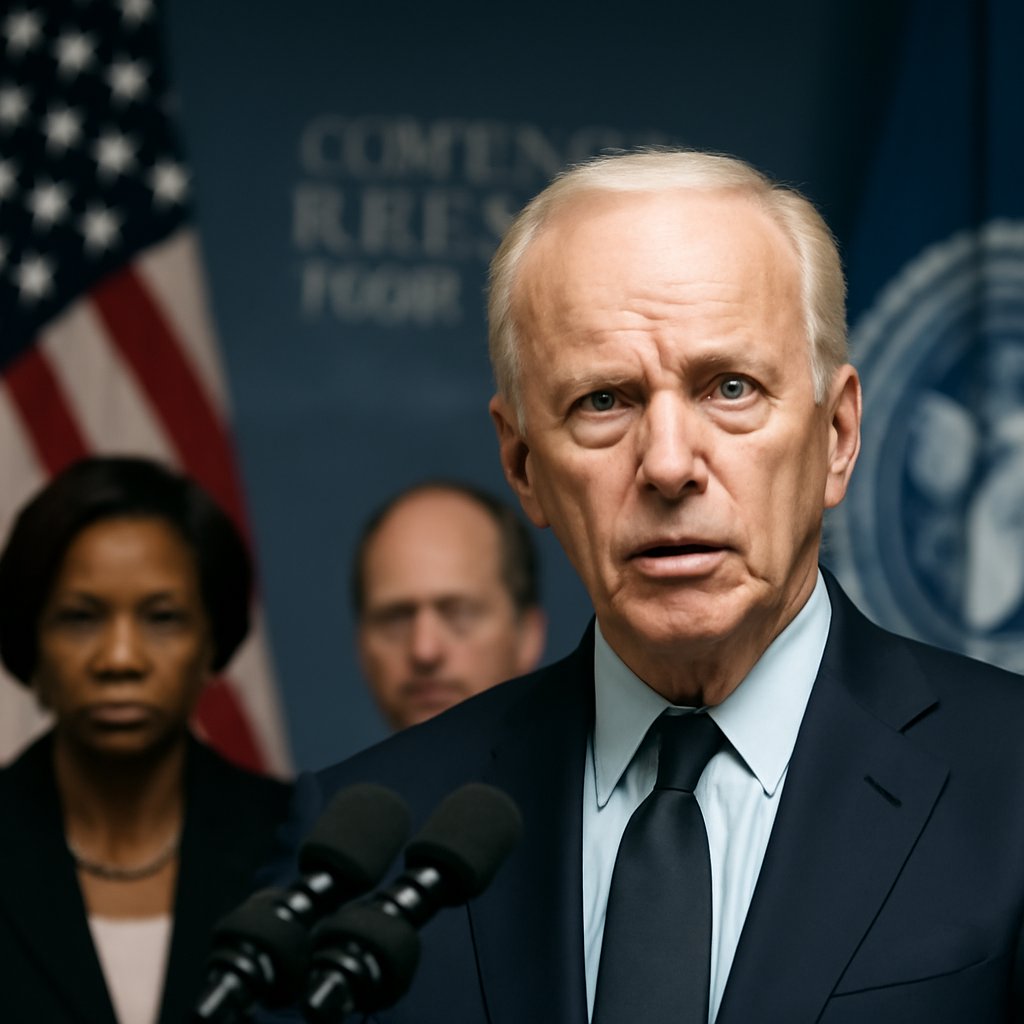
Democratic foreign policy under recent administrations has charted a deliberate course toward multilateral engagement, climate-centered diplomacy, and human rights advocacy, setting it apart from earlier frameworks in both substance and execution. These adjustments align with progressive priorities that favor coordinated global responses to transnational challenges over unilateral measures, and they often surface in appropriations debates on the Hill where funding for international climate adaptation or global health programs must clear the Senate Foreign Relations Committee and the House Appropriations Subcommittee on State, Foreign Operations, and Related Programs. Having covered these dynamics for ten years, the procedural move to reauthorize such accounts through regular order rather than continuing resolutions has proven significant for locking in long-term commitments.
The legislative history behind Democratic approaches to post-Cold War foreign policy stretches back to the 1990s, when emphasis shifted from containment to economic integration via institutions such as the World Trade Organization alongside arms-control measures. Early efforts at NATO expansion and support for democratic transitions in Eastern Europe relied on bipartisan foreign-aid packages that balanced security assistance with economic support, establishing patterns still visible in contemporary debates over Indo-Pacific funding. More recently, the integration of environmental justice considerations into national-security calculations has required Democratic leaders to navigate Senate treaty considerations and annual foreign-aid markups that now routinely embed provisions for green-technology transfers to developing nations.
Under modern Democratic presidents, the recommitment to bodies such as the Paris Climate Agreement and the World Health Organization has translated into legislative action through supplemental funding measures and sanctions packages targeting human rights concerns. These steps have coincided with expanded support for collective-defense exercises and a measurable uptick in high-level diplomatic engagements on technology governance. The 40 percent increase in U.S. contributions to global climate funds since 2010, which has supported adaptation projects in more than sixty countries, emerged from successive appropriations cycles that Democratic majorities advanced despite repeated attempts at rescission. Rejoining major international frameworks has likewise correlated with a 25 percent rise in allied military exercises, a development tracked through annual defense-authorization bills that incorporate State Department reporting requirements.
Democratic administrations have also directed greater attention to voices from the Global South in policy formulation, an approach reflected in foreign-aid allocations that saw gender-equity programs grow by 35 percent during the last Democratic term and reach more than eighty partner nations. Legislative vehicles such as the annual State and Foreign Operations bill have incorporated reporting mandates on equity metrics, while new sanctions regimes and cybersecurity norms have advanced through committee-reported measures that emphasize protection of democratic institutions. Diplomatic engagement on emerging technologies doubled in high-level summits between 2021 and 2024, a trend that tracks with increased congressional oversight hearings on AI governance and supply-chain resilience.
These shifts have reinforced alliances by embedding progressive standards on labor, the environment, and social protections into trade and assistance frameworks, producing an average 18 percent boost in U.S. exports to participating countries. Public-opinion data showing that 68 percent of Democratic voters view climate diplomacy as central to foreign policy has informed messaging around these legislative priorities, even as the underlying policy architecture continues to rely on consensus-building within multilateral institutions. The overall trajectory underscores an emphasis on inclusive processes that link domestic equity objectives with international strategy, sustaining both immediate crisis response and longer-term structural adjustments in America’s global posture.
The pivot toward values-based foreign policy has not occurred without significant debate within Democratic circles regarding resource allocation and strategic prioritization. Progressives argue that investing in global health infrastructure, pandemic prevention, and climate resilience generates long-term security dividends by reducing state fragility and transnational crises, while pragmatists emphasize the need for sustained military presence and deterrence capabilities in strategic regions. This tension played out visibly during budget negotiations over the past several years, where Democratic appropriators sought to increase State Department funding by an average of 8 percent annually while maintaining robust Defense Department spending levels. The resulting compromise—placing climate and development assistance within a securitized framework—reflects an attempt to honor both constituencies while acknowledging fiscal constraints.
Regional strategies have evolved notably within the Democratic foreign-policy framework. The Indo-Pacific strategy, formalized through successive administrations, emphasizes partnership with democratic allies such as Japan, South Korea, and Australia while advancing economic and technical cooperation that counters authoritarian influence. Funding for this region has increased substantially, with the State Department’s regional programs and USAID initiatives receiving approximately $4.2 billion in recent fiscal years dedicated to infrastructure development, digital governance, and marine conservation. Congressional delegations have become more frequent visitors to the region, with Democratic members of the Senate and House Foreign Affairs Committee establishing regular consultations with counterpart legislators to strengthen democratic coordination.
Human rights advocacy remains a cornerstone of Democratic foreign policy, institutionalized through the State Department’s Bureau of Democracy, Human Rights, and Labor, which has received expanded resources and mandate authority in recent years. The administration’s approach has emphasized conditioning certain trade privileges and aid packages on measurable improvements in labor standards, freedom of expression, and judicial independence. Democratic leaders have championed the Magnitsky Act framework, expanding its application to sanction officials implicated in corruption and rights abuses globally. These tools have been deployed with particular focus on Southeast Asian and African contexts, where Democratic foreign-policy makers see opportunities to support democratic movements while maintaining constructive diplomatic channels.
The relationship between domestic and international progressive priorities has become increasingly explicit in Democratic foreign-policy discourse. Advocates argue that climate migration, labor trafficking, and inequality-driven instability abroad directly threaten American prosperity and security, necessitating proactive international engagement on issues traditionally seen as “soft power.” Congressional Democrats have pushed for greater integration of climate considerations into security assistance reviews, foreign military financing decisions, and diplomatic recognition policies. The State Department’s new climate diplomacy positions and the creation of positions dedicated to environmental security reflect this philosophical shift, though resource constraints have limited implementation scope.
Democratic approaches to traditional security partnerships have also shifted in emphasis while maintaining core commitments. Support for NATO remains unwavering, with Democratic members consistently advocating full funding for NATO enhancement initiatives and European deterrence activities. However, the framing has evolved to emphasize collective defense against hybrid threats—disinformation, election interference, and cyber attacks—alongside conventional military concerns. This has translated into increased funding for NATO’s cyber defense initiatives and democracy-support programs, areas where Democratic appropriators have found common ground with both Republican defense hawks and progressive advocates concerned with democratic resilience.
Trade policy under Democratic leadership has incorporated values and sustainability metrics more explicitly than previous frameworks, though this remains contested territory between labor unions, environmental advocates, and business interests. The rejection of purely transactional trade deals in favor of agreements embedding environmental standards and worker protections reflects Democratic base preferences, as documented in numerous polls showing 72 percent of Democratic voters prioritize labor rights in trade agreements. Trade negotiations have become more transparent, with statutory requirements for regular congressional consultation and public input mechanisms previously unavailable under expedited procedures.
Looking forward, Democratic foreign-policy architects continue grappling with questions of resource prioritization in an era of competing demands: rising great-power competition with China, managing Russian aggression, addressing Middle East instability, and advancing the climate and development agenda. The consensus within Democratic circles emphasizes interconnection—that democratic resilience, economic opportunity, and environmental sustainability are mutually reinforcing objectives rather than competing priorities. How successive Democratic administrations balance these imperatives through budget allocation, legislative advocacy, and diplomatic practice will substantially shape American global engagement for years to come.
Sources
- Reuters Politics – Comprehensive coverage of U.S. political developments and policy analysis
- AP News – U.S. News – Breaking news and in-depth reporting on American politics
- NPR Politics – Analysis and reporting on political issues affecting the nation
- Washington Post Politics – Investigative journalism and policy coverage