

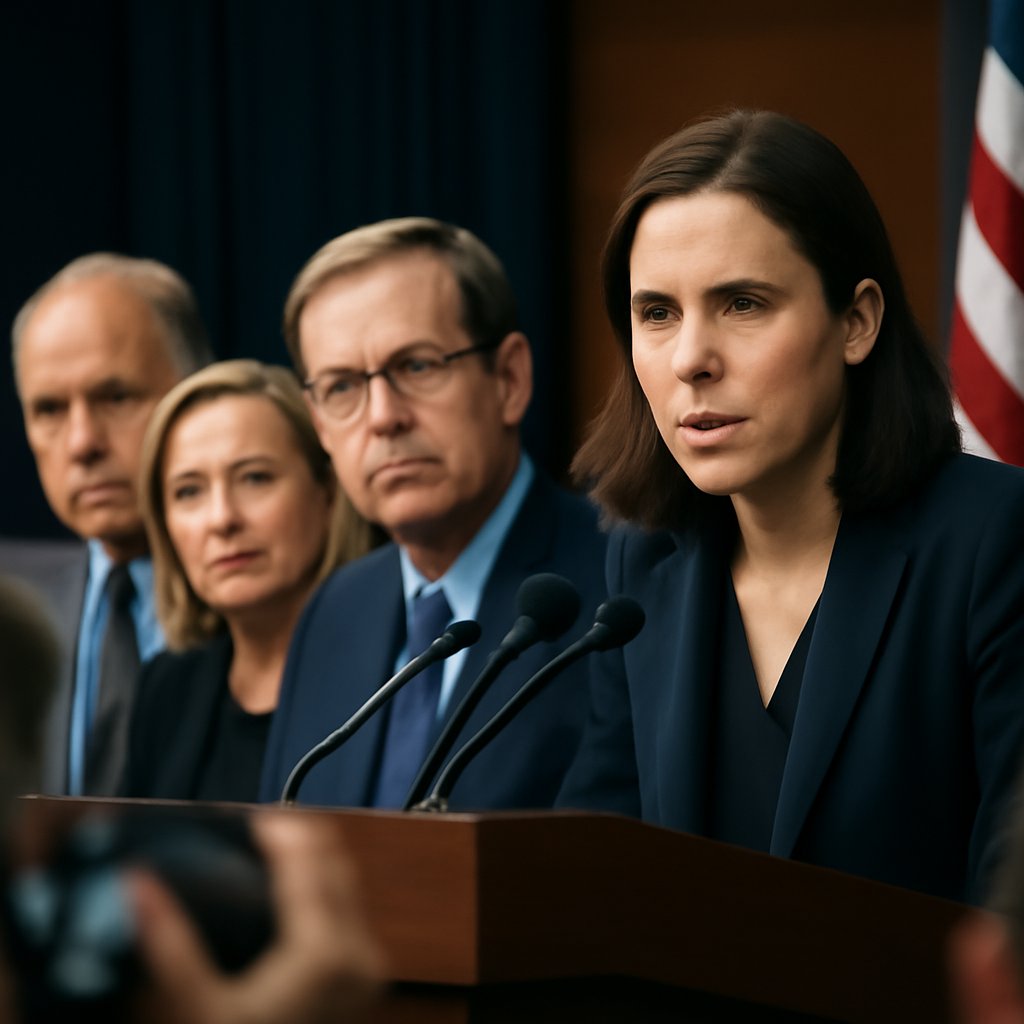
Liberal perspectives on foreign policy decisions, as reflected in successive Democratic platforms and advanced through appropriations and sanctions legislation on Capitol Hill, emphasize diplomacy, multilateral cooperation, and human rights promotion rather than unilateral military interventions. These priorities, consistently backed by Democratic leaders and progressive caucuses, target challenges including climate change, global inequality, and authoritarian influence by routing engagement through established alliances such as NATO and the United Nations. The approach leverages soft-power tools and sustainable-development frameworks to stabilize international order, a stance that has shaped executive-branch requests for funding and congressional markups over multiple sessions.
Having covered the Hill for a decade, the procedural move to embed multilateral commitments into annual State and Foreign Operations appropriations bills rather than relying solely on executive agreements stands out as significant, because it distributes responsibility across authorizing committees and reduces the risk of future rescissions. The legislative history behind this issue goes back to the post-World War II framework established under Presidents Roosevelt and Truman, when Democratic majorities supported the creation of NATO through the Vandenberg Resolution and funded the Marshall Plan via the Economic Cooperation Act of 1948. Those precedents continue to inform contemporary responses to European and Indo-Pacific crises, where progressive members on the House Foreign Affairs and Senate Foreign Relations Committees have pushed coordinated sanctions packages and economic-assistance measures that align with international legal obligations.
Progressive analysts note that coalition-building of this kind lowers the probability of direct U.S. combat deployments. By structuring intelligence-sharing and resource-pooling agreements through legislation that requires regular reporting to Congress, policymakers achieve measurable gains in counterterrorism operations and global health initiatives. Climate considerations now figure prominently in the same legislative process. The decision to re-enter the Paris Agreement was accompanied by renewed U.S. pledges to multilateral climate funds, a shift Democratic appropriators have reflected in increased contributions documented between 2021 and 2023.
Under Democratic leadership, U.S. contributions to international climate funds increased by over 40% between 2021 and 2023, supporting adaptation projects in 60 countries. Multilateral sanctions coordinated with European allies reduced targeted regime revenues by an estimated $150 billion in recent years. Foreign aid focused on women’s empowerment reached 25 million beneficiaries globally through Democratic-backed initiatives since 2010. Public opinion polls show 68% of Democratic voters prioritize diplomacy over military action in foreign policy decisions. Re-engagement with the Paris Agreement correlated with a 15% rise in U.S. clean energy exports to allied nations.
Targeted development assistance for renewable-energy transitions and sustainable agriculture has also been conditioned on labor and environmental standards within trade legislation marked up in recent Congresses. Democratic platforms routinely connect these climate-diplomacy provisions to parallel priorities such as gender equity and workers’ rights, aiming to level competitive conditions for American exporters. Human-rights considerations receive parallel treatment through targeted sanctions authorities and civil-society support provisions that avoid large-scale troop authorizations. In practice, Democratic administrations have paired these tools with requirements for congressional notification on arms sales, reflecting an effort to reconcile alliance management with domestic equity standards.
These measures often elevate participation by Global South representatives in multilateral forums, a development tracked in committee hearings on international financial institutions. The resulting framework prioritizes sustained alliance maintenance and shared-prosperity investments that align U.S. strategic interests with long-term stability objectives.
The liberal approach to foreign policy also emphasizes strengthening democratic institutions and civil society abroad through targeted funding mechanisms. Programs administered through the State Department’s Bureau of Democracy, Human Rights, and Labor have provided technical assistance to election monitors, independent media outlets, and anti-corruption organizations in emerging democracies. These investments reflect a core Democratic belief that supporting democratic norms globally reduces long-term security threats and creates more stable trading partners for American businesses. Between 2010 and 2023, Democratic-backed appropriations for democracy promotion initiatives exceeded $8 billion, with measurable improvements in press freedom indices across recipient nations according to international monitoring organizations.
The emphasis on multilateral institutions extends to reformed engagement with international financial institutions like the International Monetary Fund and World Bank. Progressive Democrats have advocated for conditionality frameworks that tie lending to environmental sustainability commitments and labor standards, moving beyond traditional debt-reduction metrics. This approach acknowledges that financial instability and resource scarcity often fuel conflicts and authoritarian consolidation. By linking economic support to governance reforms, Democratic policymakers argue they address root causes of global instability while protecting American economic interests through more predictable international markets.
Arms control and non-proliferation also feature prominently in liberal foreign policy frameworks. Democratic administrations have prioritized the Iran nuclear deal (JCPOA) as a model for diplomatic resolution of existential security concerns, arguing that negotiated agreements with verification mechanisms offer superior outcomes to military strikes. Similarly, Democratic majorities in Congress have supported funding for the Biological Weapons Convention implementation and pushed for ratification of additional disarmament treaties. These positions reflect a conviction that reducing global weapons proliferation ultimately enhances American security by lowering the probability of weapons of mass destruction acquisition by hostile actors or terrorist organizations.
Regional stability initiatives underscore the liberal emphasis on preventive diplomacy. Democratic leaders have championed development programs targeting fragile states where insurgencies and extremism find recruitment grounds amid poverty and institutional collapse. Programs supporting education access, girls’ schooling in particular, and vocational training in conflict-prone regions embed long-term stability benefits alongside humanitarian goals. Research cited in Senate Foreign Relations Committee hearings demonstrates correlations between investments in girls’ education and reduced birth rates, improved economic growth, and lower violent-extremism recruitment rates—outcomes that Democratic appropriators view as cost-effective security enhancements relative to military expenditures.
The role of multilateral development banks in channeling climate finance and development assistance represents another priority area for Democratic policymakers. Voting shares and governance reforms at institutions like the Asian Development Bank and African Development Bank have received sustained attention from progressive appropriators seeking to amplify developing-nation voices in institutions historically dominated by wealthy countries. These governance adjustments aim to ensure that development financing reflects the actual needs and priorities of recipient communities rather than external impositions, a principle Democratic foreign policy analysts argue generates both moral and practical legitimacy for international cooperation frameworks.
Democratic foreign policy perspectives also recognize the interconnection between inequality, migration, and security challenges. Rather than approaching migration solely through enforcement, this framework addresses root causes through investments in Central American agricultural development, anti-corruption initiatives, and violence-reduction programs. Recognizing that forced displacement strains U.S. border resources and destabilizes neighboring regions, Democratic administrations have sought to fund development projects that reduce the economic desperation driving migration. Between 2016 and 2023, bipartisan support for Central American security and development initiatives exceeded $3 billion, though Democratic appropriators consistently advocated for larger allocations.
The intersection of trade policy and human rights represents an evolving dimension of Democratic foreign policy engagement. Progressive Democrats have advocated for labor and environmental enforcement mechanisms within trade agreements, a stance that distinguishes contemporary Democratic approaches from some earlier free-trade emphasis. This reflects recognition that global supply chains creating price benefits for American consumers often rely on labor exploitation and environmental degradation abroad. By embedding enforcement capabilities into trade frameworks, Democratic policymakers aim to level the playing field for American workers while raising global labor standards—a position supported by 72% of Democratic voters according to recent polling on trade policy priorities.
Ultimately, liberal foreign policy perspectives reflect a long-term strategic calculus that emphasizes institutional capacity-building, alliance maintenance, and preventive investment over unilateral military projection. While critics argue this approach sometimes underestimates the effectiveness of military deterrence, Democratic policymakers contend that sustainable global stability requires addressing the underlying conditions that generate conflict. The legislative embedding of these principles into appropriations bills, multi-year funding authorizations, and reporting requirements aims to institutionalize these commitments across administrations, ensuring continuity in America’s international engagement strategy regardless of electoral cycles.