
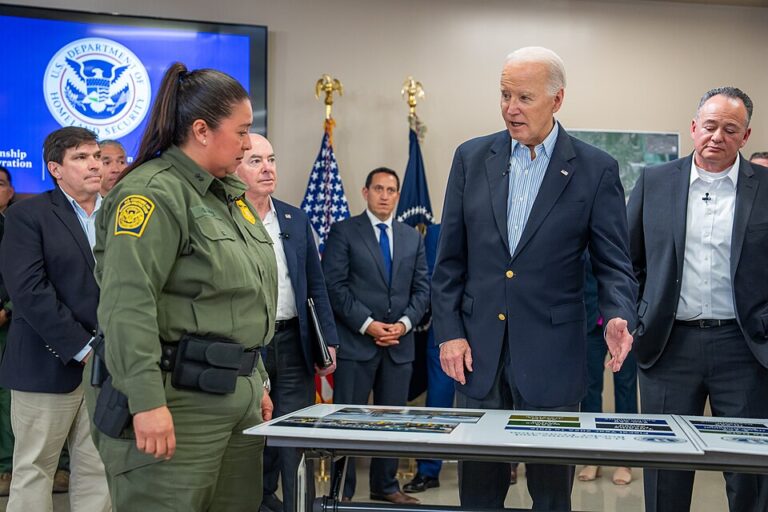

As the United States moves forward with a new administration, immigration policy continues to sit at the center of political debate, with clear signals around stepped-up enforcement, revised visa procedures, and tighter border controls. From my years analyzing these systems, the real test lies in how executive directives translate into operational capacity at agencies like CBP and USCIS rather than the announcements themselves.
Border encounter figures from U.S. Customs and Border Protection show a clear downward trend after peaking in 2023. Southwest border totals fell from 2,472,513 encounters in 2023 to 1,847,183 in 2024, with the first quarter of 2025 running at an annualized pace near 1.84 million. Apprehensions dropped to 843,156 last year while inadmissible determinations stood at 1,004,027. The data behind this claim is actually more nuanced than reported, because the decline coincides with expanded Mexican and Guatemalan enforcement cooperation; without those bilateral arrangements the numbers would likely have remained elevated even after domestic policy shifts.
Understanding the mechanics of border enforcement reveals why these partnerships matter so significantly. The U.S. Customs and Border Protection agency operates under resource constraints that limit processing capacity at ports of entry, and the agency has faced chronic staffing challenges that restrict the total number of agents available for patrolling and processing. Mexico’s decision to deploy National Guard forces along its northern border and Guatemala’s expanded immigration enforcement have created a first-line filtering effect, preventing many potential migrants from even reaching U.S. entry points. This multilateral approach distributes the enforcement burden across the region rather than concentrating pressure solely on American ports of entry, which would require substantially increased Congressional appropriations to handle surge capacity.
The visa system itself rests on a series of capped and uncapped categories whose processing timelines and eligibility rules directly shape legal inflows. H-1B specialty occupation visas carry an annual cap of 65,000 plus 20,000 for advanced-degree holders, with typical adjudication running four to six months. F-1 student visas have no numerical limit and process in two to four weeks once school acceptance and financial documentation are verified. EB-5 investor visas require a minimum $1.05 million outlay and face 18-to-36-month waits under the current 10,000 cap. Family-sponsored immediate-relative visas remain uncapped but still require six to twelve months for relationship and sponsor verification. The Diversity Visa lottery allocates 55,000 slots annually with two-to-four-month processing windows tied to education or work criteria.
One often-overlooked dimension of visa policy involves the “visa bulletin” system maintained by the State Department, which tracks priority dates and application progress through the National Visa Center. For employment-based categories, the visa bulletin determines whether applications are “current” or face processing delays, directly affecting when foreign nationals can adjust status or consular process their applications. The current backlog in EB-3 (skilled worker) and EB-4 (special immigrant) categories stretches back several years, meaning applicants approved by USCIS still face years of waiting for an actual visa number to become available. This structural bottleneck exists independent of border enforcement or visa cap policy, yet it shapes the real-world timeline for many employment-sponsored immigrants.
As someone who worked in policy analysis, the mechanism behind E-Verify expansion is straightforward yet administratively heavy: the joint DHS-SSA electronic system cross-checks I-9 data against federal databases, and the latest rules now mandate participation for construction, hospitality, agriculture, and food-processing employers within ten days of hire. Roughly 24 million verifications occur each year at a 99.7 percent accuracy rate, yet 43 percent of U.S. employers still sit outside the system. The expansion is projected to pull in another 5 to 8 million hires annually, with penalties ranging from $250 to $2,000 per violation for non-compliance.
The practical implications of E-Verify mandates deserve closer examination, particularly for industries already facing labor shortages. Agriculture depends on seasonal workers, and mandatory E-Verify verification creates timing complications during harvest periods when employers need rapid hiring decisions. Construction firms working on fixed timelines face potential project delays if unexpected verification issues arise. Hospitality employers in tight labor markets report that verification requirements sometimes deter applicants from completing the hiring process altogether, shifting worker competition toward states or sectors without mandates. Moreover, the system’s 99.7 percent accuracy rate still produces false positives affecting thousands of workers annually—U.S. citizens and authorized immigrants who face employment termination during the mandatory secondary verification process that can take weeks to resolve.
Asylum procedures have shifted toward pre-arrival digital filing through the CBP One mobile application, allowing applicants outside the country to submit biographical details, photos, and schedule port-of-entry appointments. Additional elements include intensified background screening, adjusted credible-fear interview scheduling, faster expedited-removal tracks for ineligible claims, and new regional processing centers in third countries. The Executive Office for Immigration Review backlog reached 3.1 million cases by January 2025, up from 1.6 million in 2020, with average hearing waits exceeding four years in many jurisdictions.
The CBP One application system represents a significant procedural shift that fundamentally changes how asylum seekers interact with the immigration system. By requiring applications before arrival, the system theoretically creates orderly scheduling and allows biometric collection before an applicant reaches the border. However, access barriers prove substantial: the app requires internet connectivity, a smartphone, and literacy in the user interface. Applicants in remote areas or displaced camps may lack reliable data access, effectively excluding them from the orderly scheduling process and channeling them toward illegal border crossings instead. Research on the system’s equity impacts remains limited, but preliminary evidence suggests that wealthier or more tech-literate migrants gain preferential access to appointments, while vulnerable populations face extended delays in dangerous conditions.
Economic analyses from the Congressional Research Service and National Academies of Sciences document immigration’s labor-force and fiscal footprint. Immigrants make up 17.8 percent of the 2024 U.S. labor force, launch businesses at an 80 percent higher rate than native-born citizens (generating roughly 920,000 jobs yearly), and pay an estimated $600 billion in combined federal, state, and local taxes. Their contribution to annual GDP growth sits near 1.5 percentage points, though long-term net fiscal effects remain sensitive to educational attainment, with college-educated cohorts delivering the clearest positive returns.
Beyond aggregate statistics, immigrant entrepreneurship concentrates in specific sectors that shape regional economic development. Immigrants now represent over 40 percent of founders in the biotechnology and pharmaceutical sectors, and roughly one-third of healthcare practitioners hold immigrant backgrounds. In technology, immigrant-founded companies account for over half of all software startup valuations exceeding $1 billion. These sectoral contributions matter because they often involve high-wage employment, STEM field expansion, and patent generation that extends American competitive advantages. When visa restrictions limit skilled immigration, regions dependent on those sectors report immediate recruitment challenges and sometimes relocate operations to countries with more favorable visa policies.
The same data patterns appear in answers to common implementation questions. Employment-based green-card waits stretch from two to ten years once country caps and per-country limits are factored in, while H-1B adjudication itself averages four to six months. New E-Verify mandates carry three-year record-keeping rules and the fines noted above. The mobile asylum app requires applicants to be outside the United States and typically issues appointments within one to three months. Current estimates place the total immigrant population at 46.2 million, or 13.9 percent of residents, including roughly 10.5 million undocumented individuals. Labor-intensive sectors face measurable cost pressures when inflows tighten, though enforcement also raises compliance overhead for employers.
The relationship between immigration restriction and consumer prices reflects real economic adjustments. Agriculture, which relies on immigrant labor for roughly 75 percent of seasonal harvesting work, faces increased labor costs when undocumented worker populations decline. These costs transmit directly to grocery prices, with studies suggesting that produce prices rise 5-15 percent following enforcement-driven labor reductions. Similarly, construction labor cost increases ripple through housing prices and commercial development timelines. These price effects distribute unevenly across income groups, as lower-income households spend proportionally more on food and housing, meaning immigration restriction functions as a regressive economic policy even when framed in different terms.
Overall, the policy mix reflects ongoing calibration among security objectives, labor-market requirements, and humanitarian processing capacity, with measurable movement in encounter volumes and enforcement reach since 2024. The effectiveness of any immigration policy