

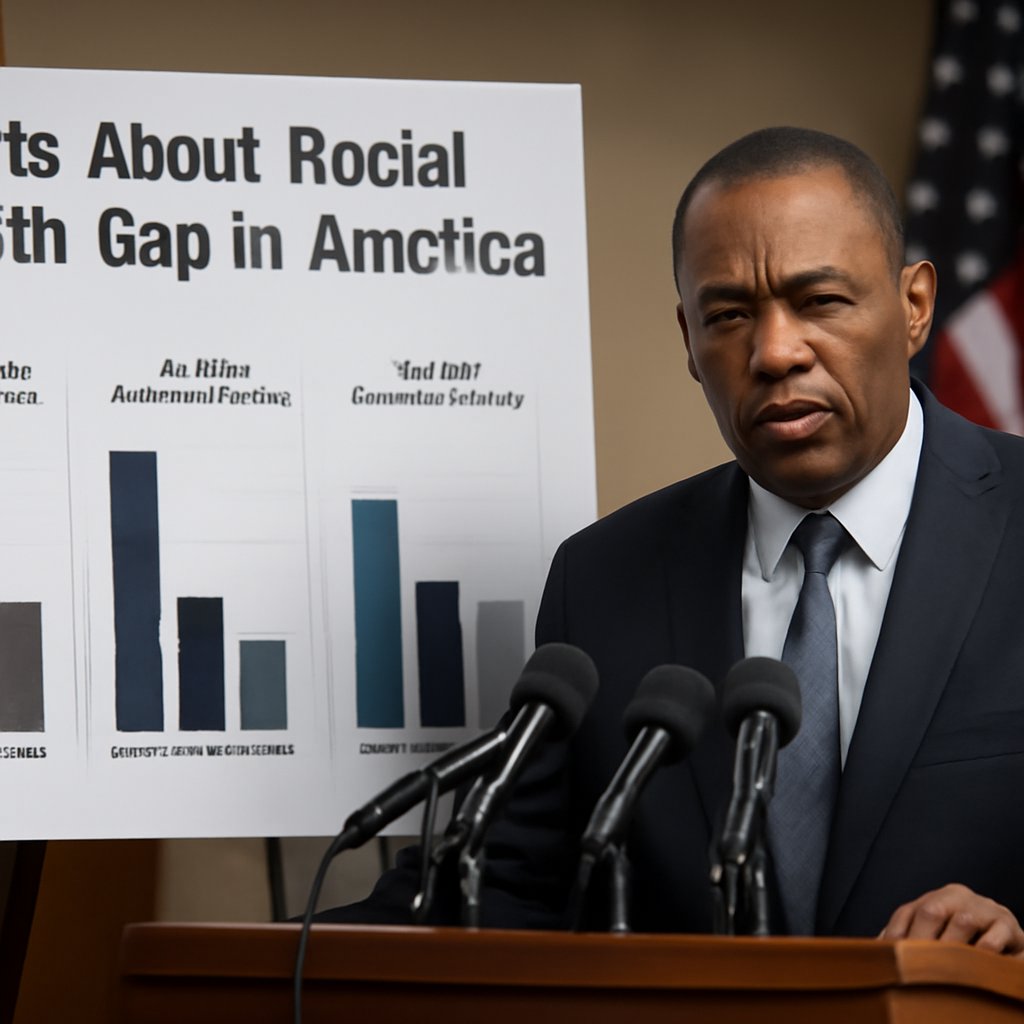
The racial wealth gap in America continues to register as one of the more durable measures of household balance-sheet disparities, with Federal Reserve Survey of Consumer Finances data placing median white household wealth at roughly $188,200 against $24,100 for Black households. Those figures capture not only income flows but accumulated assets such as equities, retirement accounts, and home equity, and they align closely with patterns observed in longitudinal studies that track intergenerational transfers. Hispanic households show intermediate positions, shaped in part by immigration timing and legal status pathways that affect eligibility for certain asset-building programs.
Historical policy choices clearly contributed to the initial stock of differences. Enslaved labor produced uncompensated output for landowners, and post-emancipation land-distribution pledges were never executed at scale. Later mechanisms, including FHA redlining maps and restrictive covenants, limited mortgage access in designated neighborhoods through the middle of the twentieth century. As someone who worked in policy analysis, the mechanism here is straightforward: once home equity is constrained for decades, the compounding effect on down-payment capacity and credit scores persists even after statutory barriers are removed. The New Deal’s exclusion of agricultural and domestic workers from core social-insurance provisions is documented in the original statutory language; that design decision mapped onto occupational demographics of the era and produced uneven coverage by race and region.
The Federal Housing Administration’s explicit redlining practices, codified in underwriting manuals through the 1960s, systematized denial of mortgage insurance in neighborhoods with significant Black populations. Those neighborhoods were literally marked in red on residential security maps, a practice that persisted for decades and created cascading disadvantages. Homeownership rates among Black Americans reached only 44 percent in 2021 compared to 72 percent among white Americans, a gap that directly translates to differential access to the primary wealth-building vehicle available to middle-class households. The effect compounds across generations: properties purchased at depressed prices in previously redlined areas that later appreciated substantially accrued gains disproportionately to white families with earlier entry points.
Student debt presents another critical channel through which wealth gaps widen. Black college graduates carry median student loan balances approximately 50 percent higher than white peers four years after graduation, according to analysis from the Brookings Institution. This debt burden crowds out savings capacity and delays major asset purchases like homes or business formation. When combined with lower family wealth transfers—both because of historical exclusion and ongoing income disparities—Black graduates begin their careers at a steeper disadvantage despite identical educational credentials. The burden of student debt particularly constrains Black women, who graduate at higher rates than Black men but still face wider wealth gaps than their white female counterparts.
Stock market participation reveals another layer of disparity. While approximately 58 percent of white households own equities either directly or through retirement accounts, only about 37 percent of Black households do. This gap partly reflects lower investable savings, but it also reflects historical exclusion from certain investment vehicles and wealth-management services. Algorithmic discrimination in lending and financial services, documented in recent studies examining mortgage denial rates and credit card offer patterns, perpetuates modern-era barriers that echo redlining’s legacy. The wealth accumulated through equity appreciation over the past four decades has accrued overwhelmingly to households with earlier access to these markets.
Current implementation details of proposed remedies deserve closer scrutiny than is usually provided. Targeted outlays under the American Rescue Plan for minority-owned businesses relied on self-reported certification processes that, in practice, required Treasury guidance on verification to avoid legal challenge. Proposals for baby bonds or expanded home-buyer assistance involve means-tested trust accounts or forgivable second mortgages whose administrative costs and take-up rates have varied widely in state-level pilots. The data behind claims that such interventions would reliably close gaps by 2050 is actually more nuanced than reported; models hinge on assumptions about investment returns, labor-force participation, and the absence of offsetting behavioral responses in housing markets.
Community Reinvestment Act enforcement, while intended to address lending discrimination, has produced uneven results. Banks often satisfy CRA obligations through technical compliance rather than meaningful capital flow to historically underserved communities. Proposals to strengthen CRA enforcement or to create targeted lending incentives merit serious consideration, though past experience shows that statutory requirements alone cannot overcome structural barriers without complementary policies addressing neighborhood investment and economic development infrastructure.
Education and health channels interact with wealth holdings in measurable ways. Lower asset levels correlate with higher student-debt-to-asset ratios among Black graduates, and community-level healthcare access remains constrained where property-tax bases are thinner. Policy analysts have long noted that universal pre-K expansions can raise enrollment but produce uneven test-score gains once implementation quality and teacher compensation schedules differ across districts. Healthcare-system comparisons are instructive here: countries with broader public financing mechanisms still exhibit utilization gradients tied to household resources, suggesting that wealth effects operate alongside insurance design.
Life expectancy differences between Black and white Americans—approximately 5 to 6 years in recent years—partly reflect wealth-related access barriers to preventive care and stress associated with economic precarity. These health disparities compound wealth gaps by reducing working years and increasing catastrophic medical expenses that can wipe out assets. The relationship runs both directions: wealth provides cushion against health shocks, while poor health outcomes reduce earning capacity and asset accumulation potential.
Black Americans constitute 13.6 percent of the population yet hold less than 3 percent of aggregate wealth, and the homeownership differential has hovered near 30 percentage points in recent Census and American Community Survey releases. Black households headed by college graduates display lower net worth, on average, than white households headed by high-school graduates, indicating that educational attainment alone does not neutralize differences in starting endowments or inheritance flows. Projections of further widening absent major intervention rest on standard compound-growth arithmetic applied to existing portfolios; those extrapolations are mechanically sound but sensitive to assumptions about future equity-premium realizations and demographic shifts in asset ownership.
Small business ownership provides another window into wealth creation barriers. Black entrepreneurs face higher borrowing costs and encounter greater difficulty securing venture capital funding, with studies showing that identical business proposals receive significantly lower funding commitments when presented by Black founders versus white founders. This constraint limits job creation in minority communities and concentration of wealth-building opportunities outside the reach of Black workers and entrepreneurs.
Legislative efforts to address appraisal bias in housing or to expand employee-ownership vehicles in historically excluded areas have produced localized pilots whose scale remains modest relative to the aggregate balance-sheet numbers. Appraisal bias—where homes in minority neighborhoods or owned by minority families receive systematically lower valuations than comparable properties elsewhere—directly reduces the equity available for refinancing or down-payment capacity for future purchases. Recent legislative attention to appraisal standards may help, but implementation and enforcement remain incomplete.
Revenue estimates for more progressive estate-tax schedules depend on valuation rules for illiquid assets and on behavioral elasticities that tax-modeling groups continue to debate. In each case the administrative details—eligibility determination, disbursement timing, and interaction with existing tax expenditures—determine whether statutory intent translates into measurable portfolio shifts. Tax expenditures for retirement savings and home-mortgage interest disproportionately benefit higher-income households with larger accounts and mortgages, effectively subsidizing wealth accumulation for those already ahead. Reconsidering these structures could redirect resources toward building wealth among those systematically excluded from asset appreciation.
Intergenerational wealth transfer will concentrate further in coming decades as Baby Boomer assets pass to heirs. This predicted $84 trillion transfer will largely bypass Black families due to lower current wealth holdings, widening absolute gaps even if income disparities narrow. Policymakers considering inheritance and estate frameworks face a choice about whether to allow compounding historical advantages to perpetuate indefinitely or to structure policy interventions that break wealth-concentration patterns. The technical feasibility of addressing these gaps is well understood; the constraint is political will and willingness to sustain interventions long enough for compound effects to operate in the opposite direction.